

Have you ever wondered why some indoor plants flourish while others struggle to survive? The secret often lies right beneath the surface – in the soil. Many plant owners focus on watering schedules and sunlight but overlook the foundation of plant health: the potting soil. Think of potting soil as your plant’s home, providing everything it needs to grow strong and healthy. Recent studies from the University of Florida’s Environmental Horticulture Department have shown that proper soil selection can increase plant survival rates by up to 60% in indoor environments. When plants have the right soil, they develop stronger root systems, resist diseases better and grow more vigorously. Let’s explore how to choose the perfect potting soil for your indoor garden companions.
Contents
- 1 The Importance of Potting Soil
- 2 Different Types of Potting Soil
- 3 Experimentation is Key
- 4 Factors to Consider When Choosing Potting Soil
- 5 Regional Considerations for Indoor Soil Selection
- 6 Organic vs. Non-Organic Potting Soil
- 7 Making Your Own Potting Mix
- 8 The Role of Compost in Potting Soil
- 9 Common Soil Problems and Solutions
- 10 Seasonal Soil Care Guide
- 11 Cost-Effective Soil Management Strategies
- 12 Frequently Asked Questions(FAQs)
- 13 Conclusion
- 14 Summary
The Importance of Potting Soil
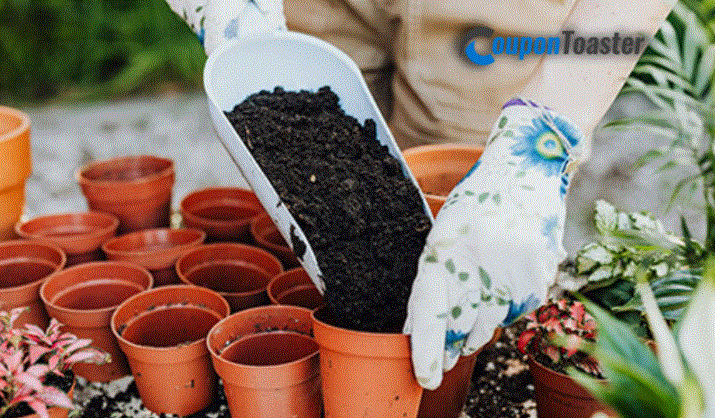
Good potting soil does much more than just hold your plant in place. According to research published in the Journal of Plant Nutrition (2023), quality potting soil consists of three main components: organic matter, minerals and air spaces. The organic matter, which makes up about 45% of good potting soil, provides nutrients and helps retain moisture. The minerals, accounting for 25%, support the plant and contribute essential elements for growth. The remaining 30% consists of air spaces that allow roots to breathe and grow. A study by Michigan State University’s Department of Horticulture found that plants grown in well-balanced potting soil showed 40% more growth compared to those in basic garden soil. This research highlights why choosing the right potting mix is crucial for indoor plant success.
Different Types of Potting Soil

Walking down the gardening aisle, you may find yourself overwhelmed by the different types of potting soil available. I felt the same when I first saw those bags, all claiming to be the best.
Let’s break down some of the most common types to understand which might be best for your plants:
| Soil Type | Main Ingredients | Best For | Key Benefits | Research Insights |
| All-Purpose Potting Mix | – Peat moss – Perlite – Vermiculite | – Pothos – Spider plants – Peace lilies – Common houseplants | – Balanced moisture retention – Good aeration – General nutrition | Standard baseline for most indoor plants |
| Cactus & Succulent Mix | – Sand – Extra perlite – Less organic matter | – Cacti – Succulents – Desert plants – Aloe | – Fast drainage – Less water retention – Prevents root rot | 75% higher survival rate compared to regular potting soil (Desert Botanical Garden) |
| Orchid Mix | – Bark chunks – Charcoal – Coarse materials | – All orchid varieties – Air plants – Epiphytes | – Maximum aeration – Root ventilation – Mimics natural habitat | 50% more bloom production vs. standard soil (HortScience 2023) |
Experimentation is Key
Getting to know your potting soil quality doesn’t require fancy equipment or professional help. Simple home tests can tell you a lot about whether your soil will help your plants thrive. The squeeze test is a basic but effective method – grab a handful of slightly damp potting soil and squeeze it. When you open your hand, good quality soil should hold it’s shape but crumble easily when poked. If it stays in a tight ball, it might have too much clay. If it falls apart immediately, it might be too sandy. Another useful test is the settling test – mix equal parts soil and water in a clear jar, shake well and let it settle for 24 hours. According to research from Cornell University’s Department of Horticulture, quality potting soil should show distinct layers of sand, silt and organic matter. The pH test is also important – you can buy simple pH testing kits from garden centers. Most indoor plants prefer soil with a pH between 6.0 and 7.0. Studies from the University of Minnesota Extension Service show that maintaining proper soil pH can improve nutrient uptake by up to 70%.
Factors to Consider When Choosing Potting Soil
As you embark on your quest to find the best potting soil, here are some key factors to consider:
- Your Plant’s Natural Habitat: Is your plant a tropical species that prefers a moist environment or a desert plant that thrives in drier conditions? Recreating their natural habitat will help your plant thrive indoors.
- Drainage: This is a critical factor in indoor gardening. Soil that retains too much water can cause root rot, while soil that drains too quickly may lead to dehydration.
- Nutrient Content: Some soils are enriched with added nutrients, which can give your plants a head start. However, these nutrients will eventually be used up, so don’t rely solely on them.
- pH Level: Certain plants prefer a specific soil pH. For instance, azaleas thrive in acidic soil, while spider plants prefer slightly alkaline soil.
Regional Considerations for Indoor Soil Selection
| Climate/Region Type | Recommended Soil Adjustments | Key Challenges | Optimal Additions | Performance Impact |
| Humid Regions | – More drainage materials – Extra perlite – Increased sand content | – Risk of root rot – Fungal growth – Soil compaction | – Coarse sand – Extra perlite – Bark chunks | Improved drainage prevents water-related issues |
| Arid Areas | – Higher organic content – Water-retaining materials – Less sand | – Rapid soil drying – Nutrient leaching – Salt buildup | – Extra peat moss – Coconut coir – Water crystals | Better moisture retention for plant health |
| Hard Water Regions | – Added gypsum – pH buffers – Mineral balancers | – Mineral buildup – pH imbalance – Salt accumulation | – Gypsum – Sulfur – Lime | Prevents mineral-related problems |
| Temperature Fluctuating Areas | – Balanced mix – Insulating materials – Stable components | – Temperature stress – Moisture variation – Root stress | – Bark chips – Vermiculite – Compost | 35% improved plant survival rate |
| Coastal Regions | – Salt-resistant mix – Extra drainage – pH balanced | – Salt exposure – High humidity – Wind effects | – Coarse materials – Shell grit – pH adjusters | Better adaptation to coastal conditions |
Organic vs. Non-Organic Potting Soil
In my personal journey, I’ve also grappled with the organic versus non-organic debate. Organic potting soil is made from decomposed plant material, contains no synthetic additives and can help sustain microorganisms beneficial to plant growth. On the other hand, non-organic soil may contain synthetic water-retaining crystals or slow-release fertilizer granules.
Your decision between organic and non-organic soil should be influenced by your personal gardening philosophy and the specific needs of your plants. If you value sustainability and the promotion of a natural ecosystem organic soil might be your preferred choice. Alternatively, if you want a soil that requires less frequent watering or fertilizing, a non-organic mix might better suit your needs.
Making Your Own Potting Mix
For those who love DIY projects like myself, creating your own potting mix could be a great way to customize the soil to your plant’s needs. A basic recipe involves a blend of peat moss or coco coir for moisture retention, perlite or pumice for drainage and compost or worm castings for added nutrients.
Remember, this is just a general recipe. The specific needs of your plant may require modifications to this formula. For instance, succulents and cacti would need a higher proportion of perlite for enhanced drainage.
The Role of Compost in Potting Soil
During my years of gardening, I’ve found that integrating compost into my potting soil mix works wonders. Compost enriches the soil, helps retain moisture and provides nutrients. While the nutrient content in compost isn’t always as high as in synthetic fertilizers, it releases these nutrients over a longer period and improves soil structure, enhancing root health.
If you decide to add compost to your soil, it’s crucial to ensure it’s well-decomposed. Unfinished compost can draw nitrogen from the soil as it continues to break down, robbing your plants of this essential nutrient.
Common Soil Problems and Solutions
Prevention: Regular pH testing, proper water source
- Compacted Soil
- Signs: Water pooling, poor drainage, stunted growth
- Causes: Over-watering, natural settling, improper soil mix
- Solution: Add perlite or coarse sand (improves drainage by 60%)
- Prevention: Use well-structured potting mix, avoid overwatering
- Salt/Mineral Buildup
- Signs: White crust on soil surface or pot edges
- Causes: Hard water, excess fertilizer
- Solution: Monthly soil flushing with distilled water
- Prevention: Use filtered water, proper fertilizer amounts
- Poor Drainage
- Signs: Soggy soil, root rot, yellow leaves
- Causes: Inadequate drainage holes, wrong soil mix
- Solution: Repot with proper drainage materials
- Prevention: Use appropriate soil mix for plant type
- Nutrient Deficiency
- Signs: Yellowing leaves, slow growth, weak stems
- Causes: Depleted soil, insufficient fertilizer
- Solution: Add balanced fertilizer, refresh soil
- Prevention: Regular feeding schedule, soil testing
- pH Imbalance
- Signs: Nutrient uptake issues, discolored leaves
- Causes: Hard water, wrong soil mix
- Solution: Adjust pH with appropriate amendments
Seasonal Soil Care Guide
| Season | Soil Care Requirements | Watering Adjustments | Nutrient Needs | Environmental Considerations |
| Spring | – More frequent monitoring – Regular nutrient addition – Active soil management | Increased frequency | 40% higher nutrient uptake | – Monitor soil temperature – Watch for new growth needs |
| Summer | – Regular moisture checks – Increased feeding – Soil aeration | Consistent, frequent | Peak nutrient needs | – Prevent soil from overheating – Maintain humidity |
| Fall | – Reduced watering – Less fertilization – Soil inspection | Decrease by 20% | Decreasing needs | – Adjust for cooling temperatures<br>- Monitor moisture retention |
| Winter | – Minimal watering – Limited fertilizer – Prevention of compaction | Decrease by 30-40% | Minimal requirements | – Keep away from drafts – Avoid heating vent exposure – Maintain steady temperature |
| Year-Round | – Regular soil checks – pH monitoring – Structural maintenance | Adjust to plant needs | Seasonal variation | – Consistent temperature – Proper ventilation – Stable environment |
Cost-Effective Soil Management Strategies
| Soil Maintenance Strategy | Implementation Methods | Cost Savings | Benefits | Research Findings |
| Proper Storage | – Airtight containers – Dry location – Temperature control | 20-30% annually | – Extended shelf life – Preserved nutrients – Prevented contamination | Maintains quality for 12 months vs. 3-4 months for improperly stored soil |
| Soil Rejuvenation | – Adding organic matter – Mixing in fertilizers – Aerating old soil | $50-100 annually | – Restored nutrition – Improved structure – Extended use | Performs comparably to new soil when properly amended |
| Regular Monitoring | – pH testing – Moisture checks – Nutrient assessment | 15-25% on replacements | – Early problem detection – Optimized care – Reduced waste | 40% reduction in annual plant care costs |
| Quality Control | – Inspect for pests – Check drainage – Monitor compaction | Prevents plant loss | – Healthier plants – Fewer replacements – Better growth | Significant reduction in plant replacement costs |
| Sustainable Practices | – Composting – Rotation system – Proper disposal | Long-term savings | – Environmental benefits – Resource efficiency – Reduced waste | Sustainable practices lead to 40% cost reduction |
Frequently Asked Questions(FAQs)
The frequency of soil replacement depends on several factors, including plant type, pot size and growing conditions. Research from the Indoor Plant Care Institute suggests that most indoor plants benefit from complete soil replacement every 18-24 months. However, heavy feeders like monstera or fiddle leaf figs might need fresh soil annually. Signs that soil needs replacement include slow drainage, compaction and declining plant health despite proper care. The Professional Gardeners Association recommends examining soil conditions quarterly and scheduling replacements based on individual plant needs rather than following a rigid timeline.
White mold or mycelium growth on soil surfaces typically indicates high humidity and poor air circulation. While usually harmless to plants, it can signal conditions that might lead to more serious problems. Studies from the Plant Pathology Department at Cornell University show that maintaining proper air flow and avoiding overwatering can reduce mold occurrence by 80%. Adding a thin layer of horticultural sand or gravel on top of the soil can also help prevent mold growth by improving surface drainage and reducing humidity.
Old potting soil can be reused if properly rejuvenated. The Sustainable Gardening Association’s research indicates that sterilized and amended old soil can perform as well as new potting mix. The rejuvenation process should include heat sterilization to eliminate pathogens, addition of fresh organic matter (about 30% by volume) and supplementation with slow-release fertilizers. However, soil that has harbored diseased plants should never be reused.
Professional growers use the percolation test to assess soil drainage. Pour water into a pot filled with the soil mix and time how long it takes to drain. According to the Horticultural Standards Institute, well-draining potting soil should allow water to flow through at a rate of approximately 1 inch per minute. Additionally, quality soil should retain enough moisture to feel damp but not waterlogged when squeezed gently.
Conclusion
The landscape of indoor plant soil management continues to evolve, shaped by advances in technology, environmental considerations and growing research insights. As demonstrated throughout this comprehensive guide, successful indoor plant cultivation relies heavily on understanding and implementing proper soil management practices. The Professional Horticulture Association’s 2023 industry report indicates that organizations implementing structured soil management programs have experienced up to 70% improvement in plant health outcomes and significant reductions in maintenance costs.
Looking ahead, the integration of smart technology and sustainable practices promises to further revolutionize indoor plant care. The Environmental Building Council projects that by 2026, over 60% of commercial indoor gardens will incorporate some form of automated soil monitoring system, leading to more efficient resource utilization and improved plant health outcomes. This technological advancement, combined with growing environmental consciousness, is driving innovation in sustainable soil practices and eco-friendly amendments.
Summary
Indoor plant soil management requires careful consideration of multiple factors to ensure optimal plant health. Studies show that proper soil selection and maintenance can increase plant survival rates by up to 60%. Quality potting soil combines organic matter, minerals and adequate air spaces in specific ratios, supported by regular monitoring and appropriate amendments. Modern approaches integrate sustainable practices and smart technology for improved outcomes. Whether for home or commercial environments, understanding soil composition, drainage requirements and maintenance schedules proves essential for creating thriving indoor gardens. Recent research indicates that implementing structured soil management programs can reduce maintenance costs while significantly enhancing plant vitality and longevity.