

Many business owners love talking about their net income and profits, but there’s an equally important number that often gets overlooked: retained earnings. In fact, many small and medium-sized business owners struggle to understand what retained earnings are and how to calculate them properly. This confusion is completely normal – after all, running a business involves wearing many hats, and not everyone starts their business journey with a background in finance or accounting.
Think of retained earnings as your business’s savings account, except it’s not actual cash in the bank. It’s more like a running total of how much money your business has earned and kept over its entire lifetime. This number tells an important story about your business’s financial health and decision-making that net income alone can’t tell. Whether you’re a seasoned business owner or just starting out, understanding retained earnings is crucial for making smart decisions about your company’s future.
If you don’t know the retained earnings formula, why you need to track this metric or what its purpose is, the guide below can help.
Contents
What’s The Purpose of Retained Earnings?
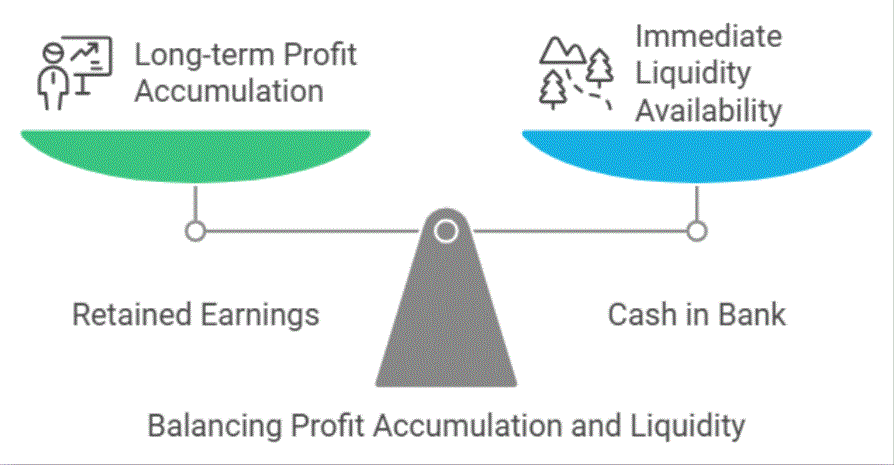
Looking at net income alone is like seeing only half the picture of your business’s financial story. While net income shows how much money your business made during a specific period, it doesn’t tell you what happened to that money afterward. This is where retained earnings come into play, especially when you’re paying out dividends to shareholders or taking owner distributions from the business.
Retained earnings work differently from your regular profit and loss statements. Instead of showing you how much cash you have right now, they give you a big-picture view of your business’s accumulated profits since day one, minus any money that’s been paid out to owners or shareholders. Think of it as your business’s lifetime report card – it shows how well you’ve done at keeping and reinvesting profits over time.
One common misconception is that retained earnings are the same as cash in the bank. They’re not. You might have high retained earnings but low cash if you’ve invested your profits in equipment or inventory. Or you could have low retained earnings but high cash if you’ve recently taken out a loan. Understanding this difference is key to making better business decisions.
“Retained earnings do not involve cash flow. Instead, it’s a measurement of your profit and losses since a certain date,” explains cashflowfrog.com.
This profit and loss doesn’t include accounting for the dividends that you pay out.
Comparing Reserves and Retained Profits

When it comes to business finances, it’s easy to mix up retained earnings and reserves. While they might sound similar, they serve different purposes in your business. Let’s break down these differences in simple terms that anyone can understand.
Retained earnings are like your business’s lifetime savings – they represent all the profits you’ve kept in the business since it started, minus any dividends paid out. They’re not a choice; they’re simply a record of what has happened with your profits over time. Think of them as your business’s financial history book.
Reserves, on the other hand, are more like specific savings accounts you create for particular purposes. They’re intentional set-asides of money for future needs or opportunities. You might have a reserve for buying new equipment, another for expanding to a new location, and another for emergency expenses. These are active choices you make about setting money aside.
Earnings and reserves may seem like the same thing, but they’re different measurements of a business’s financial health. The main difference is:
- Retained earnings relate to the profits of a company over a specific period of time
- Reserves are profits or funds that you’ve set aside for a purpose
For example, you may start to build up reserves to expand your operations or to pay out dividends to shareholders. However, you either have retained earnings or do not – there’s no way to save for these earnings.
Reserves in a business can be used for anything:
- Bonuses
- Expansion
- Investing
- Equipment
Your retained earnings must be disclosed publicly in your earnings and are meant to help with financing operations, paying dividends or reinvesting. Many businesses have reserves that they do not disclose and will use to offset slow periods, leverage opportunities and more.
Calculating Retained Earnings
Calculating retained earnings might sound complicated, but it’s actually quite straightforward once you understand the basic formula. However, accuracy is crucial because this number affects important business decisions and financial reporting. That’s why most successful businesses either use specialized accounting software or work with professional accountants to track their retained earnings.
The calculation starts with gathering key financial information from your business records. You’ll need your previous retained earnings balance (sometimes called beginning equity), your net income or loss for the current period, and any dividends you’ve paid out. Each of these numbers tells part of your business’s financial story, and together they create a complete picture of your retained earnings.
For those who prefer to handle their own calculations, accounting software can be a lifesaver. Modern accounting programs automatically track these numbers and can generate retained earnings statements with just a few clicks. This not only saves time but also reduces the chance of manual calculation errors. Plus, many of these programs can create visual reports that make it easier to understand trends in your retained earnings over time.
Retained Earnings: How Do Accountants Calculate?
The standard formula for calculating retained earnings is to first gather information on the following:
- Beginning equity
- Net income
- Net losses
- Dividends paid
Once you have this information, you’ll then add your equity and net income together. Next, you’ll subtract your net losses and then subtract your dividends paid out to come up with your retained earnings.
Let’s look at an example:
- Beginning equity = $100,000
- Net income = $25,000
- Net losses = $45,000
- Dividends paid = $15,000
In this case, we would add $100,000 + $25,000 = $125,000. Then, we would subtract $125,000 – $45,000 = $80,000 – $15,000 = $65,000 in retained earnings.
You can also decide to calculate your retained earnings as the total of your profits and losses minus any dividends paid out.
Accountants who work on your profit and loss statement will quickly determine this figure and provide you with insight into how dividend payments will impact your operations. An accountant can also look outside of the formula to help you understand how company changes are driving your business, such as how dividends may have been better used for other purposes.
What Are Some Uses for Retained Earnings?
Retained earnings are capital that you can use to your company’s advantage if you wish. While there are many ways that you can use this resource, the most common include:
- Expansion is one of the ways that large businesses use these earnings. You can use the funds to develop new products or even grow existing offices.
- Investment in either other businesses or equipment is an option, but it does come with risks. If you invest the funds properly, it can lead to higher returns in the future. The key to success is using your due diligence to invest your earnings properly.
- Reduce debt with your earnings and lower your business risks. Many businesses will use their retained earnings to pay off any high-interest debts that they have, which will work to improve debt ratios and allow a business to withstand slow periods with greater ease.
- Repurchase shares in the business, allowing your business to reduce outstanding shares. However, working with an accountant to understand the ramifications of this decision is highly recommended.
Businesses must decide what to do with their retained earnings because if the funds are used properly, it can lead to greater revenue, lower debt and expansion into new markets.
Final Thoughts
Understanding and properly managing retained earnings is crucial for any business’s long-term success. While net income gives you a snapshot of your business’s profitability at a specific moment, retained earnings tell the fuller story of your business’s financial journey and decision-making over time.
Reviews from Business Owners
“This guide helped me understand why my profitable business sometimes struggled with cash flow. Understanding the difference between retained earnings and actual cash has made me a better business planner.” – A Restaurant Owner with 15 years of experience
“The explanation about reserves versus retained earnings finally cleared up my confusion. I now feel more confident in making decisions about reinvesting in my business.” – A Retail Store Owner of 8 years
“As someone who just started tracking their retained earnings, this article broke down complex concepts into digestible pieces. It’s become an essential part of my financial planning.” – A Tech Startup Founder