

These days subscription models are becoming more and more revolutionary. Well, fou can find subscriptions on almost anything, from a deodorant subscription, travelling + hotels, food delivery to services that stream your favorite shows.
Subscriptions provide great opportunities for businesses and customers alike. On the one hand, they save time and take tasks off the customer’s list and on the other, they help businesses generate predictable revenue and increase customer engagement as long as they provide ongoing value for their subscriptions.
Contents
- 1 How Does Subscription Work?
- 2 So Many Subscriptions, So Little Time
- 3 Consider Why You Want the Subscription
- 4 Examine Your Subscription Budget
- 5 Match Prices
- 6 Learn About Their Cancellation Policies
- 7 Additional Tips for All Subscriptions:
- 8 Watch Out for Automatic Renewals: Setting Reminders
- 9 The Bottom Line
How Does Subscription Work?
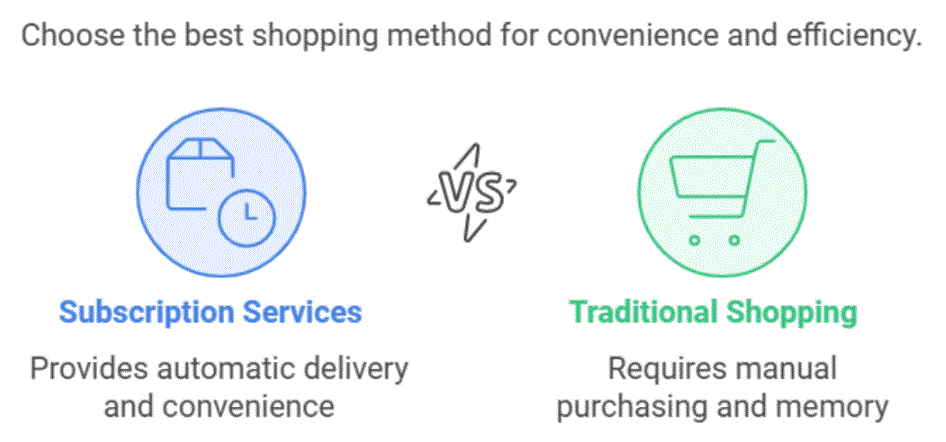
The idea behind subscriptions is pretty simple, but it’s quite different from how we used to shop. Instead of going to the store whenever you need something, subscription services bring products or provide services to you regularly – usually monthly or yearly. Think of it like having a magazine subscription, but now you can get almost anything this way. When you sign up for a subscription, you’re basically telling a company, “Yes, I want this thing regularly and I agree to pay for it each month (or year).” The company then promises to deliver what you want without you having to think about ordering it again.
For example: Let’s say you drink a lot of coffee and go through one bag of beans every week. With a traditional shopping method, you’d need to remember to buy coffee beans every time you run low. But with a coffee subscription, fresh beans show up at your door exactly when you need them. The company knows to send them and your credit card gets charged automatically. This automatic system is what makes subscriptions different from regular shopping – it’s like having a personal assistant who remembers to buy things for you right when you need them.
So Many Subscriptions, So Little Time

These days, it seems like everywhere you look, there’s a new subscription service popping up. From big companies like Amazon with their Prime membership to small local businesses offering monthly boxes of fresh produce, everyone’s getting in on the subscription game. This huge variety of options can make our lives easier in many ways – imagine never running out of your favorite shampoo because it arrives right when you need it or always having fresh workout clothes because of your quarterly activewear subscription. But here’s the tricky part: while all these subscriptions promise to make life simpler, they can quickly add up and put a real strain on your wallet if you’re not careful.
Companies love subscription models because they can count on regular income from their subscribers. They know exactly how much money they’ll make each month, which helps them plan better. Plus, they’re counting on something called the “set it and forget it” mindset – where people sign up for subscriptions and then forget to cancel them even if they’re not using the service anymore. That’s why it’s super important to be smart about which subscriptions you choose. Think about streaming services, for example. While having access to Netflix, Disney+, Hulu and HBO Max might sound great, do you really have time to watch shows on all of them? Most people don’t, which means they’re paying for services they barely use.
Consider Why You Want the Subscription
Before jumping into any subscription service, it’s really important to think about why you want it in the first place. Just because something is available as a subscription doesn’t automatically mean it’s a good deal or that you need it. Think of it like grocery shopping – buying something just because it’s on sale isn’t saving money if you weren’t going to buy it anyway. The same goes for subscriptions. The key is to look for subscriptions that align with things you already use and need regularly. For example, if you’re someone who orders takeout three times a week, a meal kit subscription might actually help you save money while eating healthier. Or if you find yourself running to the store every month for the same toiletries, a subscription service that delivers these items might save you both time and money.
Take some time to look at your regular spending habits. What do you buy over and over again? These repeated purchases might be good candidates for subscriptions. Let’s say you spend $15 every week on coffee beans at your local shop. A coffee subscription might offer those same beans for $12 per delivery, saving you $12 each month. That’s the kind of subscription that makes sense – it’s something you already buy regularly and the subscription actually helps you save money. On the other hand, signing up for a monthly box of random snacks just because it sounds fun might not be the best use of your money if you’re trying to save.
Examine Your Subscription Budget
One of the trickiest things about subscriptions is how they can sneak up on your budget. Each individual subscription might seem affordable – $10 here, $15 there – but when you add them all up, you might be surprised at how much you’re spending each month. That’s why it’s super important to sit down and really look at all your current subscriptions. Make a list of everything you’re subscribed to, from streaming services to monthly delivery boxes. Write down how much each one costs and, most importantly, write down how often you actually use each service.
You might discover some surprising things when you do this. Maybe you’re paying for three different music streaming services when you only really use one. Or perhaps you’ve got a gym membership subscription that you haven’t used in months. Look for overlaps too – do you really need both Netflix and Hulu or could you choose just one? Sometimes people find they’re spending over $100 a month on subscriptions they barely use. The good news is that once you know where your money is going, you can make better choices about which subscriptions are worth keeping and which ones you can cancel. Remember, you can always re-subscribe later if you find you really miss a service.
Match Prices
Just because something comes as a subscription doesn’t automatically mean it’s the best deal. This is where being a smart shopper really pays off. Take the time to compare subscription prices with regular retail prices, including sales and bulk buying options. For example: Let’s say you’re looking at a subscription for paper towels that costs $20 per month for four rolls. Before signing up, check how much those same paper towels would cost if you bought them in bulk at a store or during a sale. You might find that buying a 12-pack during a store sale for $45 is actually cheaper per roll than the subscription.
It’s also worth looking at different subscription options for the same type of service. Many companies offer similar services and their prices and terms can vary quite a bit. For example, if you’re interested in a meal kit subscription, compare several services to see which one gives you the best value for your specific needs. Look at things like portion sizes, delivery frequency options and whether they offer the kinds of meals you actually want to eat. Remember to factor in any sign-up bonuses or new customer discounts, but don’t let these temporary savings be the only reason you choose a service. Think about the long-term, regular price you’ll be paying after any promotional periods end.
Learn About Their Cancellation Policies
Most businesses do not provide refunds when a subscription or membership is canceled. When a cancellation occurs, the customer retains access to the subscription until the cancellation becomes effective. Another thing to remember is that most subscriptions are set to renew automatically, so make sure you set a reminder.
Subscription Cancellation Policies: What You Need to Know
| Type of Service | Common Cancellation Methods | What to Watch For | Tips to Avoid Charges |
|---|---|---|---|
| Streaming Services<br>(Netflix, Hulu, Disney+) | • Online through account settin • Mobile app • Email support | • Auto-renewal dates • Partial month charges • Shared account complications | • Mark renewal dates in calendar • Cancel 1-2 days before renewal • Screenshot cancellation confirmation |
| Meal Kit Services<br>(HelloFresh, Blue Apron) | • Online account management • Phone call require • Skip weeks option | • Weekly deadline dates • Next box cut-off times • Ingredient preparation status | • Set weekly reminders • Cancel at least 5-7 days ahead • Consider pausing instead of canceling |
| Beauty/Grooming Boxes (Ipsy, Dollar Shave Club) | • Online cancellation form • Customer service chat • Email request | • Billing cycle dates • Subscription tier locks • Pre-packed box policies | • Check billing dates monthly • Cancel before next box preparation • Save confirmation emails |
| Gym Memberships | • In-person visit required • Certified letter • Online form + phone call | • Contract length requirements • Cancellation fees • Notice period length | • Review contract before signing • Keep proof of cancellation request • Submit cancellation in writing |
| Digital Services (Cloud Storage, Apps) | • Account settings • App store management • Website dashboard | • Annual vs. monthly renewals • Data retention policies • Connected device implications | • Check all linked account • Download important data first • Verify subscription status |
| Shopping Memberships (Amazon Prime, Costco) | • Online cancellation • Customer service call • Store visit (retail) | • Refund eligibility • Benefits end da • Linked services impact | • Track renewal date • Check for partial refunds • Review connected accounts |
| Magazine/News Subscriptions | • Phone call required • Online account • Mail-in request | • Auto-renewal terms • Early cancellation fe • Digital access end dates | • Keep subscription ID handy • Document all communication • Check credit card statements |
| Software Services (Adobe, Microsoft) | • Account management portal • Phone support • Email request | • Annual contract terms • Early termination fees • Data export deadlines | • Review license terms • Back up all data • Check for business vs. personal terms |
| Pet Supply Services (Chewy, BarkBox) | • Online account settings • Phone ca • Email support | • Next shipment dates • Auto-ship schedules • Return policies | • Track shipping schedules • Cancel before processing date • Check upcoming orders |
| Music Services (Spotify, Apple Music) | • Account settings • App management • Platform specific tools | • Family plan complications • Device authorization • Playlist backup needs | • Check linked accoun • Save personal playlists • Review payment method |
Additional Tips for All Subscriptions:
Record dates and times of phone calls
Documentation is Key:
- Save all cancellation confirmations
- Keep track of confirmation numbers
- Screenshot or print important pages
Payment Protection:
- Review credit card statements monthly
- Consider using virtual card numbers
- Keep records of all charges
Timing Matters:
- Cancel early in billing cycle when possible
- Watch for holiday/weekend processing delays
- Consider time zone differences
Communication Records:
- Save all email correspondence
- Note names of customer service reps
Watch Out for Automatic Renewals: Setting Reminders
Here’s something that catches a lot of people by surprise: most subscriptions these days automatically renew. This means that unless you specifically tell them to stop, the company will keep charging you and providing the service. While this can be convenient when it’s a service you want to keep using, it can be a real problem if you forget about it or no longer need the service. The tricky part is that these automatic renewals often happen without any warning and before you know it, you’re paying for another month or even another year.
To avoid surprising charges, it’s smart to set up a system to track your subscriptions. You could add reminders to your phone’s calendar about when each subscription is due to renew. Make these reminders pop up a few days before the renewal date so you have time to cancel if you want to. Another good tip is to keep a simple list (either on your phone or in a notebook) of all your subscriptions, their costs and their renewal dates. Some people even use special apps that track subscriptions for them. Whatever method you choose, the important thing is to stay aware of when your money is going to be charged.
The Bottom Line
These days subscriptions can either be your best friend or a drain on your wallet – it all depends on how smartly you use them. The key is to be picky about which subscriptions you keep. Choose ones that truly save you money on things you already buy regularly or that provide a service you use often enough to make it worth the cost. Don’t fall into the trap of signing up for everything just because it seems convenient.
Think of your subscriptions like a garden – they need regular maintenance to stay healthy. Set aside time every few months to review all your subscriptions. Ask yourself: Am I really using this service? Could I get better value somewhere else? Have my needs changed? Just like you might pull weeds from a garden, don’t be afraid to cancel subscriptions that aren’t serving you well anymore. Remember, most companies are counting on you to set up your subscriptions and forget about them. But by staying aware and actively managing your subscriptions, you can make sure they’re working to make your life easier and saving you money, not just automatically draining your bank account every month.