

A church requires energy the same as any other building does. All day-to-day activities require the use of energy. However, with the increase in the prices of electricity bills, it has become highly important to cut down on the use of energy to save on uneconomical electricity bills.
With an increase in the population, the demand for electricity and other resources has increased while the resources are scarce. This causes the prices of electricity to rise due to the increased demand. Energy costs are the largest monthly expense of churches since it is a public worship places; they need to have lights on so that people can reach the church.
The inside temperature must be comfortable with properly functioning air conditioning and heating units, which requires the use of energy. An energy-efficient church would mean a smaller portion of the budget spent on paying bills and more on helping others.
There are many ways that a church can use to reduce energy waste which costs very little, and there are other ways that require some initial investment but, in the long run, can reap a lot of benefits for many years.
Contents
Maintenance
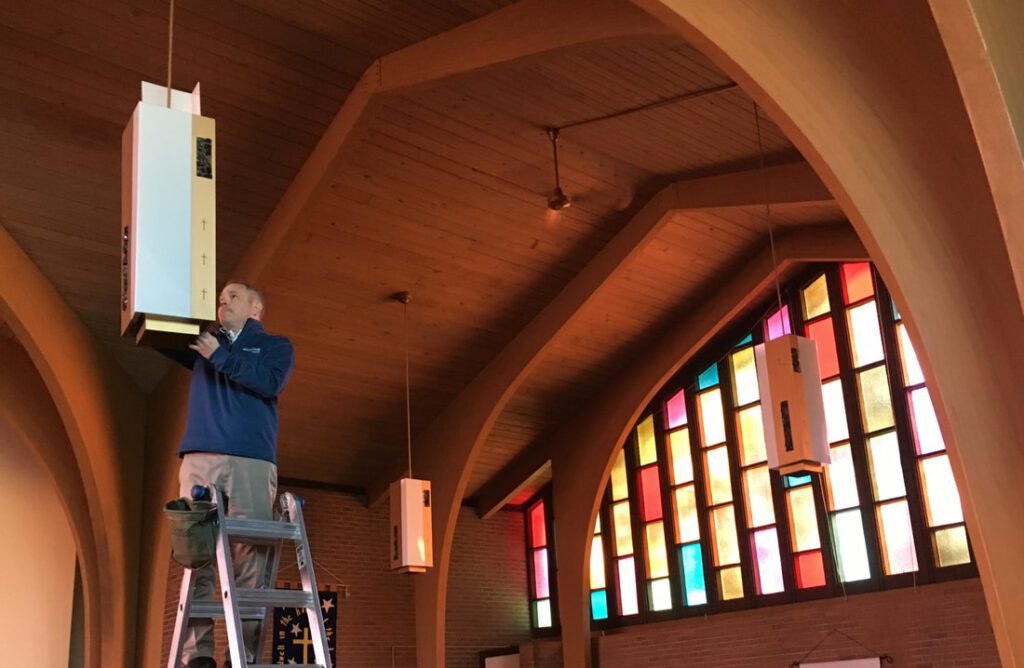
A lot of times, energy is wasted without you realizing it. Since churches have many windows, heating or cooling, if any window or door is open, it can result in a waste of energy.
Check to see any leaks in ducts and seal them tightly. Simple steps to stop cold air from leaking out and hot air from entering during summers, and cold air from entering the church during winters can reduce electricity bills. You can install caulk and weather strips on windows and doors.
Led-Based System

A church needs to have a lot of lights in order for the people to reach the church. Changing traditional light bulbs to Led based energy-saving light bulbs and compact fluorescent light bulbs will not only reduce energy wastage, but it will also reduce the high cost of electricity while providing the same amount of light as the traditional ones.
You can use dimmer switches that reduce the amount of artificial light during day time when natural light comes in through the windows that are enough to light up the church. Moreover, during the day time and when the church is unoccupied, the lights can be closed or reduced in order to save on energy.
Install light sensors that can automatically close lights when there is no one in certain rooms and instruct the church staff and volunteers to do the same. This reduction in the electricity bill can be used elsewhere for the welfare of the people.
Heating And Cooling
During the winters, it is important that the church is heated properly, and in the summers, the church is cool so that people can come to the church. Heating and Air conditioners may be expensive and require a lot of maintenance.
However, you can reduce the energy usage of the heating and cooling systems by installing newer equipment to reduce the electricity bill, as worn-out equipment requires more energy. A programmable thermostat can be used to control the temperature accordingly when it is being used.
Moreover, air filters need to be cleaned every month; church staff needs to take care of cleaning the air filters so that they don’t get clogged. If they do, they will require more energy to heat or cool the church resulting in energy wastage.
Also, if there are any rooms in the church that are not being used, then close the air vents to that room to save energy. You can also install ceiling fans to work with the air conditioner during the summers, which can conserve more electricity as you can use them only when the room is occupied and turn the air conditioner off.
The ceiling fans require a small amount of energy compared to the air conditioners, which is a huge waste of energy and also damaging to the environment.
Manage Schedules
During the working and busy days, there is a need for energy consumption by the various departments of the church. They can schedule the use of energy and align their work in a way that uses the least amount of energy.
For example, church cleaning can be done during the day when the church is busier instead of at night to conserve energy.
Design
When building a church or making changes to the existing church, you can use some techniques to minimize energy consumption. A lighter-coloured roof can reduce energy costs. The equipment that you choose to add should be energy-efficient models, along with that adding pew chairs for church is a good idea.
Think of long-run benefits when deciding on the design and facilities that you want to add to the church. Churches prioritize energy conservation to decrease their monthly bills and reduce energy consumption.
Moreover, they also work towards reducing their contributions to environmental degradation, which is why they conserve energy and reduce wastage.
Energy Audit
You can conduct an energy audit and analyze the energy efficiency of the church and provide solutions where the energy is being used the most or where it is being wasted.
Energy audits can be done by leaders of the church, or you can hire a professional for a more accurate analysis that can increase the church’s efficiency and reduce electricity bills simultaneously.
Other Measures
Other measures that you can take to reduce electricity wastage can be by switching any appliance off from the main source as plugged-in appliances also use some energy that causes wastage.
Thus, church staff need to be instructed to close all electronic devices, such as computers and other appliances, in the church. Take care of these small areas where energy can be wasted.
Finally, churches can conserve electricity in many ways that can result in reduced utility bills. You can also use a business energy comparison to see if you are being provided expensive rates that will help cut down utility bills.
These reductions in bills would give the church a more flexible budget that they can spend on helping others, giving to charities, organizing drives, and donating events to work for the community.
Case Studies: Energy Conservation in Churches
Case Study 1: St. Mark’s Episcopal Church
Problem: St. Mark’s, a historic church in downtown Atlanta, was struggling with skyrocketing energy bills. The church treasurer, Sarah, reached out to me in desperation, explaining that their monthly utility costs had nearly doubled in the past year.
Solution: After conducting an energy audit, we identified several issues:
- Outdated lighting fixtures
- Poorly sealed windows and doors
- An inefficient HVAC system
We implemented a phased approach:
- Replaced all lighting with LED bulbs
- Installed weather stripping and caulked windows
- Upgraded to a programmable thermostat
Result: Within six months, St. Mark’s saw a 35% reduction in their energy bills. Sarah was thrilled, saying, “Payal, your advice has allowed us to redirect thousands of dollars from utility payments to our community outreach programs.”
Case Study 2: New Life Baptist Church
Problem: Pastor John from New Life Baptist Church in Phoenix contacted me about their uncomfortable sanctuary. During summer services, parishioners were sweating, while in winter, they were shivering. The energy bills were also a significant burden on the church’s budget.
Solution: Upon inspection, we found:
- The HVAC system was outdated and inefficient
- The building lacked proper insulation
- Large windows were allowing heat transfer
We took the following steps:
- Installed a new, energy-efficient HVAC system
- Added insulation to the attic and walls
- Applied UV-blocking film to the windows
Result: The church saw immediate improvements. Pastor John reported, “Our congregation is now comfortable year-round, and our energy bills have decreased by 40%. Your suggestions have been a true blessing, Payal.”
Case Study 3: Lakeside Community Church
Problem: The finance committee at Lakeside Community Church, led by Treasurer Mike, was concerned about their high electricity usage, particularly during off-hours when the building was mostly empty.
Solution: After analyzing their energy consumption patterns, we implemented:
- Occupancy sensors for lighting in less-used areas
- A smart power management system for office equipment
- Staff training on energy conservation practices
Result: Mike was ecstatic with the outcomes. “Payal, your innovative solutions have cut our off-hours energy usage by 60%! We’re now able to allocate more funds to our youth programs and local charity initiatives.”
These case studies demonstrate how tailored energy conservation strategies can significantly impact a church’s budget and comfort levels, allowing them to better serve their communities.