

Let’s talk about medical cannabis in Florida. If you’re thinking about using it or already do, there’s some stuff you should know. It’s not as simple as just walking into a store and buying what you want. There are rules, and knowing them helps you stay on the right side of the law. In recent years, Florida has become one of the leading states in the U.S. for its medical cannabis program. The state has seen a rise in the number of patients seeking cannabis-based treatments for various health conditions. With this growth, it has become increasingly important to understand the laws and ordinances surrounding its use. Knowing these laws helps ensure patients have a safe and legal experience.
First off, Florida legalized medical cannabis back in 2016(Governor Rick Scott signed into law Senate Bill 1030 – the “Compassionate Medical Cannabis Act). It was a big deal. Before that, if you needed cannabis for health reasons, you were out of luck. Now, if a doctor says you need it, you can get it. But there’s a process.
Why should you care about all this? Well, if you’re in pain or dealing with a tough illness, medical cannabis might help. It’s worked for lots of people. But you can’t just decide on your own to use it. You need to do it the right way.
If you’re planning to visit a dispensary, there are a few things to keep in mind:
- You need a card. It’s like a special ID that says you’re allowed to buy medical cannabis.
- There are limits on how much you can buy. It’s not a free-for-all.
- You can’t use it just anywhere. There are rules about where it’s okay to use your medicine.
Before visiting a Florida dispensary, patients must familiarize themselves with the state’s laws. These laws govern who is eligible for treatment and how cannabis products can be legally obtained. Understanding the necessary steps for acquiring a medical marijuana card is crucial. This article goes through the significant aspects of Florida’s regulations to help ensure a smooth and compliant experience for every visitor.
Contents
- 1 Eligibility for Medical Cannabis Use in Florida
- 2 How to Obtain a Medical Marijuana Card
- 3 Purchasing Products from a Florida Dispensary
- 4 The Role of Dispensaries in Patient Education
- 5 Understanding the Penalties for Violating Cannabis Laws
- 5.1 1. You violated the Florida Comprehensive Drug Abuse Prevention and Control Act [Florida Statute 893.13] if you:
- 5.2 2. You violated the Florida Medical Marijuana Legalization Initiative [Amendment 2] if you:
- 5.3 3. You violated the Federal Controlled Substances Act if you:
- 5.4 4. You violated local ordinances if you:
Eligibility for Medical Cannabis Use in Florida
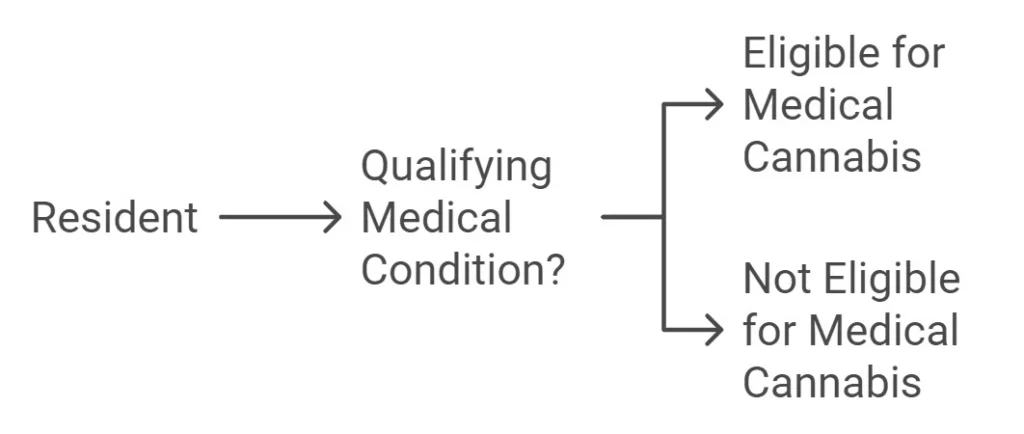
Florida’s program is designed specifically for individuals with qualifying medical conditions. Not every resident is eligible to receive treatment. Okay, so who can actually use medical cannabis in Florida? It’s not for everyone. The state has a list of conditions that qualify. Here’s the deal:
Florida’s medical marijuana program is governed by the Compassionate Medical Cannabis Act of 2014 [Florida Statute 381.986]. This law spells out who can use medical cannabis and how.
Here’s a quick rundown:
- You need to have a “qualifying condition.” It’s not just about having a headache or feeling stressed.
- A doctor has to say that the benefits of using cannabis outweigh the risks for you.
- You have to be a Florida resident. Tourists can’t just come in and get medical cannabis.
Now, let’s look at those qualifying conditions:
- Cancer,
- Epilepsy,
- Glaucoma,
- HIV/AIDS,
- PTSD (Post-traumatic stress disorder),
- ALS (Amyotrophic lateral sclerosis),
- Crohn’s disease,
- Parkinson’s disease,
- Multiple sclerosis.
Patients must be diagnosed with one of the approved conditions, which include but are not limited to cancer, epilepsy, chronic pain, multiple sclerosis, and post-traumatic stress disorder (PTSD). Patients seeking this treatment must first consult with a certified physician who can determine whether their condition qualifies under state law.
But wait, there’s more. The law also includes a catch-all for “medical conditions of the same kind or class” and for terminal conditions. So if your condition isn’t on the list but it’s similar or really serious, you might still qualify. One more thing: if you have chronic pain, you might be eligible. But here’s the catch – it has to be pain caused by one of the qualifying conditions. You can’t just say “My back hurts” and get a card.
How to Obtain a Medical Marijuana Card

A medical marijuana card is essential for any individual seeking treatment in Florida. The process to obtain this card involves several steps.
In Quick: First, patients must plan an appointment with a physician certified by the state to recommend these treatments. After an in-depth consultation and approval, the physician will submit the patient’s information to the Medical Marijuana Use Registry. Once this step is completed, the patient must apply for the card through the Office of Medical Marijuana Use (OMMU) and pay the required fee. With the card, patients can visit licensed dispensaries to purchase their products. It’s important to note that the card must be renewed annually, with an updated consultation from a certified physician.
Let’s say you’re a Tallahassee resident trying to get a medical marijuana card. Here’s how it might go down:
- First, you need to find a qualified doctor. Not every doctor can recommend cannabis. You need one who’s certified by the state to do it.
- You set up an appointment. When you go in, bring your medical records. The doctor needs to see that you actually have a qualifying condition.
- The doctor checks you out. If they think cannabis might help, they’ll enter your info into the state’s Medical Marijuana Use Registry.
- Now it’s your turn. You need to apply for your Medical Marijuana Use Registry (MMUR) identification card. You can do this online, which is easier, or by mail if you’re old school.
- You’ll need to provide some stuff with your application:
- A photo of yourself (think passport photo)
- Proof that you live in Florida (like a driver’s license or utility bill)
- The application fee (it’s $75 as of now)
- Then you wait. It usually takes about 10 business days for them to process your application.
- If everything checks out, they’ll send you your card. Congrats! You’re now legally allowed to buy medical cannabis in Florida.
But here’s the thing – it’s not a one-and-done deal. You need to see your doctor regularly (usually every 7 months) to keep your certification active. And you have to renew your card every year.
MMUR Identification Cards
The card is your golden ticket. Without it, you can’t buy medical cannabis, even if a doctor says you need it. Here’s what you need to know:
- Both patients and caregivers need cards. If someone’s helping you with your medical cannabis, they need their own card too.
- The card has your photo on it. It’s to make sure no one else can use your card.
- You need to have your card with you whenever you buy or have medical cannabis. It’s like carrying your driver’s license – don’t leave home without it.
- The card expires after a year. The state will send you a reminder to renew about 45 days before it expires.
- If you lose your card or it gets stolen, you need to tell the state right away and get a new one.
How to Apply:
- Go online. The state prefers you do it this way. It’s faster and easier for everyone.
- Fill out the application. Be careful to get everything right. Mistakes can slow things down.
- Upload your photo and proof of residency.
- Pay the fee.
- Submit and wait.
If you’re not good with computers, you can do it by mail. But it takes longer, and there’s more chance of something going wrong.
Remember, the card doesn’t mean you can buy as much as you want. Your doctor sets limits on how much you can get. The dispensary can see these limits when they check your card.
Application Requirements
When you’re applying for your card, you need to have your ducks in a row. Here’s what you’ll need:
- A valid email address. They’ll send you important stuff this way.
- A recent photo. Think driver’s license style – head and shoulders, plain background.
- Proof you live in Florida. This could be:
- Your Florida driver’s license
- A Florida ID card
- A utility bill with your name and address
- A deed or lease agreement
- If you’re a seasonal resident (snowbird), you need to prove you live in Florida at least 31 days in a row each year, and maintain a place to live in Florida.
- The $75 application fee. You can pay by credit card online, or by check or money order if you’re mailing it in.
For caregivers, there’s extra stuff:
- You need to be at least 21 (unless you’re the parent of a minor patient)
- You can’t be a qualified physician or work for one
- You can only be a caregiver for one patient (unless they’re your close relatives)
Application Approval Process
Once you hit “submit” on your application (or drop it in the mail), here’s what happens:
- The state checks your application. They make sure everything’s there and looks right.
- If something’s missing, they’ll email you. This is why having a good email address is important.
- If everything’s good, they process your payment.
- Then they do a background check. This is mostly to make sure you actually live in Florida.
- If you pass all that, they approve your application and make your card.
Right now, it’s taking about 10 business days from when they get a complete application to when they approve it. But that can change depending on how busy they are.
Once you’re approved, you can buy medical cannabis right away. You don’t have to wait for the physical card to come in the mail. The dispensaries can check your approval online.
Need Help?
If you’re stuck or confused, don’t worry. The state has people you can talk to:
- You can call 800-808-9580 for help with your application.
- There are step-by-step guides on the state’s website. They walk you through common stuff like how to log in to the registry or how to renew your card.
Remember, the people at the dispensary can’t help you get your card. That’s between you, your doctor, and the state. But once you have your card, they can help you figure out what products might work best for you.
Legal Possession and Use Limits
One key element of Florida’s laws is the regulation of possession and usage limits. The OMMU determines the time frame within which patients can purchase specific products. Typically, these limits include a 35-day supply of cannabis flowers and a 70-day supply of other forms, such as tinctures and capsules.
Patients should be aware that the law prohibits the smoking of cannabis in public places, workplaces, and schools. Consumption is strictly limited to private residences or other approved areas. Understanding and adhering to these possession and use limits is crucial for anyone visiting a Florida dispensary.
Purchasing Products from a Florida Dispensary
So you’ve got your medical marijuana card. Great! Now what? you are free to visit any licensed dispensary in the state. Florida’s dispensaries offer various products, from dried flowers and oils to edibles and topicals. Patients can speak with knowledgeable staff at the dispensary, who can guide them in choosing the right products based on their medical needs.
Here’s the nitty-gritty on buying from Florida dispensaries:
- Finding a dispensary:
- You can go to any licensed dispensary in Florida. You’re not tied to just one.
- Look online for dispensaries near you. Some big names are Trulieve, Curaleaf, and MÜV, but there are others too.
- What to bring:
- Your medical marijuana card. A physical card is best, but a clear photo on your phone can work in a pinch.
- A valid photo ID (like your driver’s license). They’ll check this too.
- Cash. Many dispensaries are cash-only because of federal banking laws.
- Products you can buy:
- Dried flower (for vaping, not smoking)
- Oils and tinctures
- Vape cartridges
- Edibles (like gummies)
- Topicals (creams, lotions)
- Capsules
- Limits:
- Your doctor sets limits on how much you can buy. The dispensary can see this when they check your card.
- Generally, you can buy up to a 70-day supply at once.
- First-time tips:
- Plan to spend some time there. There might be paperwork, and you’ll want to ask questions.
- Tell them it’s your first time. Many places offer first-time customer discounts.
- Don’t be shy about asking questions. That’s what the staff is there for.
- Using your purchase:
- Keep your receipt. It’s proof that you bought it legally.
- Use it at home or in private. You can’t use it in public places.
- Don’t share it. Your medicine is just for you.
- Some popular dispensaries:
- Trulieve: They’re all over Florida. Known for having a wide selection.
- Curaleaf: Another big chain. They often have good deals.
- MÜV: They’re known for their concentrates and topicals.
- Surterra Wellness: They focus a lot on wellness and have a clean, pharmacy-like feel.
Remember, prices and selection can vary between dispensaries. It’s okay to shop around and find what works best for you.
The Role of Dispensaries in Patient Education
A significant feature of Florida’s program is the dispensaries’ role in patient education. Licensed facilities prioritize patient understanding, offering guidance on how to use products safely and effectively. Patients visiting a dispensary for the first time may feel overwhelmed by the choices available. Still, staff are well-trained to provide information and advice on dosages, product types, and consumption methods. Education is a cornerstone of the dispensary experience, empowering people to make educated decisions about their treatment.
Now, let’s talk about what dispensaries should be doing to help you out. If you’re running a dispensary, pay attention. If you’re a patient, this is what you should expect:
- Clear signage:
- The outside should clearly say it’s a medical cannabis dispensary.
- Inside, products should be clearly labeled with THC/CBD content and usage instructions.
- Knowledgeable staff:
- Budtenders (that’s what they call the staff) should know their stuff.
- They should be able to explain different strains, products, and their effects.
- If they don’t know something, they should be honest and find someone who does.
- Patient-first attitude:
- Staff should be patient and willing to answer questions.
- They shouldn’t rush you, even if there’s a line.
- They should ask about your medical needs and preferences.
- Educational materials:
- Dispensaries should have brochures or flyers about different products.
- They should offer info on safe usage, storage, and potential side effects.
- Some might have tablets or screens with educational content.
- Consultation areas:
- There should be a private area where you can ask questions without everyone hearing.
- Clear pricing:
- Prices should be clearly displayed.
- Staff should explain any discounts or loyalty programs.
- Product variety:
- They should offer a range of products to suit different needs.
- If they don’t have what you need, they should be able to suggest alternatives.
- Safety first:
- They should remind you about safe storage, especially if you have kids or pets at home.
- They should warn you about not driving or operating machinery when using your medicine.
- Community resources:
- Good dispensaries often know about local support groups or other resources for patients.
- Follow-up:
- Some dispensaries might offer follow-up calls to see how you’re doing with your products.
Understanding the Penalties for Violating Cannabis Laws
Here’s a breakdown of common ways you might break Florida’s cannabis laws and what could happen if you do:
1. You violated the Florida Comprehensive Drug Abuse Prevention and Control Act [Florida Statute 893.13] if you:
- Possessed cannabis without a valid medical marijuana card
- Less than 20 grams: First-degree misdemeanor
- Up to 1 year in jail and $1,000 fine
- More than 20 grams: Third-degree felony
- Up to 5 years in prison and $5,000 fine
- Less than 20 grams: First-degree misdemeanor
- Sold or distributed cannabis without a license
- Third-degree felony
- Up to 5 years in prison and $5,000 fine
- If within 1,000 feet of a school, park, or other specified areas: Second-degree felony
- Up to 15 years in prison and $10,000 fine
- Third-degree felony
- Grew cannabis plants at home
- Up to 24 plants: Third-degree felony
- Up to 5 years in prison and $5,000 fine
- 25 or more plants: Second-degree felony
- Up to 15 years in prison and $10,000 fine
- Up to 24 plants: Third-degree felony
2. You violated the Florida Medical Marijuana Legalization Initiative [Amendment 2] if you:
- Used medical marijuana in public places
- Civil fine, amount varies by location
- Drove under the influence of cannabis
- DUI charge: Misdemeanor or felony depending on circumstances
- Penalties can include license suspension, fines, and jail time
- DUI charge: Misdemeanor or felony depending on circumstances
- Gave or sold your medical marijuana to someone else
- Could be charged with drug distribution: Third-degree felony
- Up to 5 years in prison and $5,000 fine
- Could be charged with drug distribution: Third-degree felony
3. You violated the Federal Controlled Substances Act if you:
- Transported cannabis across state lines
- Federal crime: Felony
- Penalties vary but can include lengthy prison sentences and hefty fines
- Federal crime: Felony
- Possessed cannabis on federal property (like national parks)
- Federal crime: Misdemeanor or felony depending on the amount
- Penalties can include fines and prison time
- Federal crime: Misdemeanor or felony depending on the amount
4. You violated local ordinances if you:
- Consumed cannabis in areas prohibited by city or county laws
- Usually results in civil fines
- Amounts vary by location
Remember:
If you’re charged with a cannabis-related crime, it’s a good idea to talk to a lawyer who knows about drug laws in Florida. Having a medical marijuana card doesn’t make you immune to all these laws. You still need to follow the rules about where and how you can use it.
Cannabis is still illegal under federal law. While Florida allows medical use, you could face federal charges in some situations. Penalties can be more severe for repeat offenses or if other crimes are involved.