

To achieve cost savings in a business, it is essential to implement a plan aimed at reducing expenses. This plan will help you to figure out the financial bottom line of your business and how and where expenses are made. According to this plan, you can find ways to cut costs and maximise savings for your business. This article explores 8 practical tips that can be implemented in your business’s cost reduction plan.
Contents
1. Create a Budget
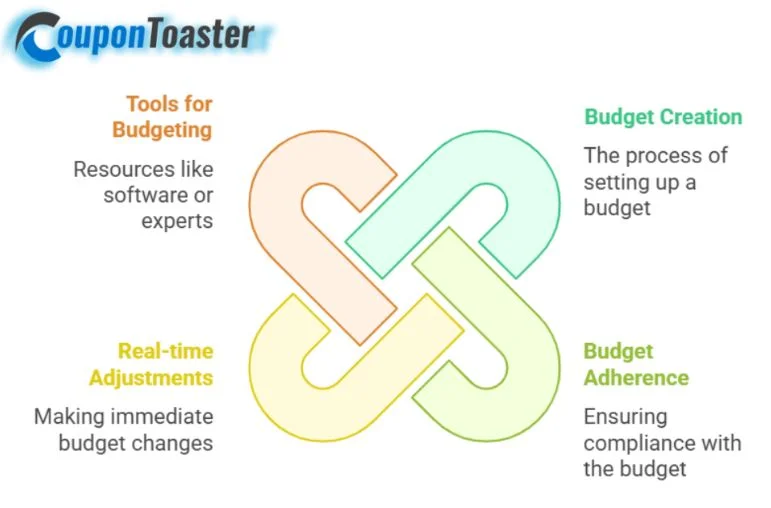
The fundamental basis of any cost reduction plan is a good budget. The trick is to stick to the budget once it has been put in place. A budget will ensure that you constantly know where money is being allocated and spent, as well as how much money is being made by the business. An efficient budget allows you to make necessary real-time adjustments as the business grows or suffers instead of after an extended period. You can create your business’s budget on your own, using software applications or by hiring an expert like a bookkeeper. A bookkeeper can make sure that you stick to your budget.
2. Business Location

The location of your business plays an incredibly important part in your expenditures. If your business is located in the centre of a business hub, then it is logical that your bills are going to be more expensive. You should relocate your business to a more affordable area while still having a good presence in the market. Another option is to downsize your offices which will save your business a lot of money. Occasionally relocating your business may adversely impact your revenue. This is when you can consider sharing office space with another business.
3. Energy Consumption
One of the bills that will no doubt put the biggest dent in your business’s budget is your energy bill. You should have an energy audit performed so that you can know more about your business’s energy usage and waste. The audit report will also give you some energy-saving tips and ways that you can implement them. It might be in your favour to switch to a different energy provider that is better suited to your business’s budget and needs. You can make use of an energy supplier comparison company like Business Energy Comparison to help you look for a new supplier. There are numerous approaches you can take to enhance the energy efficiency of your business.
4. Remote Working
Another way that your business can save money is to have employees work from home. You can encourage people to work remotely based on a set schedule where they only come to the office a few times a week or month. Certain employees may even opt for a permanent remote work arrangement, affording them the flexibility to manage their own schedules and strike a harmonious equilibrium between their personal and professional lives. Working from home has proven to increase employee productivity and motivation while also saving time. When there are fewer people in the office, the space doesn’t have to be that big and less money has to be spent on utility costs.
5. Workflow Automation
Nowadays, there are different kinds of technology that can do the work a person would normally be doing. This means that you can reduce the number of employees that your business needs by investing in automation. There are a lot of administrative kinds of tasks that normally take up a lot of time and workforce. These tasks can be completed by automation programmes which will free up employees’ time so that they can focus more on the work they were hired to do. This will ensure an increase in employee productivity. In some ways, the work done by workflow automation can be more productive and accurate than that of human employees.
6. Temporary Employees
When you hire a permanent employee into your business, you not only pay their salary but different kinds of benefits as well. Projects with shorter durations, spanning weeks or months, can be efficiently handled by engaging freelancers rather than recruiting new employees specifically for these tasks. You can also outsource the work. Outsourced workers work for companies that already pay for all their employee benefits, which means that you don’t have to. When the work is done, you don’t have to worry about severance pay and you can always make use of their services again.
7. Digital Marketing
Instead of using outdated and traditional marketing methods like television advertisements and flyers, you can switch to digital marketing and save a lot of money in the process. This means that you can make a small budget stretch very far and still have great marketing campaigns. Many of the online marketing technologies that are available are also free and completely accessible on handheld devices like cell phones. Online marketing is mostly in the form of business blogs, SEO (Search Engine Optimisation) and Social Media platforms. This includes Facebook, Instagram and TikTok. You can also make use of email marketing techniques by sending newsletters to current and future customers.
8. Local Suppliers
You have to do proper research before choosing a supplier for your business. The suppliers in your local area can provide your business with more benefits than large-scale suppliers with generic packages. Local suppliers are often small businesses that can change their services to meet your exact needs, providing you with more consumer choices. Most of the time, local suppliers can offer products and services that are unique to the area and can’t be found in other places. By engaging in supplier negotiations, you have the opportunity to secure the most favourable pricing for your business, potentially leading to discounted rates or other cost-saving benefits. Buying in bulk will also get you a discounted price. Due to the proximity of local suppliers, you don’t have to spend a lot of money on transportation costs and products will last longer.
Conclusion
This article gave a very brief explanation of cost reduction plans and their benefits. It also discussed some practical tips to cut costs and maximise savings for your business. The 8 tips that were discussed are creating a budget, business location, energy consumption, remote working, workflow automation, temporary employees, digital marketing and local suppliers.