

These days, cryptocurrency seems to be all the buzz, especially among professional investors. What was once been considered an afterthought is now at the forefront of the real economy. The daily fluctuations of crypto coins and other digital currencies are closely monitored by prominent international and national news organizations. Almost everyone knows and understands Bitcoin because it is one of the most famous currencies. New investors, on the other hand, are always on the lookout for economical and low-cost cryptocurrencies. The following are some of the most affordable cryptocurrencies with high potential. You can visit bitcoin-profitapp.com to know more.
Contents
8 Cheapest Cryptocurrencies with best potential
1. Ripple (XRP)
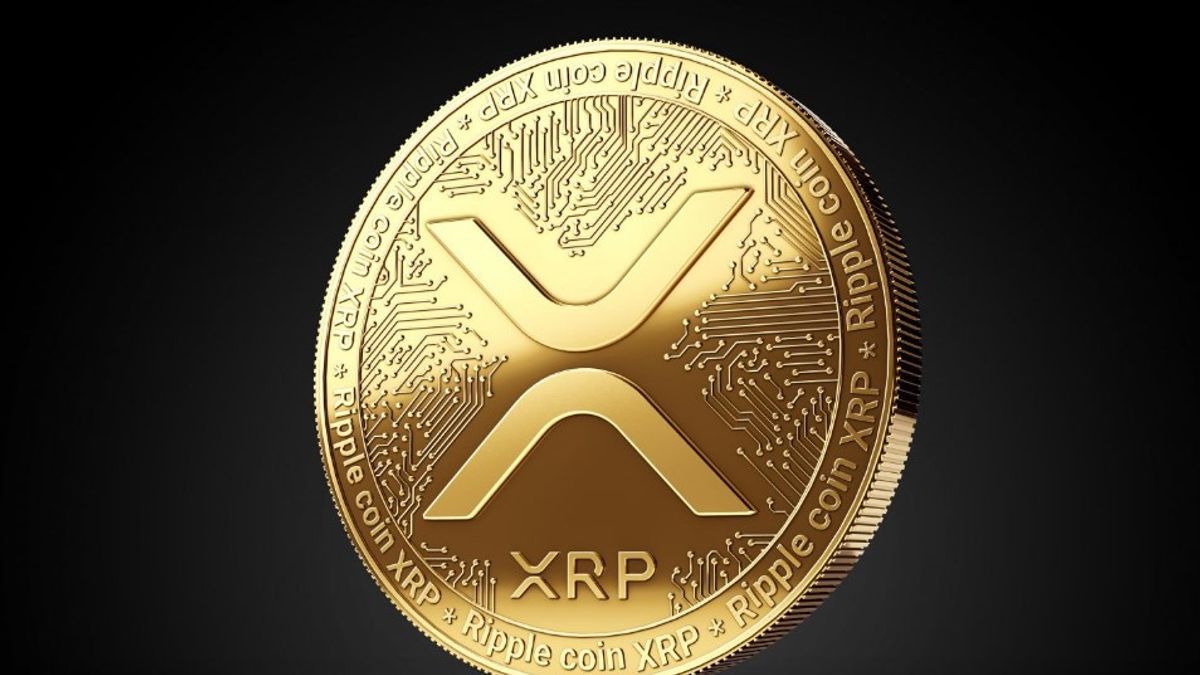
Ripple is a cryptocurrency that runs on the XRP Ledger, an open-source distributed ledger. Ripple, a business that facilitates financial trade using blockchain technology, created it. XRP, according to Ripple, was designed specifically for payments and can settle transactions faster, more reliably and at a lower cost than typical global payment infrastructure. XRP was trading at $0.9635 in December. Even though the US Securities and Exchange Commission is currently suing Ripple for allegedly engaging in unregistered securities trading, the price of XRP has risen about 315 percent since the start of the year and it is still available for under $1.
2. Algorand (ALGO)
Algorand is a blockchain platform that aims to solve the “blockchain trilemma” by offering scalability, security and decentralization without compromising on any of these aspects. Created by MIT professor and Turing Award winner Silvio Micali, Algorand brings significant academic and technical expertise to the cryptocurrency world.
One of Algorand’s key features is it’s Pure Proof-of-Stake (PPoS) consensus mechanism, which allows for fast transaction times and low fees. This makes Algorand suitable for a wide range of applications, from decentralized finance (DeFi) to gaming and digital identity.

Algorand has also positioned itself as an eco-friendly blockchain, achieving carbon negativity through it’s efficient consensus mechanism and partnership with ClimateTrade. This focus on sustainability could become increasingly important as environmental concerns about blockchain technology grow.
The Algorand Foundation actively supports the development of it’s ecosystem through grants and partnerships. This has led to a growing number of projects being built on Algorand, including DeFi protocols, NFT marketplaces and central bank digital currency (CBDC) initiatives.
While ALGO tokens are relatively cheap compared to some other major cryptocurrencies, the project’s strong technological foundation and growing ecosystem make it a coin with significant potential for future growth.
3. Dogecoin (DOGE)
Dogecoin began as a joke, but for those who are now benefitting from it, it has turned into a serious business. When compared to it’s $0.68 peak in May, the coin is still “affordable” at around $0.17 per coin as of Dec. 21. However, since the beginning of the year, when DOGE was less than half a cent, the current price has risen by nearly 2,860 percent. Dogecoin was created as a parody of Bitcoin, unlike many other digital currencies that have real-world applications. The cryptocurrency spiked earlier this year due to buzz on internet forums and Elon Musk’s tweets. Tesla will also be dealing via Dogecoins in the near future.
4. Stellar (XLM)
Stellar, with it’s native cryptocurrency, Lumens (XLM), aims to bridge the gap between traditional financial systems and the world of cryptocurrency. Created by Jed McCaleb, also a co-founder of Ripple, Stellar’s mission is to facilitate fast, low-cost cross-border transactions and provide financial services to unbanked populations worldwide.
One of Stellar’s key strengths is it’s partnerships with established financial institutions and tech companies. These collaborations lend credibility to the project and increase the likelihood of real-world adoption. For instance, IBM has used Stellar’s blockchain for cross-border payments and the Ukrainian government has chosen Stellar for it’s central bank digital currency project. Unlike traditional or even competing blockchain networks, these transactions on the Stellar network may be completed almost instantly and at a low cost.
Stellar’s low transaction fees and fast confirmation times make it an attractive option for micropayments and remittances. As global interest in these use cases grows, particularly in developing economies, demand for XLM could increase.
While Stellar faces competition from other payment-focused cryptocurrencies, including Ripple’s XRP, it’s non-profit status and focus on financial inclusion set it apart. The Stellar Development Foundation actively works to promote the adoption of Stellar technology in various sectors, which could drive long-term growth for the XLM token.
5. USD Coin (USDC)
USD Coin is a stable coin, meaning that it’s value is linked to the value of another asset, in this case, the US dollar. In comparison to other cryptocurrencies, USD Coin is very steady, with price fluctuations of only a few hundredths of a cent before returning to $1. Although you cannot profit by buying low and selling high like other tokens, you can earn interest by lending your USD Coin to a decentralized finance platform. The price was $0.9995 in December 2021.
6. Shiba Inu (SHIB)
Shiba Inu is a meme cryptocurrency that was established anonymously to parody Dogecoin, which was inspired by Shiba Inu, a Japanese breed of dog that has been the subject of online memes. Shiba Inu has a market cap of $18 billion, according to CoinMarketCap, despite it’s humorous beginnings. It’s only one of several puppy cryptos on the market right now, but it is the most renowned. The community that is forming around it adds to it’s appeal as a coin to invest in. The Shiba Inu coin was used as the basis for a quasi-token project. According to the Shiboshis website, the NFTs, also known as Shiboshis, contain characteristics that correspond to a planned Shiboshi Game.
Shiboshi will be usable in gaming for those who own it. As a result, Shiba Inu may join the ranks of digital tokens such as Decentraland, broadening it’s popularity and potentially accelerating it’s development. The coin is still quite volatile at the moment. A coin was worth $0.000000000074 (ten zeros) on January 1st. The current price is $0.00003299, up 44,580,981 percent from it’s all-time high of $0.00008 on October 26, but down more than 58 percent from that peak.
7. Cardano (ADA)
Cardano, often referred to by it’s ticker symbol ADA, has gained significant attention in the cryptocurrency world. Despite it’s relatively low price compared to giants like Bitcoin, Cardano boasts a robust technological foundation and a strong development team led by Ethereum co-founder Charles Hoskinson.
One of Cardano’s key selling points is it’s commitment to sustainability. Unlike Bitcoin and Ethereum, which use energy-intensive proof-of-work consensus mechanisms, Cardano employs a proof-of-stake system called Ouroboros. This makes Cardano significantly more energy-efficient, an increasingly important factor as environmental concerns about cryptocurrency mining grow.
Cardano’s development follows a rigorous, academic approach, with each stage of evolution peer-reviewed by scientists and programmers. This systematic process, while slower than some competitors, aims to create a more stable and secure blockchain platform.
The introduction of smart contract functionality in late 2021 marked a significant milestone for Cardano, opening up possibilities for decentralized applications (dApps) and decentralized finance (DeFi) projects on it’s blockchain. As these ecosystems develop on Cardano, the demand for ADA tokens could increase, potentially driving up their value.
While Cardano’s price is higher than some of the other coins we’ll discuss, it’s still relatively cheap compared to market leaders and it’s strong fundamentals make it a cryptocurrency with significant potential for growth.
8. Polygon (MATIC)
Polygon, formerly known as Matic Network, is a Layer 2 scaling solution for Ethereum. It’s native token, MATIC, is used for governance, staking and paying transaction fees on the network. While MATIC’s price is low compared to Ethereum, it’s role in addressing Ethereum’s scalability issues gives it substantial growth potential.
Ethereum’s popularity has led to network congestion and high gas fees, making it impractical for many everyday transactions. Polygon aims to solve this problem by providing a framework for building and connecting Ethereum-compatible blockchain networks. This allows for faster and cheaper transactions while still benefiting from Ethereum’s security and ecosystem.
Polygon has gained significant traction in the decentralized finance (DeFi) and non-fungible token (NFT) spaces. Many Ethereum-based projects have integrated Polygon to offer their users a low-cost alternative for transactions. This growing adoption could drive increased demand for MATIC tokens.
Furthermore, Polygon is not resting on it’s laurels. The project continues to innovate, with plans to introduce various scaling solutions beyond it’s current Plasma-based approach. This adaptability and commitment to improvement make Polygon a promising project in the long term.
As Ethereum continues to dominate the smart contract platform space, solutions like Polygon that address it’s limitations could see significant growth. This positions MATIC as a cryptocurrency with substantial potential despite it’s currently low price.
Finally, for someone who’s looking to get into trading and investing in crypto, these coins are worth looking into in terms of capital expenses and future profit.
Conclusion
The world of cryptocurrency offers exciting opportunities for investors willing to explore beyond the well-known coins. Cheaper cryptocurrencies like Cardano, Stellar, VeChain, Algorand and Polygon offer the potential for significant returns, backed by innovative technologies and real-world use cases.
However, it’s crucial to approach these investments with caution. The low cost of these coins comes with higher risk and not all promising projects will succeed in the long run. Thorough research, diversification and a long-term perspective are essential strategies when investing in these cryptocurrencies.