

Swords have played a crucial role in combat, especially in Japan and many other countries. Swords have remained part of different cultures; From Jews to Communists, every tradition has adopted it. For example, a Katana Sword was popularly used by the Samurai in battles. No wonder you can now find many traditional, modern, and hybrid swords that you can use for training.
The Japanese arts of kenjutsu and itto-ryu usually focus on swordsmanship. Regardless of whether you intend to start practising in sword-based martial arts or you want to improve your current skill sets, it would be best if you found the right training sword to assist you in achieving your goals. In this article you will learn about training swords.
Contents
History of Training Swords
The use of training swords dates back to ancient civilizations, where warriors recognized the need for safe practice methods to prepare for actual combat. In ancient Rome, gladiators utilized wooden swords known as “rudis” to refine their techniques before entering the arena. These wooden implements allowed them to practice complex manoeuvres and develop muscle memory without the risk of injuring themselves or their training partners.
The Styles of The Training Swords
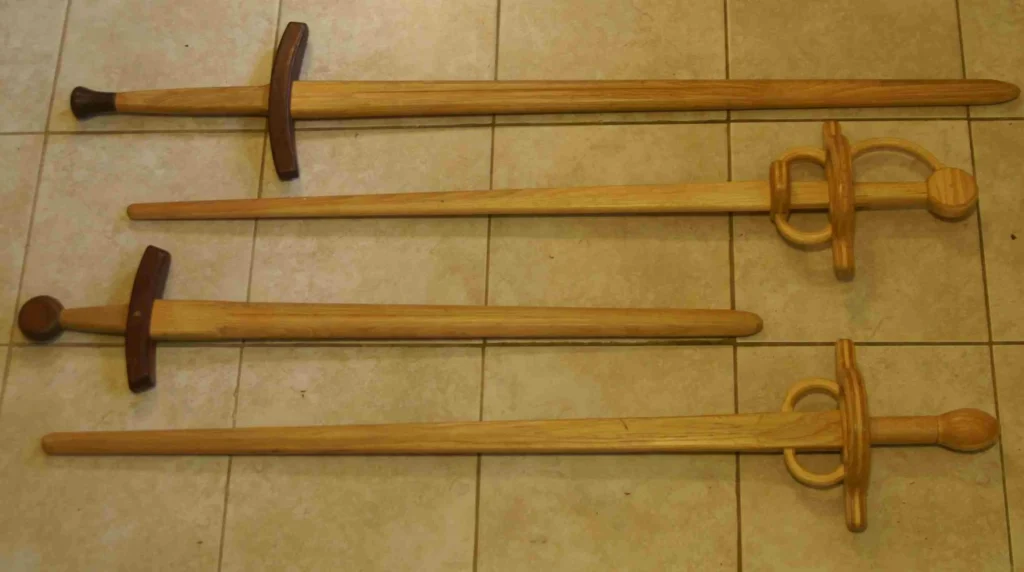
You can find several types of training swords on the market, and it’s necessary to get the right sword that suits the martial arts style. Remember that a sword that is too heavy or too big can prevent your movements while doing a certain style of training, causing injuries to yourself or your opponent. Also, a smaller sword can be hard during practice styles like tai chi.
If you don’t want to start with a katana sword for training, you can choose the Bokken. This is a wooden Japanese sword that you can usually use for training. It’s suitable for a variety of styles, including aikido and kendo. You can find a straight or curved blade and it may or may not come with a handle.
You can also choose the Shinai sword that features bamboo to give it slightly flexible properties. You can use this type of sword in kendo practice and it can also be suitable for other Japanese martial arts.
There is also the Daito which is a term utilized for any Japanese long swords, but it mostly describes a katana. Daito swords for training can have a variety of materials, such as foam and plastic.
Common Materials

Training swords can be produced from a wide range of different materials. Many have hard blades because these offer more resistance when it comes to training manoeuvres. But some blades can also have coatings to protect them while practising and sparring.
You should remember that Japanese training swords traditionally used to have wooden handles and blades. This material can be hard, but it still provides a dull blade to prevent cuts and wounds. There are a variety of styles you can find there and including broadswords, bokkens, and tai chi swords.
Bamboo is another material that is used to make traditional Japanese swords. You can choose sparring swords like the shinai, which are usually made up of this material. The good thing is that bamboo is lighter than wood to help reduce injuries and bruising during sparring practice.
Alternatives to bamboo or wood are plastic and other modern synthetic materials. The swords that are made from these materials can either be lighter or heavier depending on the materials that are included in the construction. The good thing is that synthetic training swords are usually strong and hard to break compared to wooden swords.
Choosing the Right Training Sword
Selecting the appropriate training sword is crucial for effective and safe practice. The right choice depends on various factors, including your skill level, training goals, and the specific martial art or historical tradition you’re studying. Let’s explore some key considerations to help you make an informed decision:
Consider Your Skill Level
As a beginner, safety should be your primary concern. Starting with a wooden or synthetic sword is often recommended, as these provide a good balance of safety and realism:
- Wooden Swords: Bokken or wasters are excellent starting points. They offer a realistic weight and can help you develop proper form without the risks associated with steel.
- Synthetic Swords: These are particularly good for beginners in HEMA, as they allow for safer partner drills and light sparring.
- Padded Swords: If you’re completely new to sword arts or working with children, padded swords provide the highest level of safety for full-contact practice.
As you progress in your training, you might consider transitioning to steel training swords for a more authentic experience. However, this should only be done under proper supervision and with appropriate safety gear.
Match the Sword to Your Martial Art
Different sword arts use different types of training swords:
- Japanese Sword Arts: If you’re practising ninjutsu, iaido, or related arts, you’ll likely need a bokken. For kendo, a bamboo shinai is essential.
- Historical European Martial Arts (HEMA): Depending on the specific tradition you’re studying, you might use a synthetic longsword, a wooden waster, or a steel federschwert.
- Chinese Martial Arts: Tai Chi practitioners often use lightweight wooden or wushu swords, while other Chinese sword arts might employ heavier wooden or padded swords.
- Modern Sport Fencing: This requires specific training foils, épées, or sabres, typically made of steel.
Always consult with your instructor or experienced practitioners in your chosen art to ensure you’re using the appropriate training tools.
Conclusion
Training swords represent a fascinating intersection of historical tradition, martial artistry and modern innovation. These specialized tools have evolved from simple wooden substitutes to sophisticated training aids, reflecting the ongoing development of sword-based martial arts and our understanding of effective training methodologies.
The diverse world of training swords offers options suitable for practitioners of all levels and interests. From the traditional elegance of the Japanese bokken to the historical accuracy of HEMA-specific synthetic swords, there’s a training tool to support every aspect of sword fighting practice. The safety afforded by these practice weapons allows for the exploration and preservation of martial traditions that might otherwise be too dangerous to study with authentic, sharp blades.