

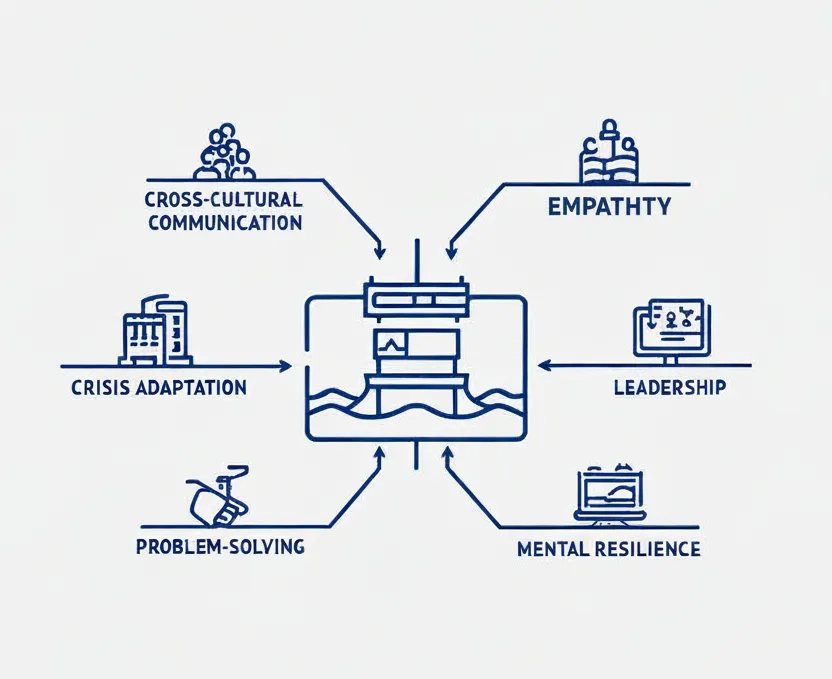
Working at sea isn’t just about knowing your charts or fixing engines. You need the basics like navigation rules and safety drills, no question. But the guys who move up to captain or chief spots? They’ve got a handle on stuff like talking across cultures, rolling with crises, leading without being a jerk, fixing problems on the fly, and keeping their head straight under pressure. These aren’t extras—they’re what keep you going when you’re stuck on a ship with the same faces for weeks, dealing with breakdowns or bad storms. Nail them, and you’ll stick around longer and get better gigs.
Contents
Talking Across Cultures: Getting a Mixed Crew on the Same Page
Ships these days pull crew from all over. You might have a Filipino engineer, a Ukrainian captain, Indian officers, and deck hands from Indonesia or Ghana. Everyone’s got their own way of talking, their background, and maybe spotty English.
It’s more than words. Some folks won’t straight-up say no to the boss because it feels rude in their culture, even if something’s off with safety. A nod might mean “I hear you” but not “I get it.” I’ve heard stories where that led to messes. Like on the Scandinavian Star in 1990—a fire killed over 150 people partly because the crew from different countries couldn’t communicate fast enough during the chaos (from accident reports).
I’ve seen it myself in cargo work. The officer tells the team how to tie down containers. Heads bob, but you can tell from the looks that not everyone’s following. A sharp officer picks up on that, shows it hands-on, asks them to repeat it back, without making anyone lose face.
In a drill or real emergency, like a 3 a.m. alarm, you can’t have mix-ups. Orders have to land right, no matter where someone’s from.
How do you do it day-to-day?
- Get solid on maritime English, not just chit-chat but the exact words for drills and ops.
- Learn about crew’s customs, like food rules or how they handle bosses.
- Watch body language—eye contact means different things, same with space.
- Check understanding by having them show you, not just say yes.
- Step in on arguments from culture clashes before they blow up.
Take a port inspection in 2018 on the MV Ever Given—wait, no, better: during a routine check, inspectors quiz the crew on fire drills. Some guys from the Philippines say “yes sir” to everything, but their faces say otherwise. The officer jumps in, asks them to walk through it step-by-step, spots the weak spots. That caught issues that could’ve meant big fines (Port State Control Form A).
The IMO lays this out in the STCW rules, with bits on communication skills (STCW Manila Amendments, 2010). But reading it isn’t enough—you learn by working with all sorts of people.
Rolling with Crises: When Plans Go Out the Window
Sea life is full of surprises. Storms hit, machines quit, ports close. You’re miles from help. The best seafarers don’t freak—they switch gears quick, using what’s around.
It’s not just bending a little. You assess fast, drop the old plan, patch something together. Picture approaching Singapore in high winds—the berth’s no good, other ships are backed up, cargo’s gotta get there yesterday.
You don’t freeze. Check other spots, tweak the schedule, talk to the port and agents. It might mean shuffling crew roles too.
This hits personal stuff too. Voyage gets longer, no shore time because of delays. How you deal affects your work and mood.
What sets the pros apart?
- Make do with what’s on board—tools, parts, people.
- Decide fast when seconds count, without overthinking.
- Keep cool under pile-on problems.
- Pick up new info quick and adjust.
- Don’t let emotions take over.
Back in 2012, the Costa Concordia hit rocks off Italy. The crew who adapted—organizing evac with what they had—saved lives, even as things fell apart (from investigation reports). Or during the 2020 pandemic, crews on ships like the Diamond Princess had to quarantine, improvise health setups, keep going for months extra. Their flexibility kept ops running.
With new tech like ECDIS or green rules, you gotta adapt or get left behind.
Leading Together: Guiding a Team in Tight Quarters
Leading on a ship is tough—you’re with your team non-stop, no clocking out. Old-school yelling works in a pinch, but for everyday, you need buy-in, trust, keep spirits up. Good leaders earn respect by being fair, knowing their stuff, caring about the crew. Everyone’s input matters—a rating might spot something the officer misses.
Why? Lots of accidents happen because juniors see trouble but stay quiet. Like unusual engine noise or a nav glitch—speaking up saves the day. You balance: firm in crises, open otherwise. Build that trust when it’s calm.
Example: Morale tanks on a long haul. Leader holds casual talks, shifts rotations based on ideas, fixes small gripes. It boosts the team for the long run.
Key parts:
- Train the juniors, help them level up.
- Pull in opinions for plans, but call shots when needed.
- Split work and perks even.
- Be straight about schedules, rules.
- Nip fights in the bud.
On ships, you train with what’s there—no sending folks ashore. Delegate smart, let them learn from slip-ups safely.
Hierarchy’s big, so in drills, orders fly instant. But good leaders set that expectation early.
Fixing Problems Step by Step: Sorting Issues at Sea
No repair shop mid-ocean. When gear breaks, you diagnose with what’s handy, rig a fix that holds till port. It’s not cookbook stuff. Problems link up—a leak hits hydraulics, steering, cargo. Fix the root, not the symptom, under time crunch.
Adds pressure during ops like docking or storms.
Skills that help:
- See how systems connect—one change ripples.
- Troubleshoot logical: test this, then that.
- Get creative with scraps.
- Weigh if the patch is safe or wait.
- Log it all for next time or shore fixes.
On the APL England in 2020, rough seas knocked containers loose off Australia. Crew analyzed, secured what remained, adjusted course—quick thinking prevented worse (from AMSA report). Or a water maker quits on a tanker, 10 days out. They reroute AC condensate, filter it, keep hydrated. Smart use of what’s there.
This covers ops too—strikes, reroutes. And now with digital nav, fix software glitches or go old-school.
Staying Tough Mentally: Handling the Grind
Sea jobs are hard on the head, no sugarcoating. Away from family months on end, same walls, wonky sleep, always some risk.
Isolation bites. Tech helps call home, but you’re still oceans away, missing birthdays, dealing with home stuff remote.
Crew dynamics: Stuck with personalities, no escape. Small beefs grow big.
Watches mess your sleep, ports mean work not rest.
Money stress too—many send cash home, can’t quit easy.
Scenario: Mid-contract, bad news about family. No flying home unless dire, lose pay if you do. Keep working sharp?
Tough ones cope with:
- Workout, breathe deep, unwind.
- Chat home despite time zones.
- Hobbies like reading, guitar onboard.
- Build crew bonds, respect space.
- Set goals to push through rough patches.
Industry’s getting better on mental health—used to be taboo, now companies see it boosts safety. Distressed crew screw up more.

Pandemic showed it: Crews on ships like the Ruby Princess in 2020 stuck extra, no leave, adapted but many hit lows (from seafarer stories).