


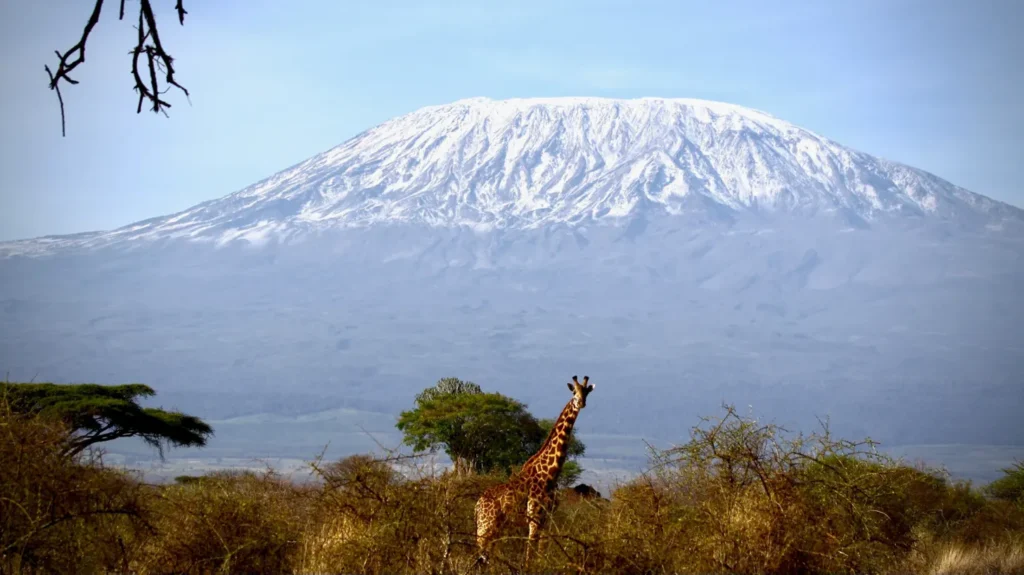
Standing at 15,100 feet, watching my tent-mate get carried down on a stretcher while I felt perfectly fine, I realized Kilimanjaro doesn’t care about your marathon medals or gym routine. Seven days on Africa’s highest mountain taught me lessons that no amount of preparation could have predicted. Here’s what I actually learned up there, stripped of the Instagram inspiration quotes and motivational poster wisdom.
Contents
- 1 Lesson 1: Your Fitness Level Means Nothing to Altitude
- 2 Lesson 2: Summit Night Will Break You (And That’s the Point)
- 3 Lesson 3: Mental Strength Matters More Than Physical
- 4 Lesson 4: The Porters Will Humble You Completely
- 5 Lesson 5: Everything You Think You Know About Your Limits Is Wrong
- 6 Remember The Must Following Things
- 7 The Truth Nobody Tells You
Lesson 1: Your Fitness Level Means Nothing to Altitude
I trained for six months. Hill repeats, stair climbing with a weighted pack, weekend hikes that left my legs shaking. Meanwhile, on day four at Barranco Camp, I watched a 68-year-old grandmother from Japan cruise past me while I stopped every ten steps to catch my breath. The woman next to me at breakfast? Half-marathon runner, CrossFit enthusiast, couldn’t hold her spoon steady from the altitude headache.
Here’s what nobody tells you: altitude sickness is completely random. I saw it happen to Roman Abramovich – yes, that billionaire – who had to be carried down at 15,100 feet despite having the best guides money could buy. Meanwhile, this overweight guy from Texas who admitted he hadn’t exercised in two years? Made it to the summit.
At Lava Tower, I felt like I’d been baking in the sun for hours, except it was freezing. My head pounded with each heartbeat. The nausea came in waves – fine one minute, then suddenly needing to sit down the next. That night at 15,241 feet, I watched my tent-mate Sherri, the strongest person in our group, deteriorate into what she called a “trance.” She couldn’t speak properly, shivered while burning up, and our guide made the call – she had to descend immediately. Five hours down in complete darkness. She lived, but barely.
The mountain’s oxygen drops to 49% of what you’re used to at sea level. Your body goes into overdrive producing red blood cells – 30-50% more overnight. I’d wake up gasping because my body literally forgot to breathe while sleeping. There was this kid Callum in our group who kept rushing ahead, showing off his fitness. Thirty minutes after reaching Lava Tower ahead of everyone, he was sitting with toilet paper shoved up his nose to stop the bleeding, head between his knees. The rest of us slow walkers? We felt fine.
The guides kept saying “pole pole” – slowly, slowly in Swahili. At first, I thought they were patronizing us. Walking at what felt like an 80-year-old’s shuffle when I could easily go faster. By day three, I understood. Speed kills on Kilimanjaro. Not metaphorically. Literally.
Lesson 2: Summit Night Will Break You (And That’s the Point)
They wake you at 11:30 PM. You’ve barely slept because of the altitude. It’s -20°F, maybe colder. I wore seven layers – base layer, fleece, down jacket, shell, everything I brought – and still felt the cold seeping through. My water froze solid in two hours despite keeping it inside my jacket. I had to chip ice off the mouthpiece just to get a sip.
The climb itself? Eight hours of hell disguised as hiking. One hour up, three-minute break for frozen energy bars you can barely chew, repeat until sunrise. Every step forward, you slide half a step back in the loose volcanic scree. Above 18,000 feet, I took five breaths for every single step. Not exaggerating. Five full breaths. One step. Repeat for four hours.
My mind started playing tricks around 3 AM. I had to consciously tell myself “left foot forward, now right foot” like teaching a toddler to walk. Except I was the toddler. Another guy in our group described it perfectly – we were zombies, swaying side to side, death-gripping our trekking poles because they were the only things keeping us upright.
The cold got so bad I started rationalizing losing fingers. This was my actual thought process: “So what if I lose all ten fingers? People manage without fingers. I could get prosthetics. Voice-to-text is pretty good now.” I was completely calm about potentially losing my fingers to frostbite. That’s how messed up your brain gets up there.
When sunrise hit at Stella Point – 18,885 feet – I collapsed into my guide’s arms and just sobbed. Not sad tears. Not happy tears. Just… tears. Pure emotional release from pushing beyond what I thought was possible. The woman next to me was on her knees, crying into the dirt. Nobody judged. We all understood.
At Uhuru Peak, the actual summit, people react in the weirdest ways. One guy proposed to his girlfriend but forgot about it immediately due to altitude-induced confusion. She had to remind him later. Another couple held each other like they’d fall off the mountain if they let go, just crying and crying. Me? I took my summit photo and immediately started the descent. Three more hours of sliding through scree on legs that felt like overcooked spaghetti. The whole ordeal burns about 6,000 calories. I lost 12 pounds in one day.
Lesson 3: Mental Strength Matters More Than Physical
Around hour five of summit night, at about 17,000 feet, my body quit. Not tired – quit. But my mind kept going. It was the strangest disconnect I’ve ever experienced. My legs moved because I told them to, not because they had any strength left. I existed in this weird space where I was present enough to keep moving but not present enough to feel how exhausted I was.
There was this woman, Shirooh, climbing near me. She suddenly stopped and gasped “I can’t breathe” and just broke down crying. Another climber, this tough-looking British guy, walked over and whispered, “It’s okay. Let it all out. I’ve cried three times already today.” That moment changed everything for her. She later told me that hearing someone else admit to breaking down made her feel lighter, like she could actually breathe again.
I developed this mantra that I repeated for probably three hours straight: “I am safe. I am loved. I am guided.” Over and over. Sounds ridiculous at sea level. Up there, it kept me sane. Another woman in our group visualized stepping into a hot bath every time the cold got unbearable. She’d close her eyes for a second, imagine the warmth, then keep walking.
The group dynamic was everything. When we reached Gilman’s Point – the crater rim before the final push to Uhuru – several people wanted to quit. Only 200 feet of elevation left, maybe 45 minutes of hiking, but they were done. One woman said if anyone turned back, she would too. Nobody did. We all knew that. So we all kept going, held up by collective stubbornness more than individual strength.
The weird part? The slowest hikers, the ones we all privately worried about on day one, they led us to the summit. While the athletes were getting helicoptered off the mountain, the “slow” ones just kept going. Pole pole. The mountain doesn’t care about your ego or your Strava records.
Lesson 4: The Porters Will Humble You Completely
Salumu carried my spare clothes, tent, and food – about 40 kilograms – while singing. Singing! I could barely carry my day pack with water and snacks. He’d been doing this job for eight years, supporting his entire family, but couldn’t afford the $1,000 to become a certified guide. He never complained. Not once. When I struggled, he’d appear with encouragement, adjust my pack, offer his own water.
These guys would set up camp before we arrived, cook dinner, then party. I mean actually party – dancing, singing, drums if someone brought them. After carrying impossible loads up a mountain. Our lead porter Amani would get the whole crew going for 30-minute dance sessions. Pascual, another porter, sang the entire way to the summit. The. Entire. Way.
My porter Faustine became my mental coach without being asked. Every time I stopped, he’d say, “You are strong. You are doing this for everyone who cannot.” When I wanted to quit at Stella Point, he said, “You are doing this for all the strong women!” I’m a guy, but somehow that worked. His English was limited, my Swahili non-existent, but he kept me going with pure human kindness.
One night, too cold to sleep, I wandered into the cooking tent. Our chef Nuru invited me to sit, taught me a local card game, shared stories about his kids while making dinner for twelve people at 14,000 feet on a camping stove. He did this every night with a massive smile, in conditions that would break most professional chefs.
The tipping ceremony at the end got emotional. We’d collected money throughout the trip, and watching it distributed transparently to each porter and guide – seeing how much it meant to them – hit different. These men (and a few incredibly tough women) make possible what would be impossible for us soft tourists.
The dark side? At Barafu base camp, I saw porters from uncertified companies begging our porters for food. Their company hadn’t provided enough. We immediately emptied our snack bags – energy bars, nuts, chocolate, everything we had. It was nothing to us, everything to them. Choose your tour company carefully. The cheap ones cut corners on porter welfare.
Lesson 5: Everything You Think You Know About Your Limits Is Wrong
The bathroom situation alone would break most people. Long-drop toilets that are essentially holes in the ground, frozen solid at night, with “deposits” from hundreds of climbers piled literally to the rim. The smell could peel paint. Some people’s aim in the dark… let’s just say it’s not great. By day four, constipated from altitude, dehydration, and freeze-dried food, I hadn’t had a bowel movement. My guide was genuinely concerned. Your body just stops working normally above 14,000 feet.
I used a pee bottle at night because leaving the warm sleeping bag meant risking hypothermia. Try aiming into a narrow-mouth Nalgene bottle while horizontal in a mummy bag at 3 AM when it’s -15°F. Women in our group had these funnel devices. Dignity dies quickly on Kilimanjaro.
Weather changes in minutes. We got caught in a freak snowstorm at Lava Tower – our guide said it was “super rare” but there we were, ice covering everything, turning the descent into a skating rink with a 1,000-foot drop. One minute you’re stripping layers in the sun, next you’re adding everything you own and still freezing.
My hydration tube froze solid despite blowing water back into the bladder after every sip (the trick everyone swears by). My gaiters froze so solid I needed help getting them on. A guy’s headlamp died right before summit night – he jerry-rigged it to his head with hair ties borrowed from the women. You adapt or you fail.
But here’s the thing – every one of these disasters became a story, a bonding moment, a lesson in what actually matters. When you’re sitting on a frozen rock at 16,000 feet, eating half-frozen peanut butter with fingers you can’t feel, laughing with strangers about how miserable you all are, you realize your comfort zone was a prison you built yourself.
I chose the Lemosho route – eight days, longer but with an 85-90% success rate. The popular five-day Marangu route? Only 27% make it. Those three extra days cost more but transform a coin flip into almost certain success. The Barranco Wall on day four – a 257-meter scramble requiring hands and feet – looked terrifying from below. There’s a section called “Kissing Rock” where you have to hug the wall because the path narrows to nothing. But once you’re on it? More fun than frightening. The traffic jam of climbers actually helps – you can’t go fast enough to be dangerous.
A British guy in our group had failed his first attempt years ago. Reached Barranco Camp at 12,992 feet and had to descend. He was incredibly fit, but chose a six-day route with poor acclimatization. “Altitude trumps fitness every time,” he kept saying. His second attempt, on a longer route, he summited easily.
Remember The Must Following Things
- Physical Training: Start a fitness regimen that includes cardiovascular exercises, strength training, and hiking. Aim to build endurance and stamina, as the trek can take anywhere from five to nine days, depending on the route you choose.
- Mental Conditioning: Mental resilience is just as important as physical strength. Prepare yourself for the challenges ahead, including altitude sickness, fatigue, and unpredictable weather. Visualization techniques and mindfulness practices can help you stay focused and calm during the climb.
- Logistical Planning: Research the various routes, choose a reputable guide service, and ensure you have the right gear. This is where you can plan your Kilimanjaro adventure now and ensure a smooth and enjoyable experience.
The Truth Nobody Tells You
Kilimanjaro doesn’t care who you are, what you’ve accomplished, or how much you’ve prepared. It’s not about conquering anything. The mountain was there before you, it’ll be there after you. You’re just trying to survive a visit to its summit.
The certificate they give you at the gate after summiting? It’s nice, but it’s not why you’ll remember this experience. You’ll remember the moment you wanted to quit but didn’t. The stranger who shared their last energy gel when you ran out. The porter who sang you up the mountain when your own strength failed. The sunrise that made you cry. The cold that taught you what cold really means.
Most of all, you’ll remember discovering that your limits – those things you were so sure about – were just suggestions you’d been accepting as facts. When you function at 49% oxygen, push through eight hours of darkness, and find clarity in complete exhaustion, you realize that most of the barriers in your life exist only in your mind.
Would I do it again? Ask me at sea level, absolutely not. Ask me when I see someone else’s summit photo, when I remember that sunrise, when I think about Salumu’s smile or the group crying together at Uhuru Peak? I’m already planning my next climb.