


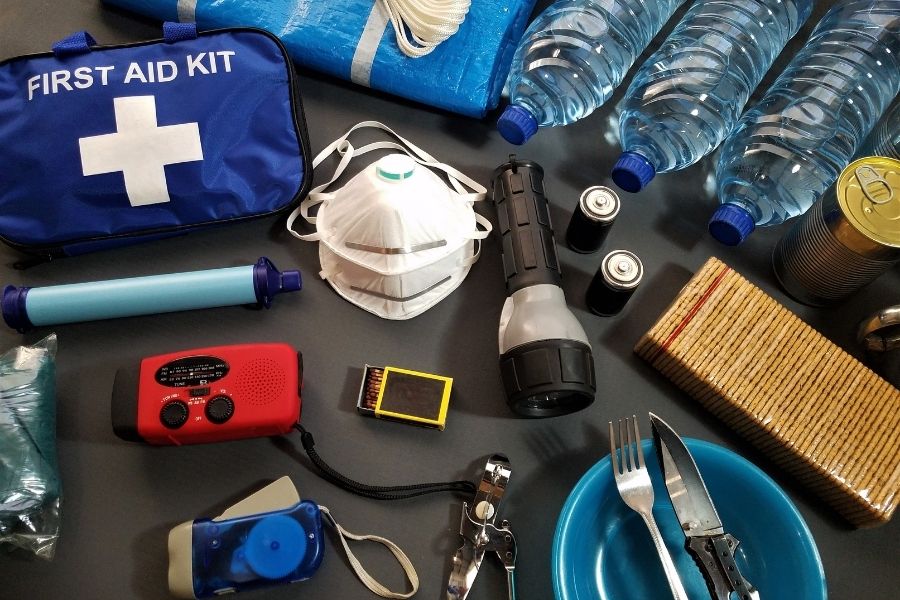
If 2020 has taught us anything, it is that we should all be better equipped for emergencies, regardless of who we are.
Things may swiftly develop, from airborne illness to political upheaval and natural disasters. So, having an emergency survival pack on hand may save your life.
You might think building a survival kit is simple. Just throw in some knives and first aid, and you’re good. While a survival kit with such basic things can help you for a short period, it won’t help you in the long run.
So, we’re going to cover all the important survival gear you’ll need to construct a survival kit for your rescue.
Contents
Why You Need a Survival Kit
No one likes to think about worst-case scenarios, but the truth is that emergencies can happen anytime, anywhere. A survival kit is your first line of defense against the unexpected, providing you with the tools and supplies you need to weather any storm. Having a survival kit on hand can give you peace of mind, knowing that you’re prepared for whatever life throws your way.
Benefits of a Survival Kit
- Peace of Mind: Knowing that you have a well-prepared survival kit can provide you with peace of mind, knowing that you are equipped to handle unexpected emergencies.
- Self-sufficiency: A survival kit allows you to be self-sufficient for a period of time, reducing your reliance on external help.
- Adaptability: With a survival kit, you can adapt to various situations, whether you’re dealing with a natural disaster or a sudden change in weather conditions.
- Quick Response: Having a survival kit readily available can help you respond quickly to emergencies, potentially saving lives.
The Checklist
You get many survival packs in the market now. The choice is yours if you want to buy it off the racks or build it from scratch. You can create a customized one according to your needs. You may crosscheck the things you already have in your bag and note down the missing stuff. The items in the checklist include:
Food And Water
When you hear doctors emphasize drinking more water- take it seriously.
Without the graciousness of h20, your body can shut down in two or three days!
Even a single day of dehydration may impair your judgment and make you sluggish. Iodine pills are quite important and take up practically a little room in your pack. Get a pair of portable survival water filters since these work much faster than iodine.
We eat to survive. Fancy burgers and pizzas are there to add a taste to your tongue, but we eat not just for flavor. We eat to survive. Without proper food, you will starve, shrivel up, and may have major health problems.
Calories are energy regardless of how they are stored; therefore, having some food storage in your emergency kit is vital!
It takes only a while for things to go wrong; grocery store stocks get depleted, causing anxiety.
Here, you can choose dehydrated food or energy bars. Peanut packs or mixed nuts and trail are some options. The underlying thing is you need food and water in your kit.
Tools And Gear
Keep survival knives or camping knives if you know how to use one. They can help you accomplish a lot.
Knives have been powerful survival tools for humankind from the beginning of time. And it is still true today – don’t be caught off guard without one.
Fire is one of man’s dearest survival tools; you’re badly underprepared if you don’t know how to make one. If you can start a fire without a matchstick, kudos to you! But why go through the trouble?
Instead, bring a set of waterproof, stormproof matches with you. Because surviving an emergency should never be made any more difficult than it needs to be!
Miscellaneous Items:
- A compact first aid kit
- A small compass
- A blanket
- Fish hooks and lines
- Some ducts and tapes
- Emergency lights
Building Your Survival Kit Step By Step
Now that you know what to include in your survival kit, it’s time to start assembling it. Here’s a step-by-step guide to building your kit:
Step 1: Choose a Container
Start by selecting a sturdy, waterproof container to hold your supplies. A backpack, duffle bag, or plastic storage bin can all work well, depending on your needs and preferences. Consider the size of your kit and how portable you need it to be.
Step 2: Gather Your Supplies
Begin gathering the items on your list, starting with the essentials like food, water, and first aid supplies. Check expiration dates on perishable items and replace them as needed. Don’t forget to include any personal items that are specific to your family’s needs, such as prescription medications or baby supplies.
Step 3: Organize Your Kit
As you add items to your kit, organize them in a way that makes sense for your needs. Group similar items together and use smaller containers or resealable bags to keep things tidy and easy to find. Consider labeling your containers or creating an inventory list so you can quickly assess your supplies in an emergency.
Step 4: Store Your Kit
Once your kit is assembled, choose a safe, easily accessible location to store it. Make sure all members of your household know where the kit is located and how to use the items inside. Consider keeping a smaller version of your kit in your car or at work in case you’re away from home when an emergency strikes.
Step 5: Maintain Your Kit
Your survival kit is not a one-and-done project. It’s important to review and update your kit regularly to make sure that all items are in good condition and haven’t expired. Set a reminder to check your kit every six months or so and replace any items that are missing or out of date.
Reviews
I’ve lived in New Orleans my whole life, and I’ve seen my fair share of hurricanes. When Hurricane Katrina hit in 2005, I was caught off guard and didn’t have a proper survival kit. It was a nightmare trying to evacuate without essential supplies. Since then, I’ve made sure to keep a well-stocked kit with plenty of water, non-perishable food, and first aid supplies. It gives me peace of mind knowing that I’m prepared for whatever comes my way.” – Maria, 45
“As a college student in Oklahoma, I never thought much about emergency preparedness. That all changed when a massive tornado tore through my town in 2013. I was huddled in my dorm room with no supplies, and it was a terrifying experience. After that, I made sure to build a compact survival kit that I could easily grab and go. It’s come in handy during several close calls with severe weather over the years.” – Jake, 28
“Living in a rural area of Northern California, I’ve had to evacuate due to wildfires more times than I can count. In 2018, I had to flee my home with just a few minutes’ notice. Having a survival kit packed and ready to go was a lifesaver. It had everything I needed to get through those first few days away from home, including a change of clothes, toiletries, and important documents. I’ll never be caught without my kit again.” – Sarah, 52
“I never thought I’d have to use my survival kit, but when a freak blizzard hit my hometown in upstate New York last winter, I was so glad I had it. We were snowed in for days without power, but thanks to my kit, I had plenty of warm clothing, a compact sleeping bag, and a propane stove to melt snow for drinking water. It was a challenging experience, but having the right supplies made all the difference.” – Mike, 35
“As a single mom in Seattle, I know how important it is to be prepared for anything. A few years ago, we had a major earthquake that left us without power or running water for several days. Having a survival kit with flashlights, a hand-crank radio, and water purification tablets gave me the tools I needed to keep my kids safe and comfortable until things returned to normal. Now, I make sure to review and update our kit regularly so we’re always ready for the unexpected.” – Emily, 41
FAQs
How often should I update my survival kit?
Can I buy a pre-made survival kit?
How much water should I include in my kit?
What if I have special dietary needs?
How can I make sure my family knows how to use the items in our survival kit?
Final Say
Building a survival kit is an important step in emergency preparedness. By following this guide, you can assemble a survival kit tailored to your needs, providing you with the tools and supplies necessary to survive in various emergency situations. Remember to assess your needs, choose a durable container, assemble your kit, and maintain and update it regularly. With a well-prepared survival kit, you can face the unexpected with confidence and peace of mind.