


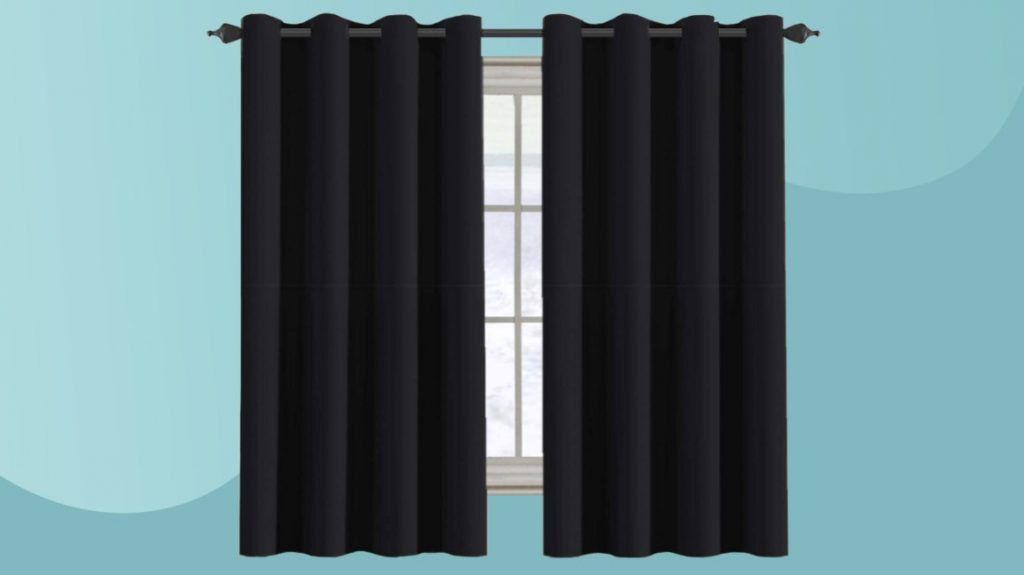
Thermal curtains might just be the way forward for you if you’re seeking an effective strategy to make your home warmer during the winter while also lowering your energy expenditures. They are different from other curtains because they are constructed of a heavier & thicker fabric or have an insulated lining/layer.
Thermal curtains have a foam backing that keeps cold air from walking into a room while simultaneously trapping sound waves, making them an excellent solution to reduce noise from outside.
Contents
What are Thermal Curtains?
Thermal curtains, also known as insulated curtains or energy-efficient curtains, are window treatments that are specifically designed to reduce heat transfer through your windows. They are made from heavy, thick materials that provide an additional barrier between your home’s interior and the outside world. Thermal curtains often feature multiple layers, including a dense foam core, reflective films and tight weaves that work together to minimize heat loss and gain.
How Do Thermal Curtains Work?
To understand how thermal curtains work, it’s essential to know a bit about heat transfer. There are three main ways that heat can move through your windows:
- Conduction: Heat travels through solid objects, such as glass, from warmer areas to cooler areas.
- Convection: Heat is carried by air currents, which can enter and exit your home through gaps around your windows.
- Radiation: Heat is emitted by warm objects, like the sun and can pass through your windows to heat up your home’s interior.
Thermal curtains address all three of these heat transfer methods:
- The thick, dense materials used in thermal curtains reduce conductive heat transfer by providing an insulating barrier between the window glass and your room.
- The tight weave and sealed edges of thermal curtains help to minimize convective heat transfer by blocking drafts and air leaks around your windows.
- Some thermal curtains include reflective films or coatings that reflect radiant heat back towards its source, whether that’s the warm interior of your home during the winter or the hot sun during the summer.
Benefits Of Thermal Curtains
- Energy-efficient thermal curtains are created for two primary purposes: to provide seclusion and to block unwanted light entering the space. Curtains were once thought to be a luxury item that could only be afforded by royal families. However, as the industries progressed, manufacturers discovered new techniques to make curtains that were both affordable and accessible to the general public.
- People buy them for the sake of providing colors and décor a room when needed. The thermal curtain is a modern offshoot of these home classics.
- Insulated curtains are another name for thermal curtains. Cotton, rayon, or a mixture of fabrics is used to make these curtains. They contain a foam thermal backing, which allows them to move and distinguishes them from standard drapery products. These curtains work similarly to a thermos in your home, keeping warm/cold items warm/cold.
- Energy-efficient thermal curtains will prevent the warmth in the room from leaving, so you may set it down or set it off entirely to save money on your energy costs. In addition, they block out the sun in warm temperatures, which can significantly raise the temperature of a space. This reduces the amount of energy used by air conditioners and lowers your electricity bills.
- These multipurpose curtains may appear to be more costly than their traditional equivalents. They are, nevertheless, relatively inexpensive and in many instances, seem to be the same price as or less expensive than standard draperies.
- Furthermore, thermal curtains can limit or filter the sunlight from outside in your home, as well as noises, creating a peaceful environment. To ensure a good rest for everybody, several people choose to place them in their bedrooms or a baby’s nursery.
What Is the Best Way to Install Thermal Curtains?
The best thermal curtains must be appropriately positioned to get the desired results or enjoy their benefits. Thermal curtains should be fitted relatively close to the windowpane, with the top, corners and bottom sealed. Keeping them near the window frame can limit energy loss by up to 19%. Being heavy & thick helps these curtains to fall perfectly.
Attach the best thermal curtain with Velcro, tapes, or hooks to a frame or adjacent walls for optimum impact. The center of the curtain must have a lot of overlap. Warm air cannot infiltrate gaps and escape via the window as a result of this. Use two layers of curtains to improve the thermal efficiency of the dead-air region. Controlling sunlight & air by using layers is also possible.
Keep the curtains open during the day to use the sun’s heat, especially on windows on the southern and western sides of a structure, during the winter. The moist development from sweat or vapors in the air, mainly on the window, is also reduced by opening or removing drapes.
Curtains Should Be Picked With Care
Don’t confuse thermal curtains, which are created to fit warmth on cold days, with temperature or solar window shades, which keep the excess energy out on warm days, while shopping for curtains to increase your primary house energy consumption.
Difference between blackout and thermal curtains.
Blackout curtains are created to block out light, while thermal curtains are designed to keep a space warm or cool. Thermal curtains are formed by three layers of mass-produced, in most cases using 100 percent cotton, polyester and wool and the backside of the curtains is covered with polyurethane foam to prevent UV rays.
Blackout curtains are manufactured from a softer triple-weave fabric that is arranged to obstruct light. In contrast, thermal curtains are manufactured entirely from three layers of fabrics, in most cases using 100% cotton, synthetic fibers, or wool. The back of the curtains is encased with polyurethane foam to protect them from UV rays. Temperature regulation is a benefit of blackout curtains, although it is not their primary role.
From where to buy Blackout & Thermal Curtains?
We’ve rounded up two of the widely-shopped online curtain stores for you. Everything from design to plain curtains, thermal curtains, blackout liners or panels and sheer coverings is available. Ensure that the curtains you purchase are compatible with the poles or rods you already have. Eyelet curtains are great for modern rooms, while pleats are lovely for more classic preferences. Whether you are looking for eyelet or pencil pleat curtains, plain or patterned, regular or thermal, our top picks are Imperial Rooms and Oxford Homeware.
Imperial Rooms
Imperial Rooms is a great place to go if you’re looking for inexpensive curtains. Their selection is both contemporary & traditional, and there are a variety of styles available, including sheers, thermal curtains, blackout drapes and much more. With many discounts and bargains available at the store, it’s a good idea to hold off on purchasing the curtains you’ve had your eye on in order to get a better deal.
Most of the styles they carry are exclusive. Therefore, you won’t find almost all your favorites at others’ stores or at your neighbor’s, so purchasing here could result in a pair of drapes that’ll have your visitors wondering where you bought them. If you haven’t visited the store or site in a while, you will be pleasantly delighted.
Oxford Homeware
Oxford Homeware is known for its low rates and speedy delivery and they have a wide selection of window coverings to choose from, including everything from lightweight sheer panels to heavy and thick thermal and blackout curtains.
You can choose drapes with large flowers, geometric designs, or glistening decorations to make a statement. Create an account for Oxford Homeware’s coupons if you’re a smart shopper. They could be used in or digitally to help you save money on your shopping.
Choosing the Right Thermal Curtains
When shopping for thermal curtains, there are several key factors to consider to ensure you select the best option for your home.
1. Insulation Effectiveness
Not all thermal curtains are created equal when it comes to their insulating properties. Look for curtains with a high insulation rating, often expressed as an R-value. The higher the R-value, the more effective the curtains will be at reducing heat transfer.
2. Material
Thermal curtains can be made from a variety of materials, each with its own benefits and drawbacks. Some common options include:
- Polyester: Durable, easy to clean and affordable, but may not provide as much insulation as other materials.
- Cotton: Natural, breathable and easy to dye, but can be less effective at blocking light and noise.
- Velvet: Heavy, luxurious and excellent at insulating, but can be more expensive and difficult to clean.
- Wool: Natural, fire-resistant and effective at insulating, but can be costly and may require special care.
Consider your priorities and budget when selecting the best material for your thermal curtains.
3. Size and Fit
To maximize the insulating properties of your thermal curtains, it’s crucial to choose curtains that properly fit your windows. Measure your windows carefully and look for curtains that are slightly wider and longer than the window itself. This will ensure that the curtains provide full coverage and minimize gaps where air can leak through.
| Popular Size | Price Range | Where to Buy |
|---|---|---|
| 63 inches | $20 – $100 | – Amazon |
| – Walmart | ||
| – Target | ||
| – Bed Bath & Beyond | ||
| 84 inches | $25 – $150 | – Amazon |
| – Walmart | ||
| – Target | ||
| – Bed Bath & Beyond | ||
| – JCPenney | ||
| 95 inches | $30 – $200 | – Amazon |
| – Walmart | ||
| – Wayfair | ||
| – Overstock | ||
| 108 inches | $35 – $250 | – Amazon |
| – Walmart | ||
| – Wayfair | ||
| – Overstock | ||
| – Pottery Barn | ||
| 120 inches | $40 – $300+ | – Amazon |
| – Wayfair | ||
| – Overstock | ||
| – West Elm | ||
| – Pottery Barn |
Note: Prices may vary depending on the brand, material, and features of the thermal curtains. The listed retailers are popular options, but thermal curtains can also be found at other home goods stores and online retailers.
4. Style and Color
While the primary purpose of thermal curtains is to improve energy efficiency, it’s also important to consider how they will look in your home. Choose curtains that complement your existing décor and consider the color carefully. Darker colors tend to absorb more heat, which can be beneficial in the winter but less desirable in the summer.
| Style | Color Options | Pros | Cons |
|---|---|---|---|
| Grommet Top | – Solid colors | – Modern, sleek look | – May allow some light leakage |
| – Patterns | – Easy to open and close | – Limited insulation at the top | |
| Rod Pocket | – Solid colors | – Traditional, classic look | – Can be difficult to open and close |
| – Patterns | – Limited insulation at the top | – May not hang as smoothly | |
| Tab Top | – Solid colors | – Casual, relaxed look | – Limited insulation at top |
| – Patterns | – Easy to open and close | – Tabs may fray over time | |
| Pleated | – Solid colors | – Formal, elegant look | – May require more maintenance |
| – Patterns | – Adds visual interest | – Can be harder to clean | |
| Eyelet | – Solid colors | – Rustic, vintage look | – Limited insulation at the top |
| – Patterns | – Easy to open and close | – Eyelets may wear out over time | |
| Blackout Lined | – Solid colors | – Excellent light blocking | – Limited color options |
| – Limited patterns | – Improved insulation | – Can be heavier and bulkier |
Note: The most common color options for thermal curtains are solid, neutral colors like white, ivory, beige, gray, and navy. However, some brands offer a wider range of colors and patterns to suit different design preferences. Consider the overall style and color scheme of your room when selecting thermal curtains.
5. Ease of Use
Consider how you will be using your thermal curtains on a daily basis. If you plan to open and close them frequently, look for curtains with a smooth, easy-to-operate mechanism, such as grommets or a rod pocket. If you want to leave your curtains closed most of the time, a simple hook or tab top design may suffice.
FAQs
Can thermal curtains be used in any room of the house?
Do thermal curtains completely block out light?
Are thermal curtains easy to clean?
Can thermal curtains help reduce my energy bills?
Are thermal curtains more expensive than regular curtains?
Conclusion
Thermal curtains offer a simple, effective way to improve your home’s energy efficiency, comfort and style. By understanding how these curtains work and what to look for when making your selection, you can find the perfect set of thermal curtains to meet your needs. Whether you’re looking to save on energy bills, reduce outside noise, or simply create a more comfortable living environment, thermal curtains are an investment worth considering.