


This post is shared with us by onf the Pittsburgh Concrete Contractors
Concrete upgrades don’t just look good on listings – they solve real problems that drag down home values. Cracked driveways leak water into foundations. Uneven walkways create safety risks. Dated patios make outdoor spaces unusable. But here’s what matters: fixing these issues with concrete often costs less than you think, and buyers notice.
Revamping your home with concrete solutions is an investment that pays off in both aesthetic and monetary value. Affordability makes these improvements accessible to a wider audience, encouraging homeowners to take the plunge. Discover how simple strategies can uncover the best deals, ensuring you make the most of your renovation budget.
Walk through any hot neighborhood and spot the homes that sell fast. You’ll find smooth driveways that look new. Level walkways with clean edges. Patios that feel like extra rooms. Smart homeowners are catching on – concrete fixes deliver serious returns without major remodeling costs. Improving your home not only enhances its beauty but also significantly increases its market value. Concrete solutions are a practical choice for many homeowners, offering durability and style at a reasonable price. The affordability of these options opens doors for more people to undertake home improvement projects without excessive spending. By understanding the benefits and finding the best deals, you can elevate your property’s worth efficiently with the help of.
Contents
- 1 Concrete Solutions For Your Home
- 2 Extended Outdoor Living Spaces: The Year-Round Value Builder
- 3 Stamped Decorative Driveways: The New Curb Appeal Champion
- 4 Indoor Stained Concrete Floors: The Hidden Value Multiplier
- 5 Foundation Restoration and Enhancement: The Hidden Champion of Home Value
- 6 The importance of local contractors
- 7 Bonus Tips For Maximizing Value
Concrete Solutions For Your Home
Concrete solutions encompass various applications such as driveways, patios, and foundations, providing both function and flair to your home. These options are not only long-lasting but also aesthetically versatile, allowing you to customize your space according to your preferences. Local contractors have been recognized for their expertise in delivering top-notch concrete work that blends durability with visual appeal.
Extended Outdoor Living Spaces: The Year-Round Value Builder

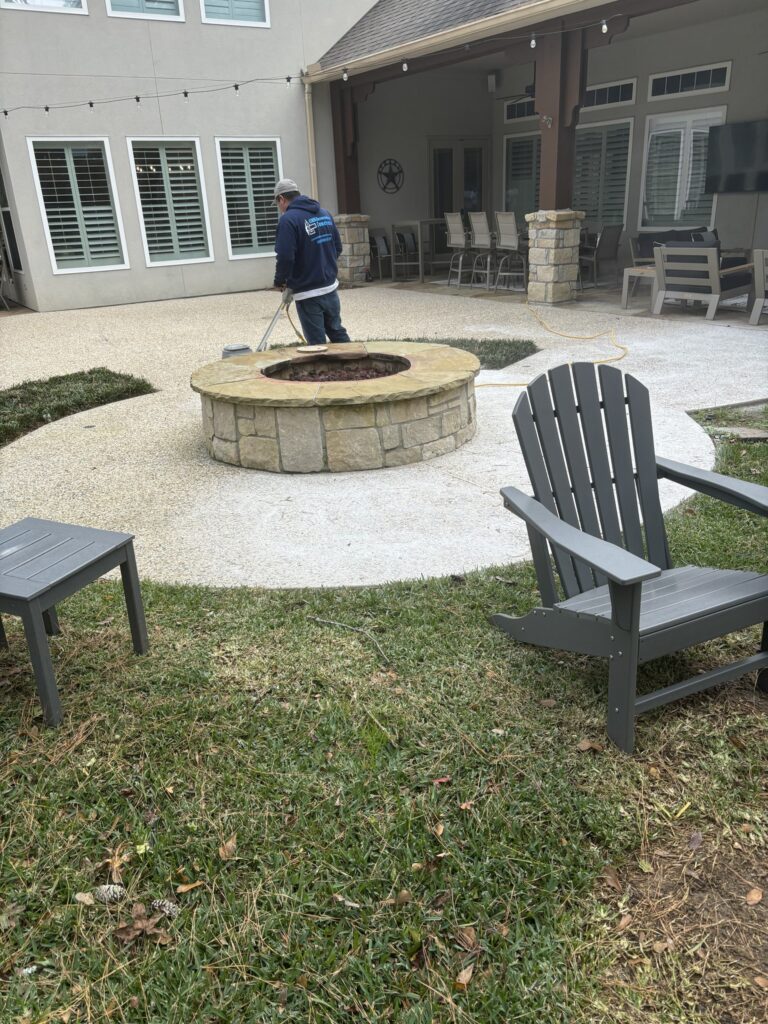
A bare backyard in Chicago sat unused 8 months a year. The solution? A 900-square-foot concrete outdoor living space that turned wasted land into the neighborhood’s most talked-about entertaining spot. This wasn’t just a slab – it became a full outdoor room.
Breaking down this transformation:
- Main patio area: 600 sq ft for seating and dining ($9,000)
- Elevated cooking space: 200 sq ft for grill and prep area ($4,000)
- Step-down conversation pit: 100 sq ft with built-in seating ($3,500)
- Concrete countertops for outdoor kitchen: 30 linear feet ($4,500)
- Built-in planters: 40 linear feet ($2,800)
- Specialty finishes and colored concrete: ($3,200)
- Drainage system integration: ($2,000)
- Lighting integration prep: ($1,500) Total project cost: $30,500
But here’s what that investment actually bought: Real estate agents now market it as “2,000 square feet of living space plus 900 square feet of premium outdoor living.” The space hosts everything from morning coffee to weekend barbecues to evening wine tastings. Even in winter, the family uses the cooking area, protected by a simple pergola.
The concrete’s thermal mass keeps the space usable deeper into fall and earlier in spring. Integral color means no repainting. The surface texture prevents slips even in rain. Built-in drainage eliminates puddles and protects the foundation. Each feature adds practical value:
- The cooking area’s concrete counters handle hot pans and weather without flinching
- The conversation pit’s built-in seating saves $3,000 on outdoor furniture
- The planters double as privacy walls, saving $4,000 on separate screening
- The varied elevations create distinct spaces without walls
- Surface treatments mean no sealing for 5 years
Compared to alternatives:
- Wooden deck: $45,000 with similar features, needs replacement in 15 years
- Paver patio: $38,000, requires regular maintenance and weed control
- Natural stone: $60,000+ for similar square footage
Insurance impact: Extended living space increased home value by $45,000 in recent appraisal. Annual insurance increase only $85 due to concrete’s durability and safety features.
Stamped Decorative Driveways: The New Curb Appeal Champion

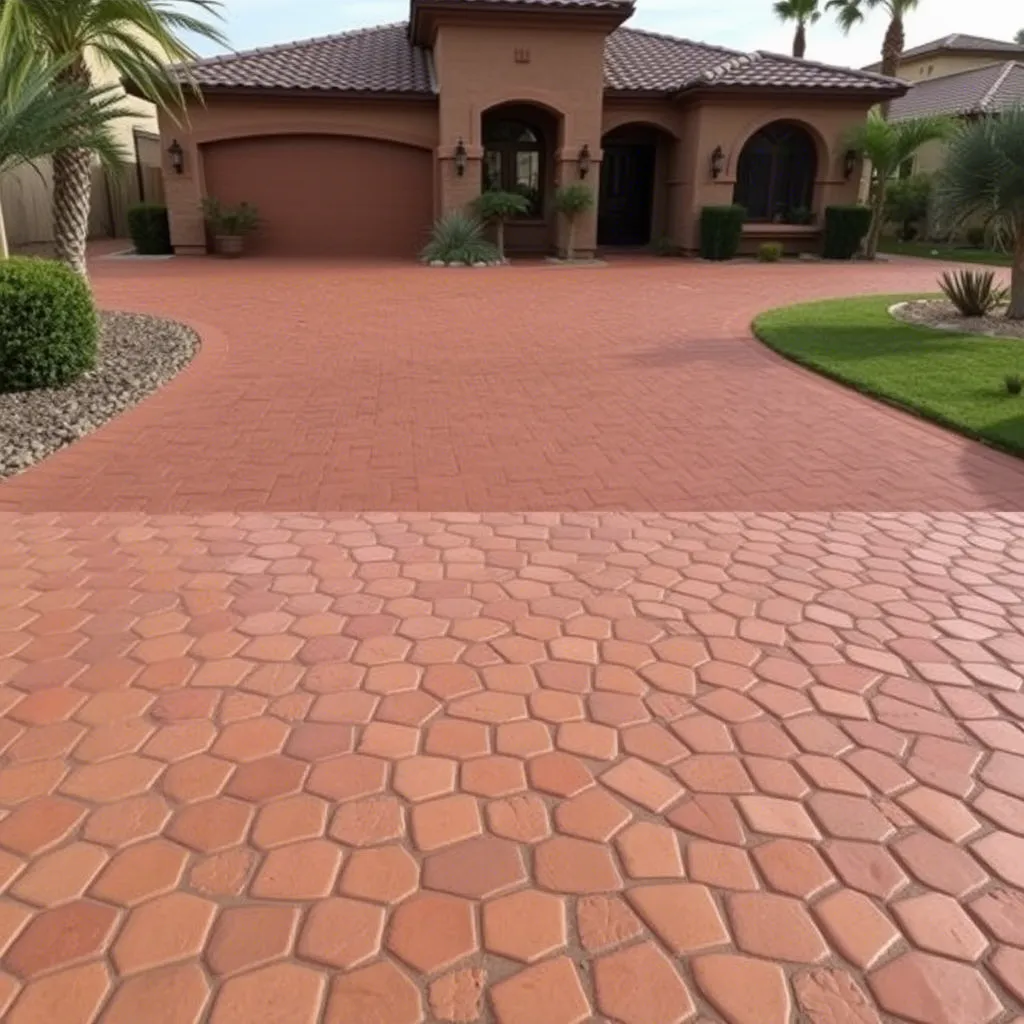
Remember that gray slab pulling up to every house in the neighborhood? That’s not what we’re talking about. Modern stamped driveways transform your home’s first impression. A recent project in Phoenix replaced a cracked, oil-stained driveway with a cobblestone-stamped pattern in warm terra cotta. Cost? $8,500 for a 600 square foot driveway. The homeowner’s initial reaction? “That’s more than I planned.” But here’s what happened next.
The pattern matched their Spanish-style home’s aesthetic. The sealer meant oil stains wiped right off. The color complemented their landscaping. Three months later, neighbors started asking for their contractor’s number. Six months later, the house down the street did the same thing. A year later, their insurance company lowered their liability premium because the even surface reduced trip hazards.
Breaking down the investment:
- Basic concrete driveway: $4,500
- Stamping pattern add-on: $2,000
- Color treatment: $1,000
- Premium sealer: $1,000
- Expected lifespan: 25+ years
- Annual maintenance cost: $200 for resealing every 2-3 years
Compare this to asphalt ($3,500 but needs replacement every 7-10 years) or plain concrete ($4,500 but adds minimal value). The stamped driveway typically returns 75% of its cost in home value immediately, plus that crucial boost in curb appeal that gets buyers through the door.
Imagine pulling up to two identical homes. One has a cracked, stained driveway. The other showcases a rich, textured surface that flows into the landscaping. Which one feels more valuable? Which one justifies a higher asking price? Real estate agents report that attractive driveways can speed up sales by 1-2 months in competitive markets.
Indoor Stained Concrete Floors: The Hidden Value Multiplier
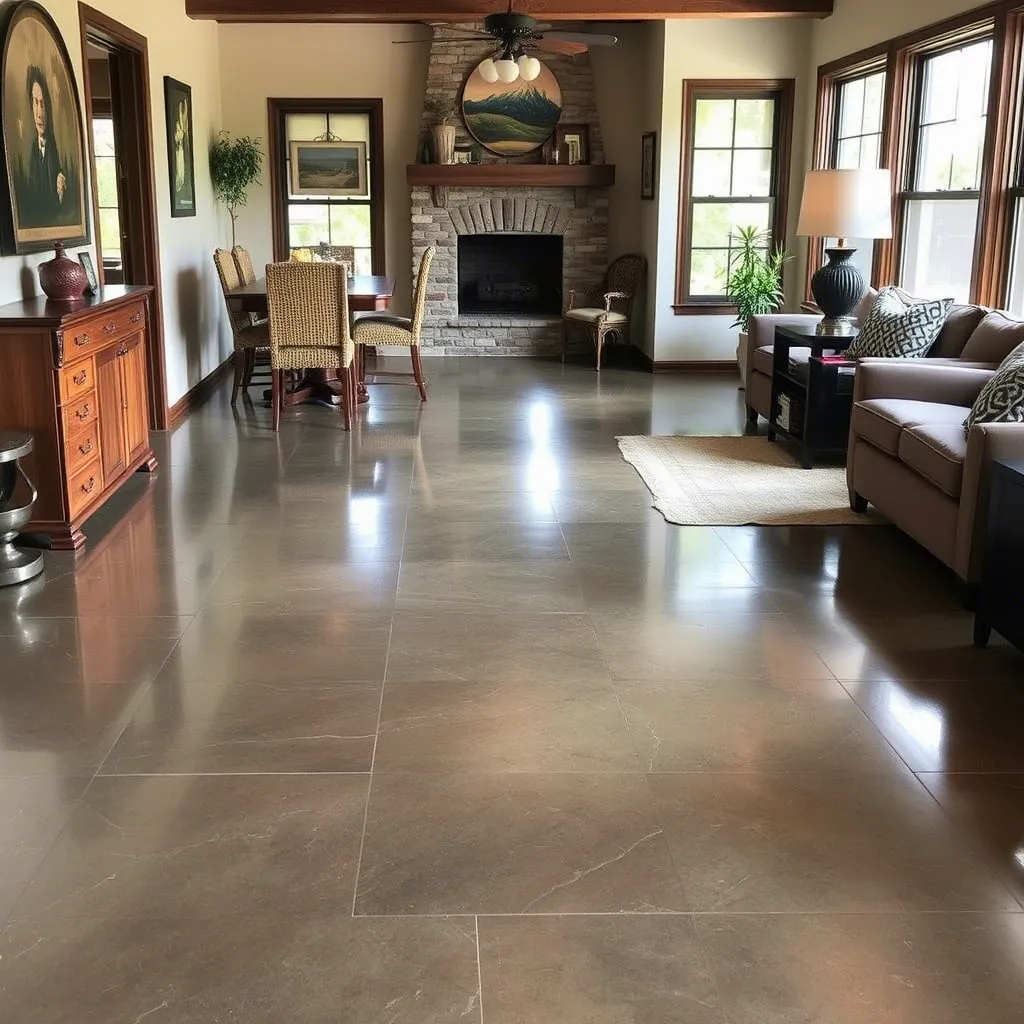
Walk into any high-end loft or modern home magazine spread. Notice the floors? That’s not exotic stone – it’s stained concrete. A recent renovation in Austin took a 2,000 square foot ranch house with dated carpet and transformed the floors into a marbled amber masterpiece. Total cost: $12,000. Far less than hardwood ($20,000) or high-end tile ($25,000).
The process took a week. Removed old flooring, ground the concrete, repaired cracks, applied stain and multiple layers of sealer. The result? A seamless surface from front door to back patio. No grout lines. No boards to warp. Just a smooth, cool floor that looked like art.
Cost breakdown for 2,000 square feet:
- Floor preparation and repairs: $3,500
- Staining process: $4,000
- High-grade sealer system: $2,500
- Final polishing: $2,000
- Expected lifespan: Lifetime of house
- Annual maintenance: $300-500 for resealing high-traffic areas
Real value comes in unexpected places. The new floor eliminated echoes, making the house feel more luxurious. It stayed cool in summer, cutting AC costs. Spills wiped up without staining. Pet claws couldn’t scratch it. Furniture slid without catching. The realtor’s feedback? “This floor makes the house feel twice as expensive.”
Think about aging in place – no carpet to trip on, no tile to crack, no wood to maintain. Insurance companies love it because it’s fireproof. Energy auditors love it because it works with radiant heating. Kids can spill juice, dogs can have accidents, furniture can drag – the floor takes it all.
Concrete Basement Transformation: The Square Footage Multiplier
Picture a 1,200 square foot basement in Boston – damp, dark, and wasting space. Most contractors pushed for traditional finishing: framing, drywall, carpet. Instead, this homeowner chose a full concrete renovation. The result? A waterproof, mold-proof lower level that added legitimate living space to home value calculations.
Complete process breakdown:
- Interior waterproofing with crystalline concrete treatment: $8,500
- Floor leveling and crack repair: $5,500
- Decorative concrete overlay with metallic finish: $9,500
- Wall smoothing and architectural concrete coating: $7,500
- Moisture barrier system: $4,500
- Custom concrete bar and entertainment center: $6,500
- Integrated floor heating system: $8,000
- Specialized lighting integration: $3,500
- Sound dampening concrete additives: $2,500 Total investment: $56,000
Value additions most overlook:
- Insurance companies rate it as full living space, unlike traditional basements
- Concrete walls and floors act as thermal mass, cutting heating costs
- No risk of mold or mildew growth in concrete surfaces
- Zero maintenance beyond occasional cleaning
- Doubles as storm shelter, adding safety value
- Floor can handle minor flooding without damage
Real costs vs. traditional finishing:
- Traditional basement finish: $45,000 but needs renovation every 15-20 years
- Risk of mold remediation: $15,000-30,000 if problems develop
- Flood damage repair: $25,000+ with traditional materials
The space now hosts:
- Home theater area where concrete provides acoustic benefits
- Wine cellar where concrete naturally regulates temperature
- Home gym where concrete handles equipment weight
- Office space with built-in concrete desk and shelving
- Full bathroom where concrete provides waterproof surfaces
Humidity monitoring shows 45% average – perfect for living space, impossible with traditional materials. Energy bills dropped 23% after completion due to concrete’s thermal properties.
Foundation Restoration and Enhancement: The Hidden Champion of Home Value
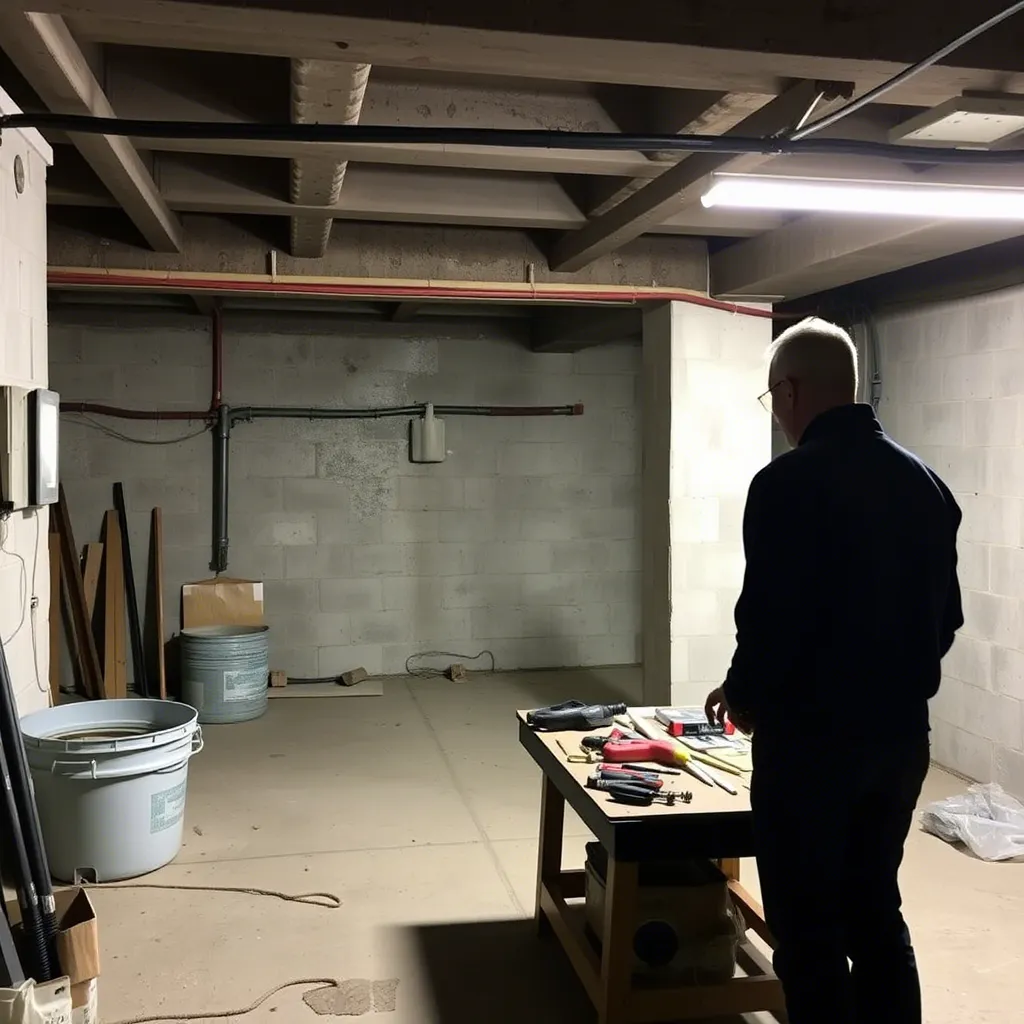
Take a 1960s ranch house in Seattle. Hairline cracks spider-webbed across the foundation walls. Water seeped in during heavy rains. The basement smelled musty. Market value? $50,000 below similar homes in the area. Here’s how concrete solutions turned this liability into an asset:
- Exterior excavation and waterproofing: $14,500
- Crack injection and structural reinforcement: $8,500
- Carbon fiber foundation strapping: $7,500
- Drainage system upgrade: $6,500
- Interior wall restoration: $9,500
- Concrete floor leveling and sealing: $5,500
- Sump pump system installation: $3,500
- Humidity control integration: $2,500
- Foundation coating and finishing: $4,500 Total Project Cost: $62,500
Real Market Impact:
- Home value increased by $85,000 post-restoration
- Insurance premiums dropped $450 annually
- Energy bills decreased 15% from better insulation
- Humidity levels stabilized at 40%
- Radon levels dropped below detectable limits
Compare this to band-aid solutions:
- Simple crack filling: $1,500 but only lasts 2-3 years
- Interior waterproofing alone: $8,000 but doesn’t fix structural issues
- Patch-work repairs: $5,000 every few years
Breaking Down Long-Term Benefits:
- Structural warranty now transferable to new owners
- Foundation issues no longer flag on home inspections
- Basement now qualifies as legitimate living space
- Property insurance covers full value without riders
- Mortgage companies offer better refinancing terms
Think about buying two identical houses. One has documented foundation issues with patch repairs. The other shows a complete concrete restoration with transferable warranty. The price difference? Often $100,000 or more. Banks finance the restored home at better rates. Insurance costs less. Future repairs become minimal.
Maintenance Schedule and Costs:
- Annual inspection: $200
- Sealer refresh every 5 years: $1,500
- Drainage system cleaning: $300 annually
- Expected lifetime of repairs: 50+ years
This solution particularly shines in markets where:
- Older homes compete with new construction
- Wet climates challenge foundation integrity
- Buyers demand documented home history
- Insurance companies scrutinize structural elements
- Property values hinge on inspection reports
The concrete approach provides tangible proof of structural integrity – something no amount of cosmetic renovation can match. Real estate agents report these homes often sell within days rather than weeks, especially when restoration documentation demonstrates the comprehensive nature of repairs
The versatility of concrete means it can be molded into different shapes and textures, enhancing any outdoor area or structural component. Whether it’s creating a modern patio or reinforcing a foundation, concrete proves to be an invaluable material. Homeowners seeking both practicality and style often gravitate towards this option for its proven track record of performance.
Furthermore, concrete’s low maintenance nature makes it an attractive option for busy homeowners. Unlike other materials that may require frequent upkeep or replacement, concrete offers peace of mind through its resilience against weather and wear. Investing in quality concrete work ensures that your home remains attractive and structurally sound for years to come.
The importance of local contractors
Local contractors play a crucial role in delivering high-quality concrete solutions at competitive prices. Their familiarity with regional building standards and climate considerations gives them an edge in crafting long-lasting installations. They bring expertise to every project, ensuring that every detail meets both aesthetic desires and functional needs.
By choosing local experts, you support community businesses while benefiting from personalized service tailored to your specific requirements. These professionals understand the nuances of working within your area’s constraints and possibilities, making them ideal partners in realizing your vision for home improvement.
A contractor from Phoenix might excel at desert-proof concrete, but put that same expert in Seattle’s constant rain, and problems surface. Local contractors carry neighborhood knowledge worth more than any technical certification. Take Brooklyn’s historic districts – concrete work must match specific color tones, meet landmark requirements, and handle salt damage from winter streets. Only contractors who’ve worked these neighborhoods understand which aggregates resist salt damage or how deep to pour foundations in areas with old subway tunnels.
Every zip code brings unique challenges. Manhattan’s soil differs block by block – some areas sit on solid bedrock while others rest on centuries of filled ground. Local crews know where underground streams run, which streets flood during storms, and how nearby construction affects ground stability. This knowledge prevents costly mistakes like pouring concrete that cracks when the season changes or installing patios that trap water against foundations.
Neighborhood expertise extends beyond technical skills. Local contractors understand permit processes for specific boroughs, know which inspectors handle certain areas, and maintain relationships with suppliers who stock materials matching existing structures. When a project in Queens needs concrete matching a 1940s sidewalk, local contractors know exactly which supply yard carries the right mix.
Consider temperature variations between city microclimates. A summer concrete pour in Battery Park City faces different challenges than one in Park Slope – wind patterns, shade from buildings, and heat reflection all affect curing times. Local crews adjust their techniques accordingly, ensuring lasting results that stand up to each area’s specific environmental pressures.
This practical knowledge translates into real savings. Local contractors can accurately estimate project timelines based on neighborhood factors like street parking rules, noise ordinances, and typical inspection wait times. They spot potential issues before they become expensive problems – like knowing which streets require extra drainage due to poor municipal systems or which areas need deeper frost protection due to specific soil conditions.
Bonus Tips For Maximizing Value
Maximizing value from your concrete investment starts with choosing the right contractor who understands your vision and budget constraints. Look for credentials and reviews that attest to their professionalism and past successes in similar projects. It’s equally important to discuss materials upfront; opting for high-quality mixes ensures longevity and reduces future repair costs.
Once installed, maintaining your concrete driveway or patio is key to preserving its aesthetic appeal and structural integrity over time. Regular cleaning prevents buildup of debris which can cause stains or damage surfaces. Additionally, periodic sealing helps protect against water infiltration and freeze-thaw cycles common in many climates.
Your initial investment should include not just installation costs but also considerations for ongoing maintenance needs. By planning ahead and staying proactive about care routines, you’ll keep your property looking pristine while safeguarding its value against potential depreciation factors.