


A mother stands in aisle seven, squinting at a yogurt label. “Natural flavors,” it says. She puts it in her cart for her eight-year-old. Three hours later, that kid’s bouncing off walls at school, can’t focus, teacher’s calling home again. Nobody connects it to breakfast.
The yogurt had 28 grams of sugar. Seven teaspoons. Would she hand her kid seven spoons of sugar? Never. But wrapped in packaging with cartoon characters, it slides right past.


Contents
- 1 A Quiet Threat That Affects Millions
- 2 It’s Not Always What You Expect
- 3 The Numbers That Should Terrify You
- 4 Vegetable Oils: The Two-Year Prison Sentence
- 5 Sugar Mathematics Nobody Teaches
- 6 Dead Food Pretending to Be Alive
- 7 Chemical Preservation: Trading Shelf Life for Your Life
- 8 A Real-World Example: The McDonald’s Outbreak
- 9 What Causes These Breakdowns?
- 10 The Role of Regulation (and Its Limits)
- 11 The Metabolism Messenger Service
- 12 Natural Flavors: The Great Legal Lie
- 13 The Protein Powder Delusion
- 14 Reading Labels Like Your Life Depends on It
- 15 The Generational Theft
- 16 Solutions That Actually Work
- 17 The Cost Argument Is Backwards
- 18 The Final Math
A Quiet Threat That Affects Millions
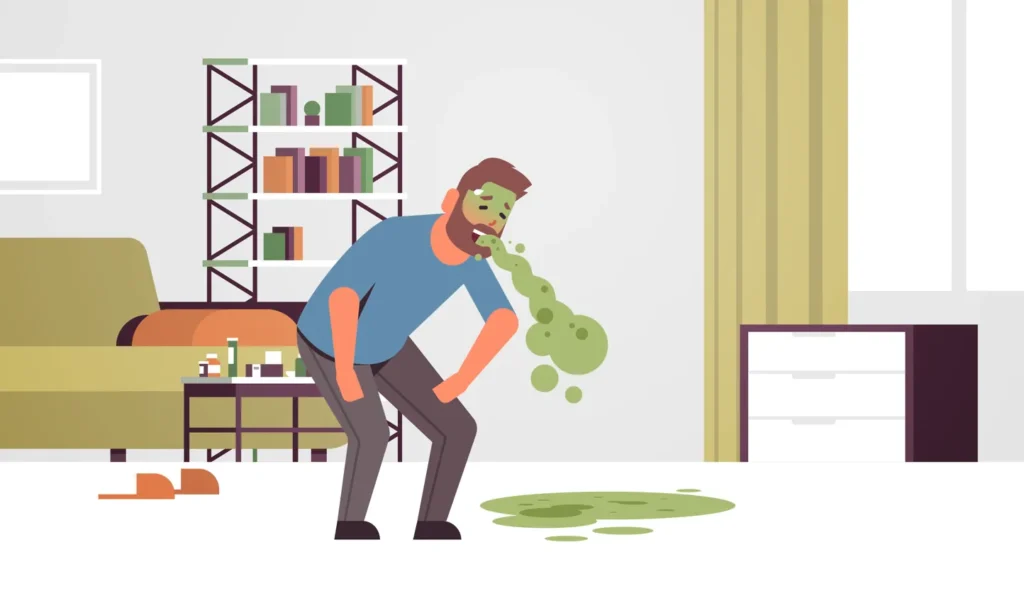
Each year, about 48 million Americans get sick from foodborne illnesses, according to the CDC. That’s roughly one in six people. While many recover with rest and fluids, some cases become far more serious. Over 128,000 people end up hospitalized, and around 3,000 die due to contaminated food.
Young children, older adults, and people with weakened immune systems face the highest risk. But even healthy adults aren’t immune to complications.
Certain bacteria can cause lasting damage. E. coli infections may lead to hemolytic uremic syndrome, a condition that can damage the kidneys. Listeria can result in miscarriage or neurological problems. Salmonella has been linked to arthritis and long-term intestinal issues.
All of this underscores that foodborne illness is far more than a temporary discomfort. It can lead to serious, long-term health consequences that go well beyond a simple upset stomach.
It’s Not Always What You Expect
Most people associate food poisoning with spoiled meat or dirty kitchens. But contamination often comes from surprising sources like bagged salad, ice cream, or even flour. These everyday items can carry harmful bacteria, even when they look and smell fine.
Take pre-cut vegetables, for example. They save time but pass through multiple machines and human hands. Each step adds another chance for contamination. Or consider frozen meals. If they’re thawed and then refrozen during transport or storage, bacteria can grow undetected inside the sealed packaging.
Even trusted brands and national chains aren’t immune. It’s not always a matter of neglect. Often, it’s the scale of the system, too many moving parts, and people to catch every misstep. In a global food supply chain, even one small error can have wide-reaching effects.
The Numbers That Should Terrify You
Americans now get 58% of their calories from ultra-processed foods. Not processed. Ultra-processed. There’s a difference.
- Processed: Frozen vegetables, canned beans, cheese.
- Ultra-processed: Things with barcodes that survive nuclear winter.
- Real food: Stuff that rots when you leave it out.
Your liver doesn’t know what to do with half the chemicals entering your body. It tries. God, it tries. By age 35, one in three Americans has fatty liver disease. Not from alcohol. From food.
Twenty years ago, fatty liver in kids was unheard of. Now pediatric hepatologists see it weekly. These kids aren’t drinking. They’re eating normal American lunches.

Vegetable Oils: The Two-Year Prison Sentence
Soybean oil was basically nonexistent in 1909. Today it’s 20% of American calories. One ingredient. Twenty percent.
Your cell membranes incorporate these oils. Every cell. Brain cells especially – your brain is 60% fat. These omega-6 oils make membranes rigid, interfere with cellular communication, promote inflammation. The kicker? They stay in your body for up to two years after you stop eating them.
Two years.
You could quit vegetable oils today, eat perfect fats, and still have soybean oil in your cell membranes when your toddler starts preschool.
Food manufacturers love seed oils because:
- They’re cheap – industrial waste turned into food.
- They never spoil – nothing wants to eat them, not even bacteria.
- They make everything crispy – that addictive crunch.
Your body experiences them as:
- Inflammatory signals cranked to eleven.
- Mitochondrial dysfunction – your cellular power plants sputter.
- Hormone disruption – especially thyroid and reproductive.
Sugar Mathematics Nobody Teaches
Look at any drink label. See “carbohydrates: 22g”? Divide by four. That’s teaspoons of sugar. Five and a half teaspoons in one serving.
But wait. The insulin response makes it worse.
Here’s the timeline after drinking that sports drink:
- 0-15 minutes: Blood sugar skyrockets.
- 15-30 minutes: Insulin floods in, panic mode.
- 30-90 minutes: Sugar crashes below baseline.
- 90-180 minutes: Insulin stays high while sugar is low.
- 180 minutes: Kid is starving, irritable, can’t think straight.
This is reactive hypoglycemia. The body overshoots. Now the kid needs another hit to function. By lunch, they’ve had three sugar spikes. Their liver is converting excess glucose to fat. Fatty liver begins.
The drink cost $3. Water was free. The medical bills come later.
Dead Food Pretending to Be Alive
Bread that doesn’t mold after three weeks isn’t food. It’s an edible food-like substance.
Real bread – sourdough made with flour, water, salt, starter – molds in five days. That’s normal. Mold is life recognizing life.
Commercial bread:
- Stripped of fiber (the part that feeds gut bacteria).
- Stripped of germ (where the vitamins live).
- “Enriched” with synthetic vitamins (like putting a vitamin pill in cardboard).
- Preserved with calcium propionate (linked to behavioral issues in children).
- Shelf-stable for months (because it’s already dead).
Your gut bacteria starve on this stuff. You need 30 different plant types weekly for optimal microbiome diversity. Most Americans get nine. A Big Mac meal counts as maybe two.
The fiber paradox:
- Bagel: 1 gram fiber, 190 calories.
- Apple: 4 grams fiber, 95 calories.
- Your microbiome: Desperately hungry either way.
Chemical Preservation: Trading Shelf Life for Your Life
TBHQ. Calcium disodium EDTA. BHA. BHT. These aren’t food. They’re industrial chemicals that prevent oxidation. Same chemicals used in petroleum products.
Food manufacturers say they’re “generally recognized as safe” (GRAS). That designation? Companies can self-declare it. No FDA review required. Just decide your chemical is safe, file some paperwork, start adding it to food.
Currently 10,000 chemicals are added to US food. Europe bans hundreds of them.
The dyes are worse:
- Red 40: Linked to hyperactivity, approved in 1971 when safety standards were different.
- Yellow 5: Triggers asthma, hives, hyperactivity – requires warning labels in Europe.
- Blue 1: Crosses the blood-brain barrier, accumulates in the brain.
Europe requires warning labels: “May have an adverse effect on activity and attention in children.”
A Real-World Example: The McDonald’s Outbreak
In 2024, a serious E. coli outbreak was linked to slivered onions used in McDonald’s Quarter Pounder sandwiches.
At least 75 people across 13 states became ill, and 22 were hospitalized. Moreover, two people developed hemolytic uremic syndrome, and one person died. The outbreak was traced back to Taylor Farms, a food processor located in Colorado Springs.
Following the outbreak, the FDA identified multiple health violations at the Colorado Springs facility. These included improper sanitation, unsafe food handling, and temperature control failures. For individuals in Colorado Springs or nearby areas who may have eaten at McDonald’s during the affected period, this outbreak raises serious concerns. Springs Law Group notes that those who fall ill due to someone else’s negligence may be entitled to compensation. This can cover valuable medical costs, lost income, and related damages.
Speaking with a personal injury lawyer in Colorado Springs can help you understand your rights and determine whether you were affected. They can also guide you in exploring options for holding negligent parties accountable.
What Causes These Breakdowns?
Food contamination can happen at any point in the supply chain:
- During growing or harvesting on farms
- During processing or packaging at factories
- During shipping and storage
- During food prep at restaurants or in your home
Poor handwashing by a factory worker, contaminated water used to rinse vegetables, or broken refrigeration units can lead to widespread outbreaks.
The risk is higher in large-scale operations. When one facility supplies dozens or hundreds of locations, contamination spreads quickly and widely.
The Role of Regulation (and Its Limits)
Food safety in the U.S. is regulated by a web of federal, state, local, and tribal agencies. At the national level, the CDC leads efforts to track and prevent foodborne illnesses. It partners with the FDA, which oversees most food products, and the USDA’s FSIS, which regulates meat, poultry, catfish, and egg products.
In total, more than 30 federal laws and at least 15 federal agencies are involved in safeguarding the food supply. However, most food facilities are inspected only occasionally. A facility might pass an inspection, yet fail to follow safety rules consistently. Limited resources and outdated systems make it hard to maintain strict oversight.
According to the GAO Watchdog, this overlapping oversight has caused fragmentation. With so many agencies involved, coordination often suffers. Efforts can be inconsistent, duplicative, or inefficient.
The Metabolism Messenger Service
Food isn’t just calories. It’s information. Every bite sends signals through your body, turning genes on and off, releasing hormones, feeding or starving bacteria.
Ultra-processed food sends scrambled messages:
- Fake sweetness without calories confuses insulin response.
- Lack of fiber fails to trigger satiety hormones.
- Chemical additives stress detoxification pathways.
- Missing micronutrients leave cells malnourished despite excess calories.
A Dorito lights up your brain like a slot machine. The crunch (engineered at exactly 4 pounds of pressure per square inch), the flavor dust (disappears quickly so you need more), the texture (dissolves just fast enough to make you think it’s not filling).
Your hypothalamus, expecting nutrition from these signals, keeps hunger turned on. You can eat a whole bag and still be genuinely hungry. Because you are. Your cells are starving while you’re overfed.
Natural Flavors: The Great Legal Lie
“Natural flavors” appears on 80% of packaged foods. Sounds healthy. It’s not.
Natural flavor can be:
- 100+ chemicals mixed together.
- Derived from “natural” sources (beaver anal glands for vanilla, really).
- Processed with solvents, preservatives, emulsifiers.
- Legally hidden because it’s proprietary.
Companies hire flavor scientists. Their job? Make food irresistible. They study the “bliss point” – the exact combination of salt, sugar, fat, and flavor that overrides satiety signals.
MSG hides under 40+ names:
- Yeast extract.
- Natural flavoring.
- Hydrolyzed protein.
- Autolyzed yeast.
- Glutamate.
- Textured protein.
Not saying MSG kills you. But transparency matters. If it’s safe, why hide it?
The Protein Powder Delusion
Gym bros drinking protein shakes thinking they’re healthy. Check the label:
- Sucralose (damages gut bacteria).
- Acesulfame potassium (affects thyroid).
- “Natural flavors” (see above).
- Heavy metals (third-party testing finds lead, cadmium, arsenic).
Meanwhile, 4 ounces of chicken breast: 35 grams complete protein, zero additives.
The supplement industry generates $150 billion yearly selling isolated nutrients to people eating dead food. You don’t need supplements. You need food that hasn’t been murdered by processing.
Reading Labels Like Your Life Depends on It
Because it does.
Rules for not poisoning yourself:
- More than five ingredients? Probably not food.
- Can’t pronounce it? Your liver can’t either.
- Barcode? That’s a warning label.
- Health claims on the package? The healthiest foods don’t need marketing.
Real food doesn’t have:
- Ingredients lists.
- Health claims.
- Mascots.
- TV commercials.
The Generational Theft
Kids raised on this food supply think it’s normal. Energy drinks for breakfast. Chips for lunch. Pizza for dinner. They don’t know what real energy feels like.
Their baseline:
- Brain fog is normal.
- Afternoon crashes expected.
- Anxiety is everyone’s default.
- Focus requires medication.
They’re medicating problems caused by food with drugs that create more problems requiring more drugs.
ADHD medications are amphetamines. We’re giving kids speed because their breakfast was basically candy.
Solutions That Actually Work
- Stop eating products. Start eating food.
- Shop the perimeter. Everything in the middle aisles is trying to kill you slowly.
- If it grew, ran, swam, or flew – eat it. If it was made in a plant, don’t eat plants made in plants.
Your plate:
- Half vegetables (actual vegetables, not french fries).
- Quarter protein (real animals or legumes).
- Quarter starch (potato, rice, real bread).
- Fat from the protein or olive oil.
That’s it. That’s the whole diet industry destroyed in four bullets.
The Cost Argument Is Backwards
“Healthy food is expensive.” No. Medical bills are expensive.
Type 2 diabetes costs $327 billion annually in America. That’s $1,000 per American, whether you have it or not.
Statins: $20 billion. Blood pressure meds: $15 billion. Antidepressants: $13 billion.
A dozen eggs: $4. Pound of ground beef: $5. Bag of potatoes: $3. Bunch of bananas: $2.
You’re either paying the farmer or the pharmacist. Choose.
The Final Math
Every meal is a choice. Nourishment or poison. Medicine or toxin. Energy or exhaustion.
The food industry profits from confusion. They fund studies showing sugar is fine, seed oils are heart-healthy, chemicals are safe. They put yoga moms on packages selling diabetes in a box.
Your body keeps perfect score. Every fake meal, every chemical drink, every dead snack adds up. The bill comes due at 35, 45, 55. Earlier every generation.
Your liver remembers. Your cells remember. Your microbiome remembers.
The question isn’t whether you can afford to eat real food.
It’s whether you can afford not to.
References
- American Gut Project findings on microbiome diversity and plant consumption requirements.
- Southampton Study on artificial food coloring and hyperactivity in children (Archives of Disease in Childhood, 2007).
- NHANES data on ultra-processed food consumption in the United States.
- European Food Safety Authority regulations on food additive labeling requirements.
- FDA GRAS notification database and self-designation protocols.
- Omega-6 fatty acid retention studies in adipose tissue (American Journal of Clinical Nutrition).
- Pediatric NAFLD prevalence data from NASPGHAN (North American Society for Pediatric Gastroenterology, Hepatology and Nutrition).