


The postpartum period is a time of immense joy, major lifestyle shifts, and profound physical transitions. While much of the preparation before birth focuses on assembling nursery gear and buying infant clothing, the reality is that a mother’s body requires just as much care, attention, and preparation. During the fourth trimester, your muscles work overtime to support your healing body while adapting to the physical demands of cradling, lifting, and feeding a newborn around the clock. Investing in a structured baby nursing pillow before your little one arrives is one of the most effective ways to establish an ergonomic setup from day one, allowing you to feed in comfort while protecting your spine from repetitive strain. By proactively addressing your postpartum physical health, you can prevent chronic muscle tension and dedicate your energy to enjoying those irreplaceable early weeks of bonding.
Contents
The Biomechanics of the Postpartum Body
To effectively rebuild your strength and protect your posture, it helps to understand exactly what your musculoskeletal system goes through during pregnancy and childbirth. Your body does not instantly return to its pre-pregnancy state once your baby is born; instead, it enters a prolonged phase of healing and restructuring.
The Impact of Relaxin and Ligament Laxity

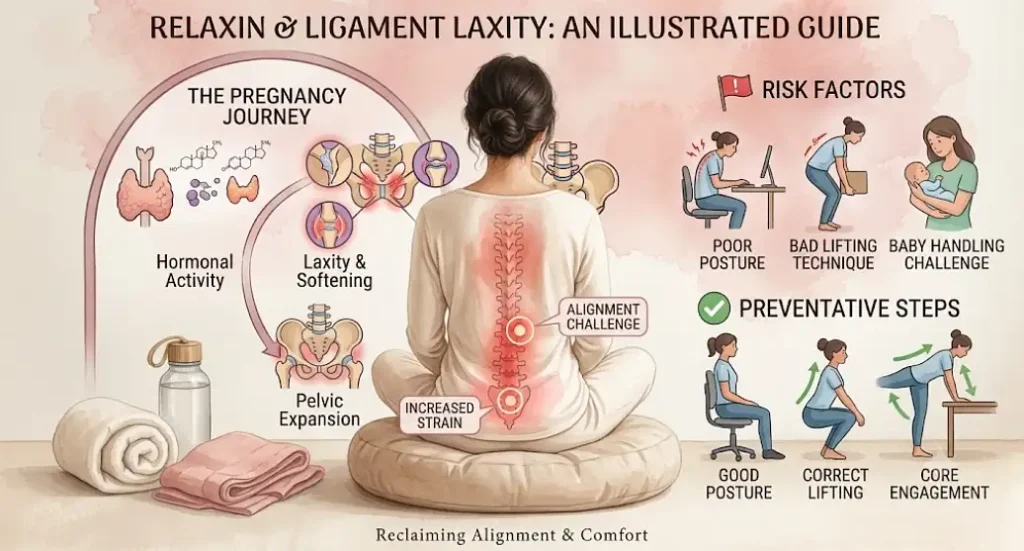
During pregnancy, your body secretes a hormone called relaxin, which softens the ligaments, cartilage, and joints to allow your pelvis to expand during childbirth. This hormone does not disappear overnight. It remains active in your bloodstream for several months postpartum—and even longer if you choose to breastfeed.
Because your ligaments are temporarily loose, your skeletal joints lack their usual structural stability. As a result, your muscles must work significantly harder to keep your body aligned. If you routinely adopt poor posture or lift heavy objects incorrectly during this phase, you run a much higher risk of developing joint misalignment, lower back strain, and pelvic girdle pain.
Understanding the “Nursing Slouch”

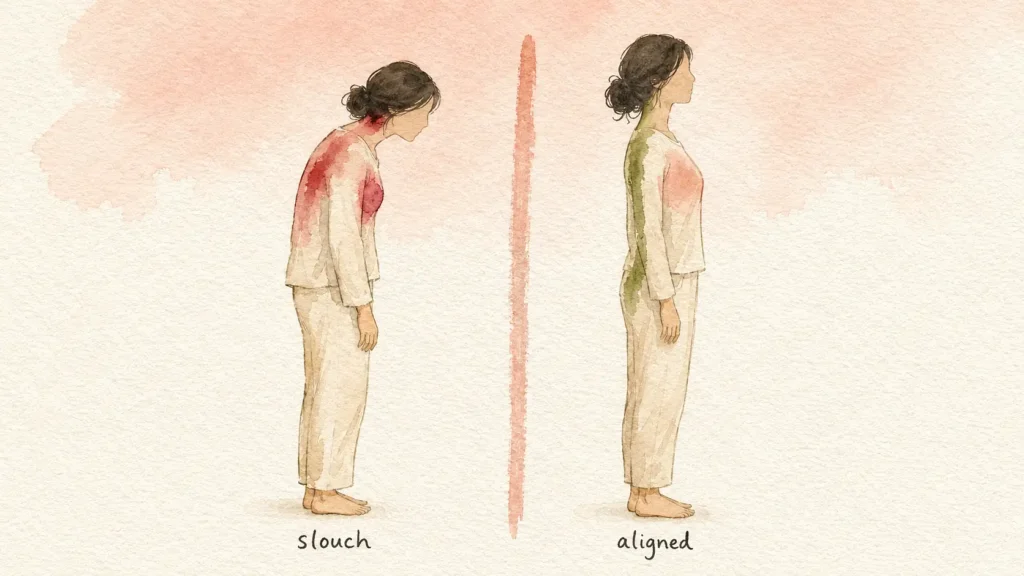
With a newborn, you will spend several hours each day looking down, rounding your shoulders, and hunching forward to feed or comfort your baby. Over time, this repetitive position leads to a very common postural imbalance known as the “nursing slouch” or upper cross syndrome. This condition is characterized by:
- Tight, restricted pectoral (chest) muscles.
- Overstretched, weakened upper back muscles (the rhomboids and middle trapezius).
- Forward head posture, which places up to thirty pounds of extra pressure on your cervical spine.
How to Set Up an Ergonomic Nursing Station

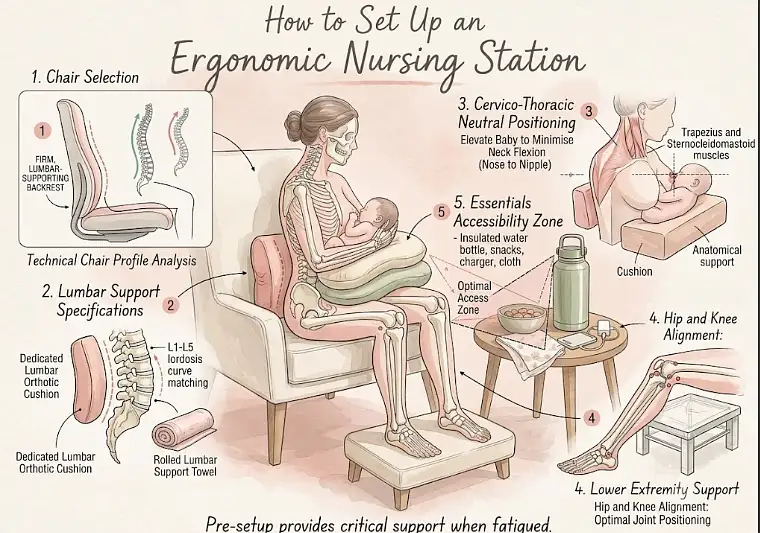
One of the easiest ways to protect your postpartum physical health is to create a dedicated, highly supportive space where you can feed your baby comfortably. Setting up this station before you bring your baby home ensures you will not have to scramble to find supportive cushions when you are exhausted in the middle of the night.
- Choose the Right Chair: Look for a chair that has a firm, supportive backrest. Avoid deep, plush couches that cause your lower back to collapse and round. Your knees should be level with or slightly lower than your hips, and your feet should rest flat on the floor. If your feet do not reach, use a small footstool to keep your lower body stable.
- Incorporate Lumbar Support: Place a small, rolled-up towel or a dedicated lumbar cushion behind the curve of your lower back. This simple adjustment supports the natural alignment of your spine and prevents slouching.
- Elevate the Baby to Nipple Height: The most common postural error is leaning your torso down to meet your baby. Instead, stack firm cushions or a structured feeding support across your lap until your baby’s nose is level with your breast. This allows you to keep your back fully supported by the chair while you feed.
- Keep Essentials Within Arm’s Reach: Set up a small side table next to your chair. Stock it with a large, insulated water bottle, healthy one-handed snacks, a phone charger, and a burp cloth. This prevents you from having to twist, stretch, or bend awkwardly once you and your baby are settled.
Daily Movement Patterns: Protecting Your Spine
Newborn care requires a constant cycle of lifting, carrying, and bending. Making minor adjustments to how you execute these movements can drastically reduce the physical wear and tear on your recovering body.
Lifting from the Crib or Bassinet
Reaching down into a deep crib to lift a baby puts a high amount of mechanical stress on your lower back.
- The Correct Technique: Stand as close to the edge of the crib as possible. Engage your deep abdominal muscles by gently pulling your belly button toward your spine. Bend at your hips and knees—rather than rounding your spine—to lower yourself. Lift the baby close to your chest before standing up, using the strength of your legs to push yourself back up.
Carrying Your Baby Center-Mass
It is incredibly easy to fall into the habit of resting your baby on one hip while you do household chores. However, this lateral carrying position forces your pelvis out of alignment and compresses one side of your spine.
- The Correct Technique: Try to carry your baby centered against your chest. If you are using a baby carrier, make sure the waistband is buckled securely around your hips to distribute the weight evenly, and ensure the shoulder straps are snug enough to keep the baby high on your torso.
Gentle Postpartum Exercises to Rebuild Strength

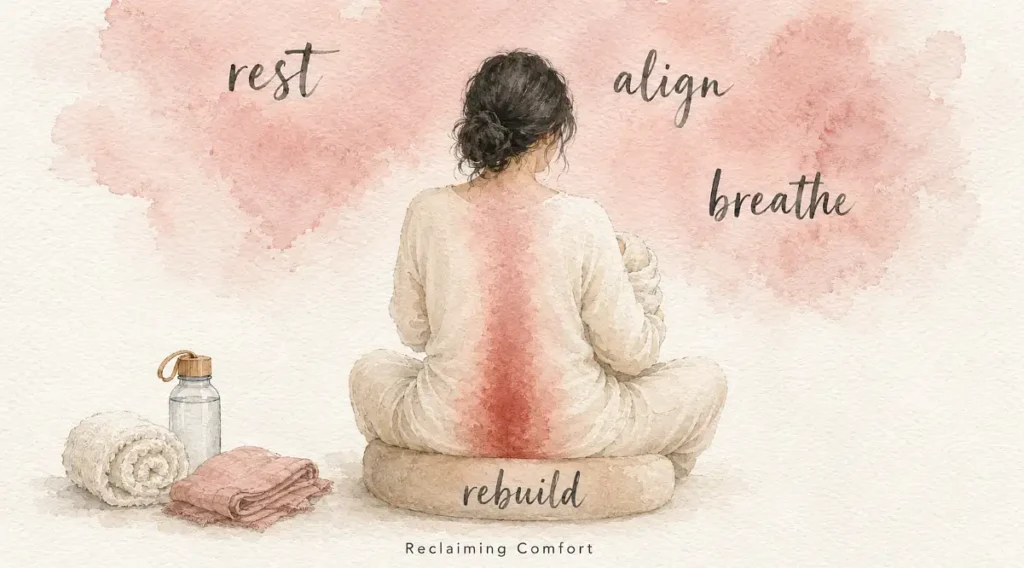
Before you begin any exercise routine after giving birth, it is essential to get cleared by your healthcare provider, typically at your six-week postpartum checkup. Once you have the green light, focus on slow, low-impact movements designed to gently reactivate your core and open up tight, overworked muscles.
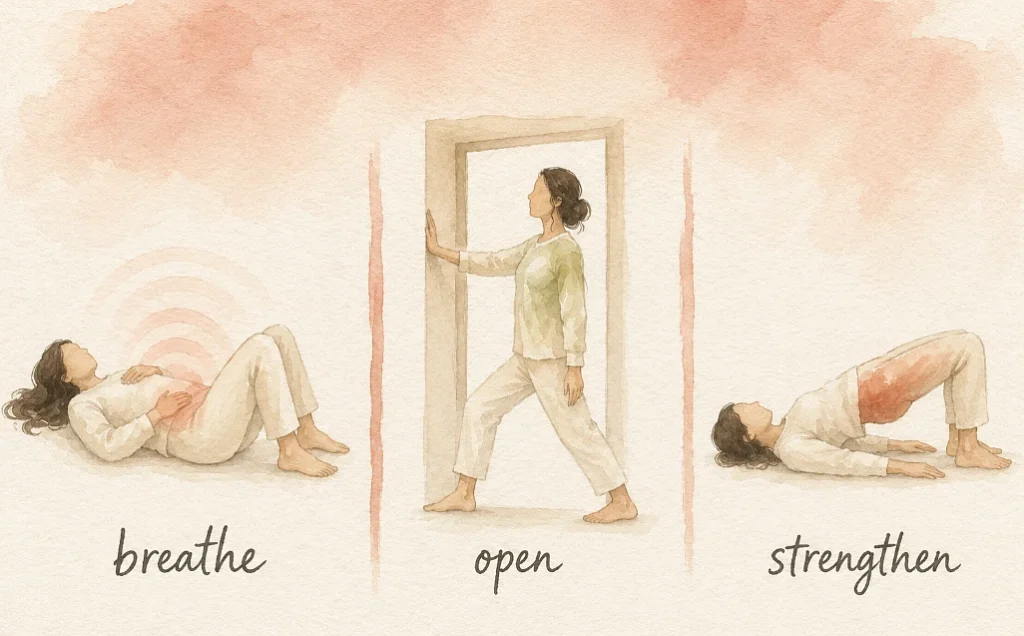
1. Diaphragmatic Breathing
This foundational exercise helps reconnect your deep core muscles, including your transverse abdominis and pelvic floor, which were stretched during pregnancy.
- Lie on your back with your knees bent and your feet flat on the floor. Place one hand on your chest and the other on your belly.
- Inhale deeply through your nose, allowing your belly and ribcage to expand fully while keeping your chest relatively still.
- Exhale slowly through your mouth, gently drawing your lower belly in and lifting your pelvic floor upward. Repeat for 10 to 15 breath cycles.
2. The Doorway Chest Stretch
This movement directly counters the “nursing slouch” by stretching out the tight chest muscles that accumulate tension during long feeding sessions.
- Stand in a doorway and place your elbows and forearms flat against the door frame at a 90-degree angle.
- Slowly step one foot forward through the doorway until you feel a gentle, comfortable stretch across the front of your chest and shoulders.
- Hold this position for 20 to 30 seconds while breathing deeply. Step back and repeat twice more.
3. Glute Bridges
Strengthening your glutes and hamstrings helps stabilize your pelvis and supports your lower back as you resume carrying your baby and heavy gear.
- Lie on your back with your knees bent and feet flat on the floor, hip-width apart.
- Keep your arms resting at your sides. Press through your heels to lift your hips toward the ceiling until your body forms a straight line from your shoulders to your knees.
- Squeeze your glutes at the top for two seconds, then slowly lower your hips back to the starting position. Perform 2 sets of 10 repetitions.
Honoring Your Body’s Healing Timeline
The journey through postpartum recovery is not a race. Your body spent nine months undergoing profound physical changes to grow and deliver your baby, and it requires time, rest, and patience to heal fully.
Prioritizing your physical health is not a selfish act; it is a fundamental aspect of sustainable parenting. When you take the time to support your posture, use proper lifting techniques, and build strength slowly, you prevent the chronic physical exhaustion that can make early motherhood feel overwhelming. Listen to your body’s signals, adjust your daily setup to support your skeletal structure, and allow yourself the grace to heal at your own unique pace.