


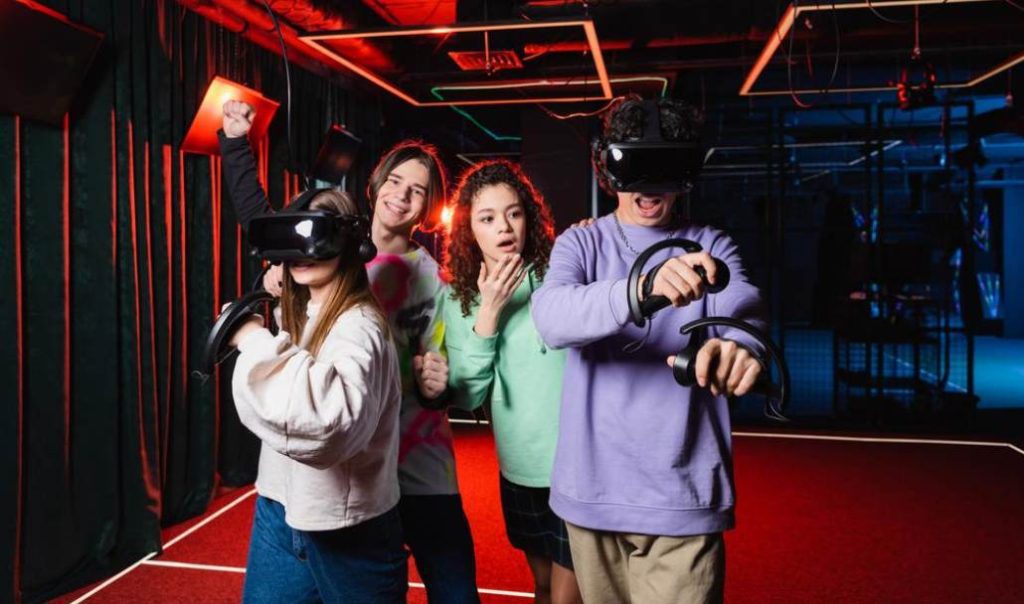
Virtual reality (VR) game development is revolutionizing the gaming landscape, offering immersive experiences that blur the lines between reality and digital worlds. Choosing the right VR game development partner is crucial for creating engaging, innovative, and memorable gaming experiences.
This article takes a deep dive into the essential elements of VR game development and critical considerations for selecting a development company.
Contents
- 1 The Evolution of VR Gaming
- 2 Critical Components of VR Game Development
- 3 Selecting a VR Game Development Company
- 3.1 Overcoming Challenges in VR Game Development
- 3.2 Integrating Advanced Technologies in VR Games
- 3.3 Creating Engaging Storylines and Characters
- 3.4 Customization and Player Agency in VR Games
- 3.5 Balancing Realism and Playability in VR Game Design
- 3.6 The Importance of User Experience and Accessibility
- 4 Conclusion
The Evolution of VR Gaming
VR gaming has progressed dramatically from simple 3D settings to rich, interactive worlds. This progression demonstrates VR games’ enormous potential to alter the gaming experience.
Critical Components of VR Game Development
Developing a VR game involves several critical elements:
- Immersive world-building. Crafting detailed and captivating virtual worlds that immerse players.
- Intuitive gameplay mechanics. Creating innovative and user-friendly gameplay, capitalizing on VR technology’s unique capabilities.
- High-quality graphics and sound. Ensuring the visual and auditory elements are top-notch to contribute to a fully immersive experience.
Selecting a VR Game Development Company
Choosing the right VR game development partner involves evaluating the following:
- Proven experience in VR. A company with a solid track record in VR game development demonstrates its expertise and creativity.
- Portfolio of successful games. Reviewing their past projects helps them understand their capabilities and the quality of their work.
- Understanding of gaming trends. The company should be knowledgeable about current and emerging gaming trends and how to incorporate them effectively.
Overcoming Challenges in VR Game Development
VR game development presents unique challenges:
- Balancing immersion and comfort. Striking a balance between creating immersive experiences and ensuring player comfort is crucial, particularly regarding motion sickness and user interface design.
- Hardware limitations and compatibility. Developing games that are compatible with various VR hardware, considering their limitations and capabilities, is essential.
- Innovative storytelling and design. Integrating storytelling with interactive design is key to creating compelling and memorable VR games.
Integrating Advanced Technologies in VR Games
Incorporating cutting-edge technologies enhances VR game development:
- AI and machine learning. Using AI to make gameplay more dynamic and responsive to player actions.
- Motion capture and haptics. Employing motion capture for realistic animations and haptics for tactile feedback enhances realism.
- Cross-platform development. Creating games that support cross-platform playability expands the audience’s reach.
Creating Engaging Storylines and Characters
Its plot and character development also determine a VR game’s success. Unlike traditional games, virtual reality provides a unique potential to engage players on a deeper level.
Developers must create intriguing storylines and relevant characters with which gamers may relate in order to make the VR experience visually, interactively, and emotionally engaging. This necessitates a careful balance of narrative and gameplay to ensure that the story adds to rather than detracts from the game’s interactive components.
Customization and Player Agency in VR Games
Providing high levels of customization and player agency is a critical component of VR game development. VR games that allow players to manipulate the game environment or personalize their avatars have higher engagement rates.
Such customization extends beyond cosmetic changes, allowing players to make genuine decisions that affect the game’s plot and outcomes. These aspects must be carefully planned and designed to ensure that player choices are meaningful and readily incorporated into the game’s scenario.
Balancing Realism and Playability in VR Game Design
A significant issue in VR game development is finding an acceptable balance between realism and playability. VR technology offers an unparalleled opportunity to build realistic worlds and experiences; yet, this realism must be carefully maintained in order to preserve gaming enjoyment and avoid issues such as motion sickness.
Developers must balance realistic sights and physics and innovative and appealing gameplay systems. This entails creating realistic settings while keeping performance in mind, as well as interactions that appear natural while remaining simple enough for players.
The Importance of User Experience and Accessibility
In VR game creation, user experience (UX) and accessibility are critical. A good VR game must be simple to operate, with controls and interfaces that are simple to use.
Furthermore, considering accessibility means that the game is entertaining for a wider audience, including individuals with impairments. Adjustable settings, subtitles, and different control systems can help make VR games more accessible and appealing to a wide range of players.
Conclusion
VR game production needs a combination of technological competence, creativity, and knowledge of gaming trends and user expectations. The right development partner is essential for developing immersive and memorable VR experiences. The possibilities of VR gaming are boundless with an experienced crew, providing gamers unparalleled places to explore and sensations beyond conception.