


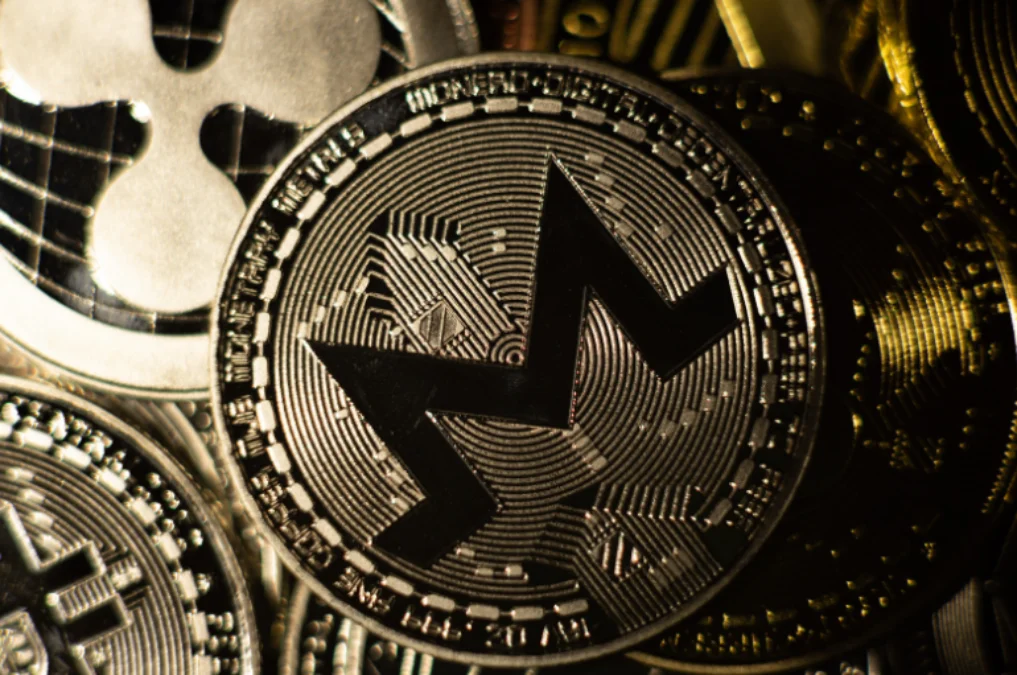
In recent years, the world of cryptocurrencies has witnessed a surge in innovation and adoption, with new technologies and concepts emerging at a rapid pace. Among these developments, two distinct phenomena have captured the attention of enthusiasts and investors alike: Non-Fungible Tokens (NFTs) and Monero, a privacy-focused cryptocurrency. While NFTs have revolutionized the way we perceive and value digital assets, Monero has established itself as a champion of financial privacy and fungibility. At first glance, these two concepts may seem unrelated, but the potential for their integration presents a fascinating opportunity to explore new frontiers in the realm of digital assets and privacy.
Contents
NFTs in the Monero ecosystem
- Monero inscriptions: Also known as Mordinals, these are a recent development in the Monero ecosystem that allows users to attach data to individual transaction outputs, effectively turning them into digital assets that resemble NFTs.
- Mordinals are similar to Bitcoin ordinals: These allow users to imprint personalized data onto the Bitcoin blockchain.
- Background and Features: Monero inscriptions are a way to associate certain data with transaction outputs, effectively creating a digital asset that can be transferred between users. Mordinals use an arbitrary but logical ordering system called ordinal theory to give each individual Monero output a unique number. This unique ID for every single output on the Monero blockchain sets Mordinals apart from previous implementations.
How to Mint Mordinals
Step 1: Set up a Bitcoin Wallet
- To mint Ordinals, you’ll first need a Bitcoin wallet that supports the Taproot address format (bech32m).
- Some popular wallet options include Sparrow Wallet, Ordinal Wallet, and Xverse.
- Download and install your chosen wallet, following the provided instructions.
- Ensure that your wallet is securely backed up and that you have safely stored your recovery phrase.
Step 2: Fund Your Wallet
- Ordinals are minted on the Bitcoin blockchain, so you’ll need some BTC to cover the transaction fees.
- Acquire some Bitcoin from a reputable exchange or another wallet.
- Transfer the BTC to your Taproot-enabled Bitcoin wallet address.
- Keep in mind that minting an Ordinal requires a transaction fee, which can vary depending on network congestion.
Step 3: Prepare Your Inscription Content
- Ordinals allow you to inscribe various types of content, such as text, images, audio files, and more.
- Prepare the content you wish to inscribe as an Ordinal.
- Ensure that your content meets the size limits and format requirements specified by the Ordinals protocol.
- Currently, the maximum size for an Ordinal inscription is 4 MB.
Step 4: Use an Ordinal Inscription Tool
- There are several tools available for creating and inscribing Ordinals, such as the Ordinals Wallet, Gamma, and Ordimint.
- Choose an inscription tool that is compatible with your wallet and supports the type of content you want to inscribe.
- Follow the instructions provided by the inscription tool to upload your content and prepare the inscription transaction.
Step 5: Inscribe Your Ordinal
- Once your content is ready and the inscription transaction is prepared, you can proceed with inscribing your Ordinal.
- The inscription tool will generate a special Bitcoin transaction that includes your content as part of the witness data.
- This transaction will be signed using your wallet’s private key and broadcasted to the Bitcoin network.
- You may need to pay a higher transaction fee to ensure that your inscription is processed and confirmed in a timely manner.
Step 6: Wait for Confirmation
- After your inscription transaction is broadcast, it needs to be included in a block and confirmed by the Bitcoin network.
- The confirmation process typically takes around 10 minutes per block, but it can vary depending on network congestion.
- You can monitor the status of your inscription transaction using a Bitcoin block explorer or your wallet’s transaction history.
- Once your transaction has received a sufficient number of confirmations (typically 6 or more), your Ordinal is considered fully minted and secured on the Bitcoin blockchain.
Step 7: View and Manage Your Ordinal
- After your Ordinal is minted, you can view and manage it using an Ordinal-compatible wallet or explorer.
- Ordinal wallets like Ordinal Wallet and Xverse allow you to see your inscribed content, check the inscription details, and transfer your Ordinals to other addresses.
- You can also use Ordinal explorers to view your inscription on the Bitcoin blockchain and verify its authenticity.
Step 8: Transferring or Selling Your Ordinal (Optional)
- If you wish to transfer your Ordinal to another person or sell it, you can do so using your Ordinal-compatible wallet.
- To transfer an Ordinal, simply send it to the recipient’s Bitcoin address, ensuring that they are using a wallet that supports Ordinals.
- If you want to sell your Ordinal, you can list it on an NFT marketplace that supports Bitcoin NFTs, such as Gamma or Generative.
- Keep in mind that transferring or selling an Ordinal involves a Bitcoin transaction, so you’ll need to pay a transaction fee.
Let’s Talk About Monero’s Privacy Protocol
Ring Signatures:
- Monero uses a clever technique called “ring signatures” to hide the real sender of a transaction.
- Imagine you’re at a party with a group of people, and someone throws a message into the center of the room. With ring signatures, it’s like everyone in the group signs the message, making it impossible to tell who actually wrote it.
- This way, when you send Monero, your transaction gets mixed in with others, and no one can tell it was you who sent it.
Stealth Addresses:
- Monero also uses something called “stealth addresses” to keep the recipient of a transaction hidden.
- When someone sends you Monero, they actually send it to a one-time, random address that’s created just for that specific transaction.
- This means that your real Monero address is never exposed on the blockchain, and no one can link different transactions to the same recipient.
RingCT (Ring Confidential Transactions):
- Monero takes privacy a step further with RingCT, which hides the amount being sent in a transaction.
- It’s like writing a check where the amount is hidden, but the bank can still verify that the transaction is valid.
- With RingCT, even if someone knows you sent or received Monero, they can’t tell how much was involved.
Kovri (In Development):
- Monero is also working on a project called Kovri, which aims to hide your IP address when you make transactions.
- It’s like using a secret tunnel to send your Monero, so no one can trace the transaction back to your computer.
- While Kovri is still in development, it shows Monero’s commitment to constantly improving privacy.
Fungibility:
- One of the key benefits of Monero’s privacy features is that it makes every Monero coin “fungible.”
- This means that every Monero is treated equally, regardless of its history.
- Unlike other cryptocurrencies, where coins can be “tainted” by association with illegal activities, Monero ensures that every coin is as good as any other.
Continuous Improvements:
- The Monero community is constantly working to improve the privacy protocol and address any potential weaknesses.
- Researchers and developers regularly review the code and propose new features to make Monero even more secure.
- This commitment to ongoing development helps ensure that Monero remains at the forefront of privacy technology.
Understanding Monero’s privacy protocol is key to appreciating why it’s such a valuable tool for anyone (it is explained in detail at immediate-catalyst-ai.com) who cares about financial privacy. By using techniques like ring signatures, stealth addresses, and RingCT, Monero ensures that your transactions remain confidential and your identity stays hidden. While no system is perfect, Monero’s approach to privacy is one of the most comprehensive and innovative in the cryptocurrency world.
Challenges in NFTs and Privacy
The challenges in NFTs and privacy are multifaceted, involving aspects such as security, legal implications, and the impact on users’ privacy.
The Transparency Paradox
- NFTs are usually built on blockchain platforms like Ethereum, which are designed to be transparent and public.
- This means that anyone can see the details of NFT transactions, like who bought what and for how much.
- While transparency is great for trust and verification, it can be a problem if you want to keep your NFT dealings private.
Linking Identities
- Even if you use a pseudonym or a random wallet address to buy or sell NFTs, there’s always a risk that your real identity could be linked to those transactions.
- Imagine if someone figures out that your wallet address belongs to you. They could then track all your NFT activity and learn a lot about your interests and financial dealings.
- This is especially concerning if you’re using NFTs for sensitive purposes, like medical records or personal assets.
Metadata Leaks
- NFTs often come with metadata attached, which is essentially a description of the token and its properties.
- Sometimes, this metadata can include personal information, like the creator’s name, the owner’s identity, or even the location of a physical asset.
- If this metadata isn’t properly secured or anonymized, it could leak sensitive details about the people involved in the NFT.
Smart Contract Risks
- Many NFTs are powered by smart contracts, which are self-executing pieces of code that live on the blockchain.
- While smart contracts are super useful, they can also introduce privacy risks if they’re not designed carefully.
- For example, a poorly written contract might accidentally expose personal data or allow unauthorized access to an NFT.
Balancing Accountability and Anonymity
- One of the big challenges with mixing NFTs and privacy is striking the right balance between accountability and anonymity.
- On one hand, people want to be able to prove ownership and authenticity of their NFTs, which requires some level of transparency.
- On the other hand, people also want to be able to keep their personal information and transaction history private.
- Finding a way to have both is a major hurdle for NFT platforms and privacy advocates.
Regulatory Uncertainty
- As NFTs become more popular and valuable, they’re attracting more attention from regulators and lawmakers.
- The problem is, the rules around NFTs and privacy are still pretty murky and vary a lot from place to place.
- This regulatory uncertainty can make it risky for people to get involved with NFTs, especially if they’re worried about accidentally breaking the law.
The Human Factor
- Even with all the technical and legal challenges, one of the biggest risks to NFT privacy is actually human behavior.
- People can accidentally dox themselves by sharing too much info online, using weak passwords, or falling for phishing scams.
- No matter how secure the technology is, there’s always a chance that human error could compromise someone’s NFT privacy.
Monero NFT Use Cases
Private Art Collections:
- Imagine being able to own a unique piece of digital art, but without anyone knowing it’s yours.
- With Monero NFTs, artists could create limited-edition works and sell them to collectors who value privacy.
- It’s like having a secret art gallery that only you and the artist know about!
Confidential Gaming Assets:
- You know how some games let you buy and trade virtual items, like weapons or skins?
- Well, with Monero NFTs, you could do that without anyone snooping on your transactions.
- You could buy, sell, or trade gaming assets without worrying about hackers or scammers tracking your activity.
Private Membership Tokens:
- Monero NFTs could be used as exclusive membership tokens for private clubs or communities.
- Imagine a VIP lounge where you need a special NFT to get in, but no one knows who the other members are.
- It’s like a secret society, but with cool digital badges!
Private Ticketing and Access Control:
- What if you could buy tickets to an event or access to a service using Monero NFTs?
- The ticket or access token would be uniquely yours, but no one would know it was you who bought it.
- It’s like having a secret VIP pass that gets you into exclusive places without anyone knowing you’re there.
Discreet Medical Records:
- Okay, this one’s a bit more serious, but hear me out.
- With Monero NFTs, you could potentially store and share your medical records in a way that protects your privacy.
- Doctors and hospitals could access the info they need to treat you, but without exposing your identity to the world.
- It’s like having a secret code that unlocks your health data, but keeps it safe from prying eyes.
NFT-Monero Integration: Technical Aspects
Integrating NFTs with Monero (XMR) would require addressing technical aspects to ensure privacy, security, and interoperability.
- Smart Contract Modifications: Develop Monero-compatible smart contracts using languages like Solidity (Ethereum) or Chain code (Hyperledger Fabric).
- Atomic Swaps: Enable trustless, decentralized exchange of Monero and NFTs using atomic swap protocols (e.g., Monero-Leonardo or NFT-XMR).
- Confidential Transactions: Utilize Monero’s Ring Confidential Transactions (RCTs) to encrypt transaction amounts and protect the privacy of NFT buyers and sellers.
- Shielded NFT Storage: Develop decentralized storage solutions (e.g., IPFS or Sia) that integrate with Monero’s privacy features, ensuring NFT data remains confidential.
- Monero Wallet Integration: Modify Monero wallets (e.g., Monero Wallet or Cake Wallet) to support NFT storage, display, and management.
- Privacy-Preserving NFT Metadata: Implement zero-knowledge proof protocols (e.g., zk-SNARKs) to protect NFT metadata, such as ownership and provenance, while still allowing for verification.
- Interoperability: Develop bridges or sidechains to enable seamless interactions between Monero and other blockchain ecosystems, facilitating NFT trading and exchange.
- Scalability: Optimize smart contracts and protocols for efficiency, ensuring high transaction throughput and minimal fees.
- Security Audits: Conduct regular security audits and penetration testing to ensure the integrity of the NFT-Monero ecosystem.
Environmental Concerns:
- Like other blockchain technologies, Monero NFTs have the potential to be energy-intensive and environmentally costly.
- As more people start using the technology, the carbon footprint could become a serious concern.
- Addressing this will require a combination of technical solutions, like more efficient mining algorithms, and social solutions, like renewable energy incentives.
Interoperability and Standards:
- For Monero NFTs to really thrive, they need to be able to play nicely with other blockchain ecosystems and standards.
- This means developing common protocols and interfaces that allow Monero NFTs to be traded, transferred, and used across different platforms and applications.
- It’s like trying to get a bunch of different languages and cultures to all speak the same lingo – it’s not easy, but it’s essential for global harmony.
Killer Apps and Use Cases:
- Finally, for Monero NFTs to really take off, we need to find some killer apps and use cases that showcase the technology’s unique strengths and benefits.
- This could be anything from private art collections to confidential real estate deals to anonymous charitable donations.
- The key is to find the “killer app” that makes people sit up and say, “Whoa, I need to get me some of those Monero NFTs!”
So, as you can see, the future of Monero NFTs is both exciting and challenging. There are a lot of hurdles to overcome, from technical challenges to legal and philosophical debates to environmental concerns.
But at the same time, there’s a huge potential for this technology to revolutionize the way we think about digital ownership, privacy, and value. If we can find the right use cases, build the right tools, and navigate the right challenges, Monero NFTs could become a powerful force for change in the world.
Conclusion
Basically, the idea of combining NFTs with Monero’s privacy features is like a digital dream come true for anyone who values both uniqueness and confidentiality. It’s like having your own secret stash of one-of-a-kind digital goodies that no one else can snoop on or track.
But let’s be real – making this dream a reality won’t be a cakewalk. There are technical hurdles to jump, legal hoops to dive through, and philosophical debates to navigate. It’s like trying to build a super-secure, super-private treehouse club, but with digital blocks instead of wooden planks.
Still, the potential rewards are massive. Imagine a world where artists can create and sell exclusive digital masterpieces without worrying about copycats or prying eyes. Or where gamers can trade rare virtual items without tipping off hackers or scammers. Or where anyone can support their favorite causes without broadcasting their good deeds to the world.