


Chainlink Functions is a game-changing feature that drastically simplifies how developers connect their decentralized applications (dApps) to external APIs and run custom serverless computations. With just a few lines of code, devs can now seamlessly integrate their dApps with any API, opening up a world of possibilities. Imagine being able to easily tap into powerful data sources like Space and Time or The Graph without the hassle of complex integrations. Chainlink Functions makes that a reality, empowering developers to build more robust and feature-rich dApps with ease.
Contents
- 1 Chainlink Automation 2.0
- 2 VRF 2.5
- 3 Chainlink Data Streams
- 4 Cross-Chain Interoperability Protocol (CCIP)
- 5 Smart Contracts and Their Role in Web3
- 6 Understanding Chainlink’s Core Functionality
- 7 Decoding Chainlink’s Oracle Network
- 8 How Chainlink Facilitates Data Connectivity in Web3
- 9 Web3 Use Cases Powered by Chainlink
Key Features:
- Extensive connectivity: Chainlink connects smart contracts to any data source, including public or password-protected APIs, IoT devices, and enterprise systems.
- Customizable computation: Chainlink enables the aggregation and transformation of data using highly scalable and customizable serverless runtime environments.
- Trust-minimized security: Chainlink’s decentralized infrastructure ensures the security and reliability of data, which is essential for Web3 applications.
- Self-service: Developers can access Chainlink’s services in minutes, without the need for extensive setup or maintenance.
Chainlink Automation 2.0
Chainlink Automation 2.0 is a smart contract developer’s dream come true. It allows you to offload any smart contract computation offchain in a way that’s both verifiable and ultra-reliable. This means you can trust that your computations will be executed correctly without having to burden the blockchain with the work. The best part? Chainlink Automation 2.0 can save you up to 90% in gas costs. That’s a huge win for developers looking to optimize their smart contracts and keep costs down.
VRF 2.5
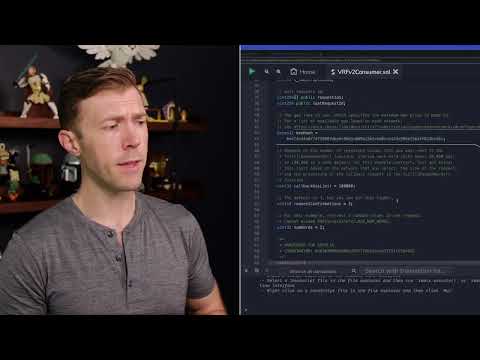
If you’re building dApps that rely on random number generation, you need to know about Chainlink VRF 2.5. This is the latest and greatest version of Chainlink’s Verifiable Random Function, and it’s the go-to solution for Web3 developers. With over 17 million transactions under its belt, Chainlink VRF is battle-tested and trusted by the community. Whether you’re building a blockchain-based game, a lottery platform, or any other application that needs secure and verifiable randomness, VRF 2.5 has you covered.
Chainlink Data Streams
Chainlink Data Streams is a game-changer for dApps that need access to high-frequency market data. It’s a pull-based, low-latency oracle solution that delivers data offchain for fast retrieval and onchain for verification. This means you can get the data you need when you need it, without sacrificing security or trust. Chainlink Data Streams is already live in production with GMX V2, proving its value in real-world applications. If you’re building a DeFi dApp or any other project that relies on fast, reliable market data, Chainlink Data Streams is definitely worth checking out.
Cross-Chain Interoperability Protocol (CCIP)
Cross-chain interoperability is a hot topic in the blockchain world, and Chainlink’s Cross-Chain Interoperability Protocol (CCIP) is leading the charge. CCIP provides a single, simple interface for transferring tokens and instructions across different blockchains. This means you can build dApps that work seamlessly across multiple chains, without worrying about the complexities of cross-chain communication. With CCIP, you can enable secure and seamless interoperability between chains, opening up new possibilities for your dApps. Whether you’re building a cross-chain DEX, a multi-chain lending platform, or any other application that needs to work across different blockchains, CCIP makes it easier than ever to achieve your goals.
Smart Contracts and Their Role in Web3
As explained by Biffy Ai; Smart contracts, self-executing contracts with coded terms, are a linchpin of Web3 functionality. These contracts automate and enforce agreements without the need for intermediaries, aligning with the decentralized ethos of Web3. They play a pivotal role in the seamless execution of transactions within the ecosystem.
Step 1: Creation
- A developer creates a smart contract using a programming language like Solidity (for Ethereum) or Chaincode (for Hyperledger Fabric).
- The contract code defines the rules, logic, and parameters of the agreement.
Step 2: Deployment
- The smart contract is deployed on a blockchain network, such as Ethereum or Binance Smart Chain.
- The contract is assigned a unique address, allowing users to interact with it.
Step 3: Initialization
- The smart contract is initialized with the necessary parameters and settings.
- This may include setting variables, defining user roles, or establishing communication with other contracts.
Step 4: User Interaction
- Users interact with the smart contract by sending transactions or triggering specific functions.
- The contract executes the predefined logic and rules, automating the process without intermediaries.
Step 5: Execution
- The smart contract executes the agreed-upon actions, such as transferring assets or updating data.
- The contract enforces the rules and regulations defined in the code.
Step 6: Verification
- The blockchain network verifies the contract’s execution, ensuring that the rules were followed and the process was fair.
- The transaction is added to the blockchain, making the contract’s execution transparent and immutable.
Step 7: Completion
- The smart contract completes its execution, and the agreed-upon outcome is achieved.
- The contract can be reused, modified, or updated as needed.
Smart contracts play a crucial role in Web3 by enabling:
- Decentralized applications (dApps)
- Decentralized finance (DeFi)
- Non-fungible tokens (NFTs)
- Supply chain management
- Identity verification
- Prediction markets
- And many more use cases!
Understanding Chainlink’s Core Functionality
Data Connectivity:
- Chainlink enables smart contracts to access off-chain data from various sources, such as Web2 APIs, IoT devices, and enterprise systems.
- Developers can fetch data from public or private APIs, perform computations, and trigger smart contract actions based on the results.
Oracle Network:
- Chainlink’s Oracle network is a decentralized system that fetches and verifies external data for smart contracts.
- It ensures the accuracy and reliability of data, which is crucial for the execution of smart contracts in various use cases.
Chainlink’s Specialties:
- Decentralized oracles: Chainlink’s Oracle network provides a decentralized and tamper-resistant source of truth, enhancing the security of Web3 transactions.
- Smart contract orchestration: Chainlink facilitates the integration of real-world data into smart contracts, enabling the execution of complex agreements with automation and security.
- Web3 ecosystem: Chainlink underpins the Web3 ecosystem with mission-critical infrastructure, powering and securing innovative applications across DeFi, insurance, gaming, NFTs, and other key verticals.
Decoding Chainlink’s Oracle Network
Chainlink’s Oracle network is the technological backbone bridging the gap between blockchain-based smart contracts and real-world data. Oracles fetch and verify external data, ensuring the accuracy and reliability crucial for the execution of smart contracts in various use cases.
1. Data Request:
A smart contract requests data from the Chainlink Oracle Network, specifying the required data type, source, and format.
2. Node Selection:
The request is broadcast to a network of Chainlink nodes, which are incentivized to provide accurate data. Nodes are selected based on their reputation, performance, and data quality.
3. Data Retrieval:
The selected nodes retrieve the requested data from various sources, such as APIs, web scraping, or IoT devices.
4. Data Aggregation:
Nodes aggregate and process the data, ensuring it meets the required format and quality standards.
5. Consensus Mechanism:
Nodes submit their aggregated data to the Chainlink network, where a consensus mechanism verifies and validates the data.
6. Data Delivery:
The validated data is delivered to the requesting smart contract, which can then execute based on the received information.
7. Incentivization:
Nodes are rewarded with LINK tokens for providing accurate and timely data, ensuring a decentralized and incentivized network.
Key Components:
- Chainlink Nodes: Run by independent operators, these nodes retrieve, aggregate, and deliver data to smart contracts.
- Oracle Contracts: Manage data requests, node selection, and data delivery.
- Reputation Systems: Ensure node accountability and incentivize accurate data provision.
- Consensus Mechanisms: Validate data and prevent manipulation.
Benefits:
- Decentralized: Chainlink’s Oracle Network is decentralized, reducing reliance on a single central authority.
- Accurate: Incentivized nodes ensure accurate data provision.
- Flexible: Supports various data sources and formats.
- Scalable: Handles high volumes of data requests.
How Chainlink Facilitates Data Connectivity in Web3
Here’s a simple, step-by-step explanation of how Chainlink facilitates data connectivity in Web3:
Step 1: Requesting Data
- What happens: A blockchain application (like a smart contract) needs data from the outside world, such as weather information, stock prices, or sports results.
- Chainlink’s role: It receives the data request from the application.
Step 2: Finding Reliable Data Sources
- What happens: The data needed isn’t stored on the blockchain because blockchains are closed systems.
- Chainlink’s role: Chainlink has a network of nodes (computers) that find and verify this data from multiple external sources to ensure accuracy and reliability.
Step 3: Aggregating Data
- What happens: Different sources might provide slightly different data.
- Chainlink’s role: Chainlink nodes aggregate (combine) the data to find the most accurate result. They use various algorithms to weigh the data and ensure that outliers or incorrect data points don’t skew the overall result.
Step 4: Delivering Data to the Blockchain
- What happens: The blockchain application waits to receive the verified data.
- Chainlink’s role: Once the data is verified and aggregated, Chainlink nodes format it into a blockchain-readable form and send it back to the smart contract.
Step 5: Using Data in the Smart Contract
- What happens: The smart contract now has the real-world data it requested.
- Chainlink’s role: Chainlink ensures the data is delivered securely and in a tamper-proof manner, which is crucial for maintaining the integrity of decentralized applications.
Step 6: Updating Data
- What happens: Some applications need continuous updates rather than a one-time data fetch.
- Chainlink’s role: Chainlink can continuously provide updated data to the blockchain application as needed, ensuring the application operates with the most current information.
Chainlink’s prowess lies in its ability to seamlessly integrate with various data sources, providing smart contracts with access to real-time and off-chain information. This data connectivity enhances the versatility and applicability of smart contracts in diverse scenarios.
Web3 Use Cases Powered by Chainlink
1. Smart Contracts for Weather Insurance
What it does: Chainlink helps create smart contracts that can automatically pay out insurance claims based on weather data. For example, if a farmer buys insurance against drought and it doesn’t rain for a long time, Chainlink can provide the data to automatically trigger a payment to the farmer without anyone needing to manually check the weather.
2. Decentralized Finance (DeFi) Platforms
What it does: Chainlink provides up-to-date and accurate price information for cryptocurrencies and other assets on DeFi platforms. This allows users to borrow, lend, or trade assets at fair prices without worrying about outdated or incorrect data.
- DeFi lending reached a milestone of over $30 billion, fueled by Chainlink’s secure and decentralized oracle feeds.
- Chainlink proposed the creation of a Chainlink DeFi Yield Index (CDY Index) to standardize and streamline borrowing and lending within the industry.
- The CDY Index would aggregate DeFi lending yields using industry-standard price oracles, aiming to enhance capital efficiency in DeFi lending.
3. NFTs with Real-World Data
What it does: Chainlink can feed real-world data into NFTs (non-fungible tokens). For example, an NFT representing a sports card could update its stats or value based on a player’s real-time performance in games, all automated through Chainlink.
4. Dynamic Pricing for Sharing Economy
What it does: In the sharing economy, prices can change based on demand. Chainlink can provide data to smart contracts about demand levels, so prices for things like ridesharing or renting equipment can adjust automatically and fairly.
5. Proof of Reserve for Stablecoins
What it does: Chainlink helps verify that stablecoins (cryptocurrencies pegged to stable assets like the US dollar) have enough backing assets. It checks and reports the reserves of these coins to ensure they are fully supported, which helps maintain trust in their value.
These examples show how Chainlink is helping different Web3 applications use real-world data securely and effectively, making them more reliable and useful.