



Are you curious about Ethereum and want to learn how to get started? You’ve come to the right place! In this beginner-friendly guide, I’ll walk you through the essentials of Ethereum, from setting up your first wallet to buying Ethereum and exploring effective trading strategies. By the end of this article, you’ll have a solid foundation to confidently navigate the exciting world of Ethereum.
But before we get in, it’s important to note that the cryptocurrency market is constantly evolving and governments around the world are taking notice. As an Ethereum enthusiast, it’s crucial to stay informed about the latest regulations and how they may impact your investment decisions. Don’t worry; I’ll make sure to touch on that aspect as well.
So, are you ready to embark on your Ethereum journey? Let’s get started!
Contents
Setting Up an Ethereum Wallet

What is an Ethereum Wallet?
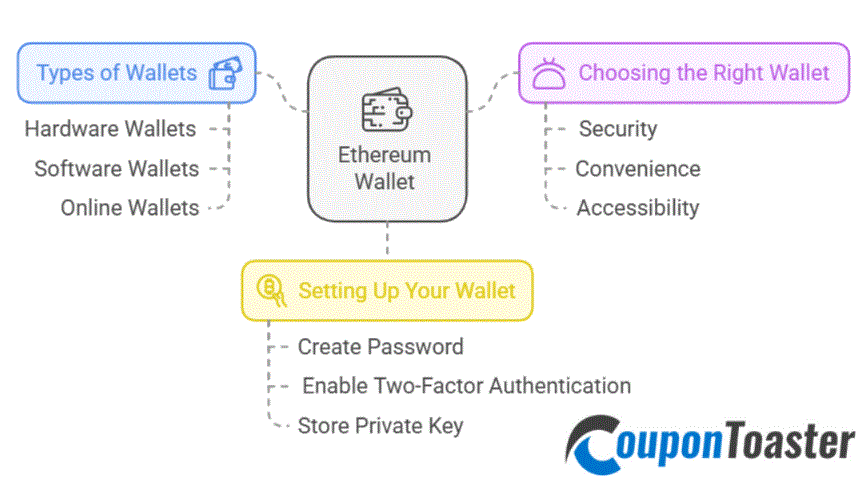
Think of an Ethereum wallet as your personal digital vault for storing, sending and receiving Ethereum. It’s like having a bank account, but instead of dealing with traditional currency, you’re dealing with a digital asset. Just as you wouldn’t leave your cash lying around, you need a secure place to keep your Ethereum.
There are different types of wallets available, each with it’s own features and security levels. Some popular options include:
- Hardware wallets: Physical devices that store your Ethereum offline, providing top-notch security.
- Software wallets: Digital wallets that you can access through your computer or mobile device, offering convenience and ease of use.
- Online wallets: Web-based wallets that allow you to access your Ethereum from anywhere, but may have slightly higher security risks.
Choosing the Right Wallet for You
With so many wallet options out there, how do you choose the one that suits your needs? Here are a few key factors to consider:
| Factor | Description |
| Security | Look for wallets with robust security features, such as two-factor authentication and offline storage. |
| Convenience | Consider how easily you can access and manage your Ethereum with the wallet. |
| Accessibility | Think about where and how often you’ll need to access your wallet (e.g., on-the-go, multiple devices). |
Personally, I recommend hardware wallets like Ledger or Trezor for long-term storage and security. They keep your Ethereum offline, making them less vulnerable to hacking attempts. For day-to-day transactions, software wallets like MetaMask or MyEtherWallet offer a good balance of security and convenience.
Setting Up Your Wallet
Once you’ve chosen your wallet, it’s time to set it up. The specific steps may vary depending on the wallet provider, but generally, you’ll need to:
- Create a strong password to protect your wallet.
- Enable two-factor authentication for an extra layer of security.
- Securely store your wallet’s private key or seed phrase (a series of words that act as a backup for your wallet).
Remember, your private key is like the master key to your Ethereum vault. Never share it with anyone and make sure to keep a backup in a safe place. If you lose access to your private key, you may lose access to your Ethereum forever!
Buying Ethereum

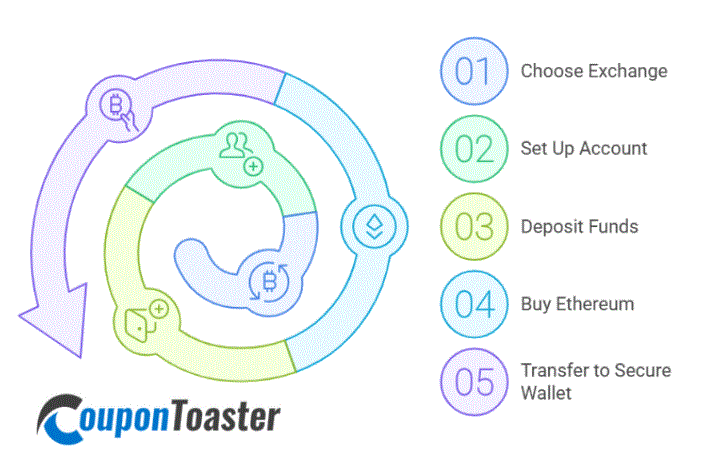
Now that you have a secure wallet set up, it’s time to buy some Ethereum. Here’s what you need to know:
Choosing an Exchange
To buy Ethereum, you’ll need to use a cryptocurrency exchange. Exchanges are platforms that allow you to buy, sell and trade cryptocurrencies. Some popular exchanges include:
- Coinbase
- Binance
- Kraken
- Gemini
When choosing an exchange, consider factors like:
- Reputation and security
- Fees (trading fees, deposit/withdrawal fees)
- Payment methods (credit/debit card, bank transfer)
- User-friendliness
Do your research and compare multiple exchanges to find the one that best suits your needs. For beginners, Coinbase is often a good choice due to it’s user-friendly interface and wide availability.
Setting Up an Account
Once you’ve selected an exchange, you’ll need to create an account. This typically involves providing personal information and completing a verification process to comply with regulatory requirements and prevent fraudulent activities.
The verification process may require submitting identification documents, such as:
- Government-issued ID (passport, driver’s license)
- Proof of address (utility bill, bank statement)
Be prepared to provide accurate information and wait for the exchange to review and approve your account. This process can take anywhere from a few minutes to several days, depending on the exchange and the volume of applications they’re processing.
Depositing Funds and Buying Ethereum
With your account set up and verified, you can now deposit funds into your exchange account. Most exchanges offer various deposit options, such as:
- Bank transfers
- Credit/debit card payments
- Cryptocurrency deposits from other wallets
Choose the deposit method that works best for you and follow the exchange’s instructions to initiate the deposit. Keep in mind that some methods may have higher fees or longer processing times than others.
Once your funds are deposited, you’re ready to buy Ethereum! On the exchange’s trading platform, you can place an order to buy Ethereum at a specific price or at the current market price. After your purchase is complete, the Ethereum will be credited to your exchange account.
It’s important to note that leaving your Ethereum on an exchange is not recommended for long-term storage due to potential security risks. Consider transferring your Ethereum to a secure wallet that you control, such as a hardware wallet or a software wallet where you own the private keys.
Ethereum Trading Strategies

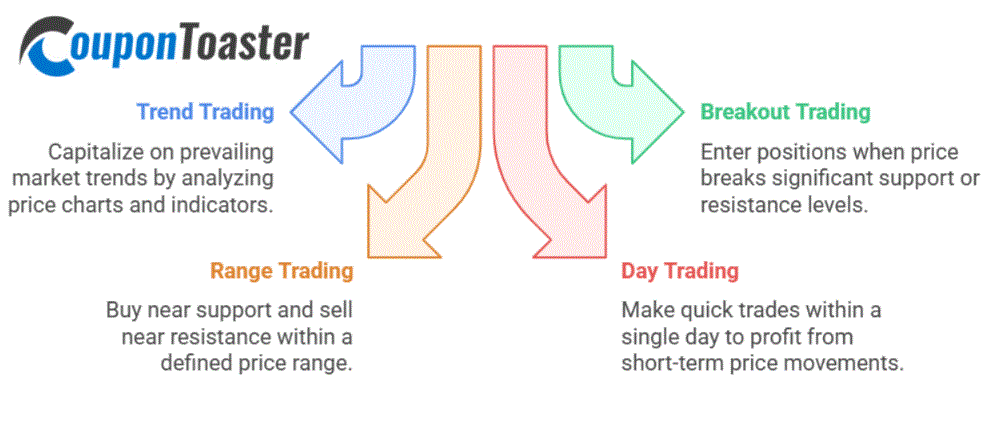
Now that you’ve got some Ethereum in your wallet, let’s explore a few common trading strategies you can use to potentially grow your investment:
Trend Trading
Trend trading involves identifying and capitalizing on the prevailing market trend. By analyzing price charts and indicators, trend traders determine whether the market is in an uptrend (rising prices) or a downtrend (falling prices).
Here’s how it works:
- Identify the trend: Use tools like moving averages and trendlines to determine the direction of the market.
- Enter positions: If the trend is up, consider buying Ethereum. If the trend is down, you may want to sell or wait for a reversal.
- Exit positions: Set profit targets and stop-losses to manage your risk. Exit your positions when the trend shows signs of reversing.
Example: Let’s say you notice that Ethereum’s price has been consistently rising for the past few weeks, with higher highs and higher lows on the chart. This indicates an uptrend. You decide to buy Ethereum and set a profit target at a key resistance level. You also set a stop-loss slightly below a recent low to limit your potential losses if the trend reverses.
Breakout Trading
Breakout trading involves entering positions when the price of Ethereum breaks through a significant support or resistance level. This indicates a potential shift in market sentiment and can lead to substantial price movements.
Here’s how it works:
- Identify key levels: Use horizontal lines to mark significant support and resistance levels on the price chart.
- Wait for the breakout: Watch for the price to break above resistance or below support with strong volume.
- Enter positions: If the price breaks above resistance, consider buying Ethereum. If it breaks below support, you may want to sell.
- Set exit points: Place a stop-loss at or slightly below the breakout level to manage risk. Set profit targets at key levels or use trailing stop-losses to ride the momentum.
Example: Suppose Ethereum’s price has been trading between $2,000 and $2,200 for several weeks. You notice that the price has just broken above the $2,200 resistance level with strong buying volume. This could indicate a bullish breakout. You decide to buy Ethereum and set a stop-loss just below $2,200. You set a profit target at the next major resistance level, say $2,500.
Range Trading
Range trading involves identifying a clear range where the price of Ethereum has been oscillating between support and resistance levels. The idea is to buy near support and sell near resistance, profiting from the predictable price movements within the range.
Here’s how it works:
- Identify the range: Look for a period where the price has been bouncing between two clear levels.
- Buy near support: When the price approaches the lower end of the range (support), consider buying Ethereum.
- Sell near resistance: When the price reaches the upper end of the range (resistance), consider selling Ethereum.
- Set stop-losses: Place stop-losses slightly below support when buying and slightly above resistance when selling to manage risk.
Example: Let’s say Ethereum’s price has been trading between $1,800 and $2,000 for the past month. You notice that whenever the price reaches $1,800, it tends to bounce back up. Conversely, when it hits $2,000, it often pulls back. You decide to buy Ethereum at $1,820, just above support and set a sell order at $1,980, just below resistance. You set a stop-loss at $1,780 to limit your downside risk.
Day Trading
Day trading involves opening and closing positions within the same trading day, aiming to profit from short-term price movements. This strategy requires a significant time commitment and a solid understanding of market dynamics and technical analysis.
Day traders often use a combination of price charts, technical indicators (such as moving averages and oscillators) and newsflow to make rapid trading decisions. They aim to capitalize on intraday volatility and usually avoid holding positions overnight to minimize exposure to gaps and overnight risk.
Example: A day trader might start their day by analyzing the 5-minute and 15-minute Ethereum price charts. They identify a bullish divergence on the RSI oscillator, suggesting a potential short-term uptrend. They buy Ethereum and set a profit target at the nearest resistance level, planning to exit the trade before the end of the trading day.
It’s important to note that day trading is a high-risk, high-reward strategy that requires discipline, emotional control and strict risk management. Beginners should approach day trading with caution and consider practicing with small amounts or on a demo account before committing real funds.
Conclusion
Congratulations on making it to the end of this guide! You’re now equipped with the essential knowledge to start your Ethereum journey with confidence. Let’s recap the key points:
- Set up a secure Ethereum wallet to store, send and receive your Ethereum.
- Choose a reputable exchange, create an account and verify your identity to buy Ethereum.
- Explore different trading strategies, such as trend trading, breakout trading, range trading and day trading, to potentially grow your investment.
- Stay informed about market trends and regulatory developments to make informed decisions.
Remember, the cryptocurrency market is dynamic and ever-evolving. As you venture on your Ethereum adventure, stay curious, keep learning and adapt your strategies as needed. Don’t be afraid to start small and gradually expand your knowledge and investment over time.
If you found this guide helpful, feel free to share it with your friends and fellow Ethereum enthusiasts. Together, we can demystify the world of cryptocurrencies and empower more people to participate in this exciting space.
Happy trading and may your Ethereum journey be filled with success and growth!
Summary
This beginner’s guide to Ethereum covers essential topics for getting started, including setting up a secure wallet, buying Ethereum on a reputable exchange, and exploring trading strategies. The guide explains the different types of wallets available and factors to consider when choosing one. It walks through the process of creating an exchange account, depositing funds, and purchasing Ethereum. The article also introduces four common trading strategies: trend trading, breakout trading, range trading, and day trading, providing examples for each. The guide concludes with a summary of key points and encourages readers to continue learning about the dynamic cryptocurrency market.