



Your competitors are racking up sales while you’re stuck with the same flat product photos from 2019. They’re not smarter than you. They just figured out that customers need to see products like they’re actually holding them. That’s where 3D visualization comes in – and the numbers are stupid good for anyone who actually implements it.
Think about this: you’re selling a $2,000 sofa online. Customer can’t sit on it, can’t feel the fabric, can’t see if it fits their weird L-shaped living room. So they bail. Meanwhile, stores using 3D visualization are watching conversion rates jump by 40% because customers can spin that sofa around, zoom into the stitching, even plop it virtually into their actual room.
The technology isn’t new anymore. What’s new is that it actually works now, and the stores using it are eating everyone else’s lunch.
Contents
The Psychology Behind Why 3D Visualization Works
Your brain processes visual information 60,000 times faster than text. But that’s not why 3D works. It works because it bridges what researchers call the “imagination gap.”
The Trust Factor
When customers can rotate a product, zoom into details, see how light reflects off surfaces – their brain treats it almost like they’re holding the actual item. The visualization function allows users to see a virtual 3D model of a product or visualize specific aspects of it or certain benefits. Users can interact with the model and turn it to view it from different angles or they might customize the size, colors, and shape.
This interaction builds trust. People want to feel and see a product in as much detail as possible before they spend their hard-earned money on it. Traditional photos can’t deliver that. Even video falls short – you’re still watching someone else’s perspective, not exploring on your own terms.
Engagement That Converts
Here’s a stat that should wake you up: 34% interact with 3D visuals for over 30 seconds. Thirty seconds might not sound like much, but in e-commerce terms, that’s an eternity. Most visitors bounce in under 10 seconds.
The reason they stick around? interactivity and visual–spatial cues significantly enhance perceived informativeness and playfulness. But here’s the crucial part: informativeness and playfulness influence the purchase decision-making process in distinct ways. More specifically, a playful interface may enhance consumers’ preference for hedonic product benefits (e.g., a stylish and attractive design), whereas informativeness is a more important explanatory variable for subsequent purchase intentions.
Translation: the fun part gets them interested, the information part gets them to buy.
The “Situated Cognition” Effect
This is fancy psychology speak for something simple: consumers more deeply process and remember information when this information is embedded in their environment (e.g., virtually placing furniture in their own living room) and when consumers interact with the information.
When someone puts a virtual couch in their actual living room using AR, their brain processes it as if they already own it. That psychological ownership is powerful – it’s why test drives sell cars and why 3D visualization sells everything else.
Furniture Industry
IKEA Changed the Furniture Game Forever

IKEA’s been using 3D renders instead of photography since 2005. Yeah, you read that right – most of those perfect room setups in their catalogs? Computer generated. By 2018, they were creating 75% of their furniture images with 3D software.
But the real magic happened when they launched IKEA Kreativ. Since its launch, IKEA Kreativ has seen over 3 million users create virtual room designs. Users can scan their actual room with their phone, then drag and drop IKEA furniture into it. Not some generic room template – their actual space.
The results? IKEA reports that customers who use the IKEA Place app are 11% more likely to complete a purchase compared to those who do not use the app. And here’s the kicker from Shopify’s research: buyers who interact with a 3D product model are 27% more likely to place an order, while those who visualize an item in AR were 65% more likely to purchase.
IKEA’s U.S. division reported $5.9 billion in total sales (including food and services), as well as an 18.8 percent increase in e-commerce sales in 2022, right after rolling out their enhanced 3D features.
Wayfair’s AR Revolution


Wayfair was bleeding money until they went all-in on visualization tech. Their View in Room 3D feature lets customers point their phone at any space and drop furniture into it. Real size, real proportions, real-time.
The company’s stock has risen more than 36% this year, putting its market cap at just above $32 billion after implementing their AR features. They didn’t stop there – they launched Room Planner 3D on mobile, letting customers design entire rooms from scratch.
The psychology behind it is simple. Shopping for home decor and furniture, complete with pricey products, long shipping dates, measuring out rooms, and the sad possibility of having to return a whole couch because it simply didn’t work, is a stressful ordeal. Their 3D tools eliminate that stress.
Footwear Industry
Nike’s Custom Shoe Empire
Nike didn’t just add a color picker to their shoes and call it customization. They built Nike By You with full 3D visualization where customers design shoes in real-time. Change the material, swap the swoosh color, add personal text – you see it all instantly in 3D.
The custom shoe market tells the story: 76% of buyers are more likely to buy from companies that provide individualized experiences. The entire custom shoe market is growing at a compound annual growth rate between 5.8% and 9.2% through 2033, with Nike dominating the space.
Nike’s already massive – they hold 38.6% of the total footwear market. But their 3D customization isn’t just maintaining that lead, it’s expanding it. This customization option enhances customer engagement and satisfaction, as it allows individuals to express their individuality while wearing high-performance Nike shoes.
Automotive Industry
Audi’s Game-Changing Car Configurator

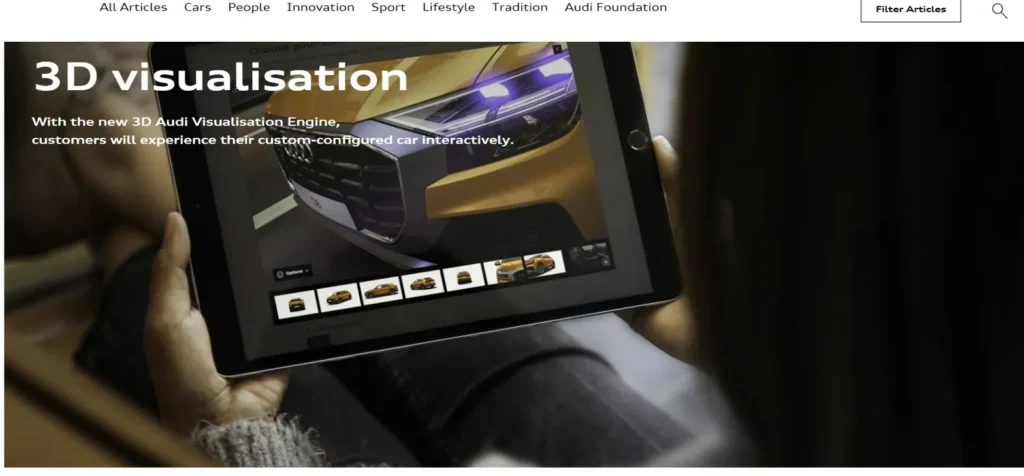
Audi was first among major car manufacturers to use real 3D visualization in their configurator. Not just picking colors from a dropdown – actual 3D models you can rotate, open doors on, turn the lights on and off.
The pilot program results were insane: An initial pilot of a real-time 3D configurator by Audi saw user engagement increase by 66%. But here’s what matters for the bottom line: a 9% increase in additional feature selection per vehicle, which increased the overall purchase price and resulted in increased revenue.
When customers can actually see that premium leather interior or those upgraded wheels in photorealistic 3D, they buy more expensive options. Audi straight up said “The results reflect the fact that the real-time 3D user experience is a drastic improvement over typical 2D experiences.”
Zodiac Boats’ 3D Configurator Fuels 50% Sales Surge

Zodiac Nautique, a premium boat manufacturer, deployed a Sketchfab-powered 3D configurator on its site, allowing customers to customize hulls, engines, and interiors in interactive 3D before purchase. This tackled the automotive e-com hurdle of visualizing complex, high-ticket items remotely.
Within months, sales rose 50% as leads converted faster—dealers reported shorter sales cycles and fewer post-sale adjustments. The tool not only enhanced user immersion but also generated shareable configs, amplifying organic traffic and positioning Zodiac as an innovative leader in online boat sales.
Jewelry Industry
Tiffany Brings Luxury Online
Tiffany & Co. integrated 3D display and AR try-on features into their WeChat and JD platforms in China. Tiffany found that the Kivisense team was implementing mature 3D mode and providing AR try-on function, leading to an authentic jewelry-wearing experience, enhancing user satisfaction, boosting cart additions, and driving growth in Tiffany’s online sales revenue.
The tech recognizes hand, wrist, and neck contours in real-time. Customers can layer multiple pieces – bracelets, rings, necklaces – seeing exactly how they work together. This drives what Tiffany calls “ensemble purchasing” – basically, people buy more stuff when they can see how it all looks together.
Industry-wide, the numbers back this up: adding 3D visualization helps to improve the conversion rates by 94% on average for jewelry retailers.
Swarovski’s Augmented Reality Rings
For a luxury brand like Swarovski, the intricate details of a piece of jewelry are what sell it. The delicate cuts of a crystal or the unique setting of a ring are difficult to appreciate from a flat image. To solve this, Swarovski introduced an AR-powered virtual try-on for its rings, allowing shoppers to see how the jewelry would look on their own hand via their phone’s camera.
This immersive experience created a powerful sense of connection and reduced the distance between the brand and the customer. The technology news publication TechCrunch reported that this AR campaign for a new line of rings saw an engagement rate that was 300% higher than with their traditional 2D ads.
Apparel & Beauty Industry
L’Oréal’s Virtual Try-On Revolution

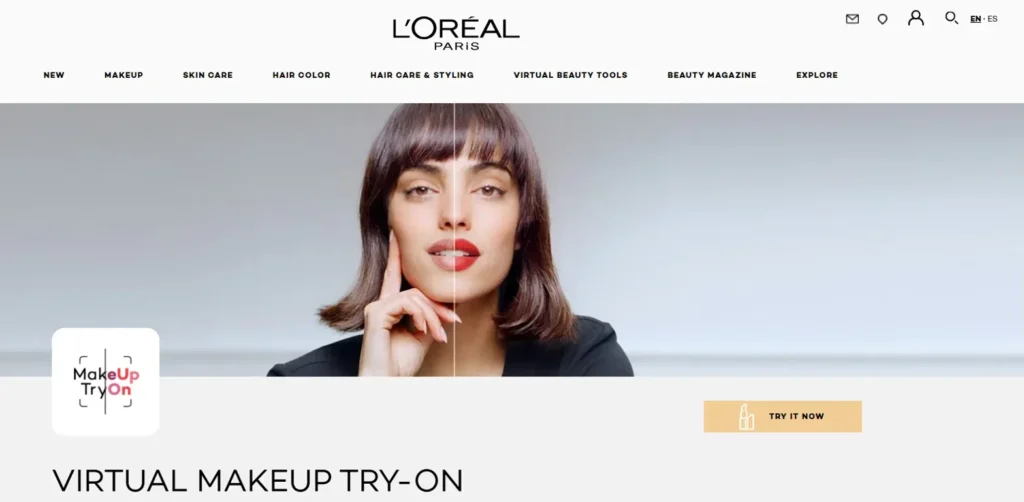
In the beauty industry, a customer’s decision to purchase a new makeup product is deeply personal and dependent on how it looks on them. To overcome the barrier of online-only swatches, L’Oréal acquired the AR and AI company ModiFace and integrated virtual try-on technology into its e-commerce platforms.
This feature enables customers to virtually “try on” cosmetics and hair colors in real-time. According to a press release from L’Oréal, this technology has proven to be incredibly effective, with virtual try-on experiences driving conversion rates three times higher and reducing return rates by over 20%.
Rebecca Minkoff’s 3D Configurator Sparks 44% More Cart Adds
Rebecca Minkoff, a designer handbag and apparel brand, integrated a 3D product configurator into its online store to let shoppers rotate, zoom, and customize items like totes and dresses in real-time. This addressed the common fashion e-com challenge of conveying texture and fit through static images alone.
Post-implementation, users interacting with the 3D tool showed a 44% higher likelihood of adding products to their cart, alongside a 65% increased chance of completing a purchase. The result? A surge in session times and reduced bounce rates, translating to sustained revenue growth as repeat visits climbed—proving 3D turns passive browsing into active intent.
e.l.f. Cosmetics’ Virtual Try-On Yields 200% Conversion Boost

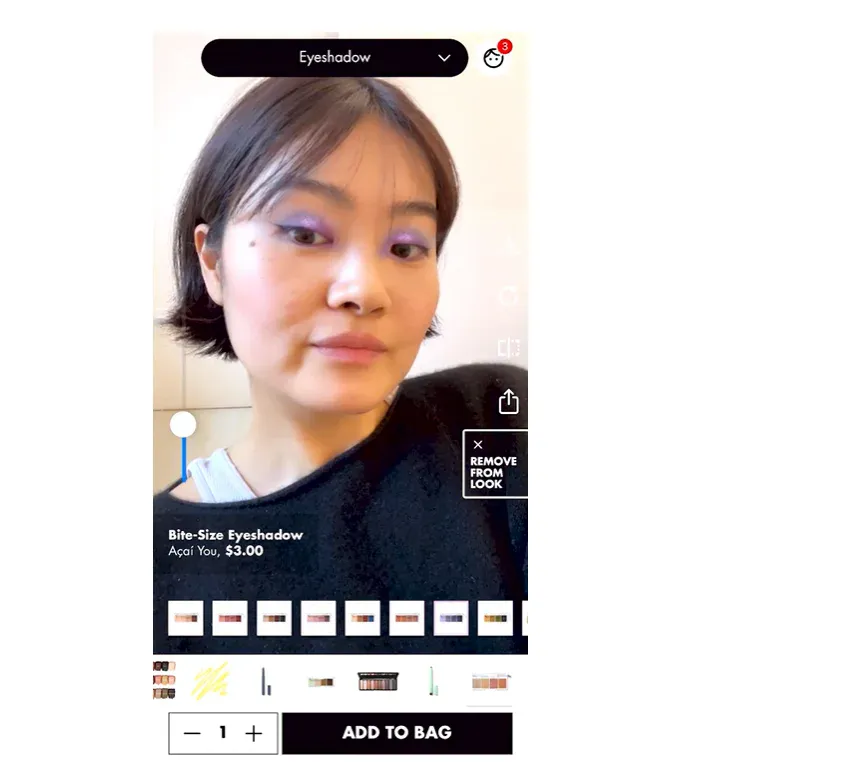
e.l.f. Cosmetics embedded 3D virtual try-on tech from Perfect Corp into its e-commerce platform, enabling real-time face mapping for lipsticks, eyeshadows, and foundations. Aimed at curbing shade mismatches (a top reason for 25%+ beauty returns), the feature let users “try before buy” via webcam.
Shoppers using the tool exhibited a 200% higher conversion rate from browsing to purchase, with engagement metrics like time-on-site doubling. This drove immediate revenue spikes and long-term loyalty, as personalized recommendations based on try-on data refined inventory and marketing efforts.
Home Improvement Industry
Sherwin-Williams’s ColorSnap Visualizer

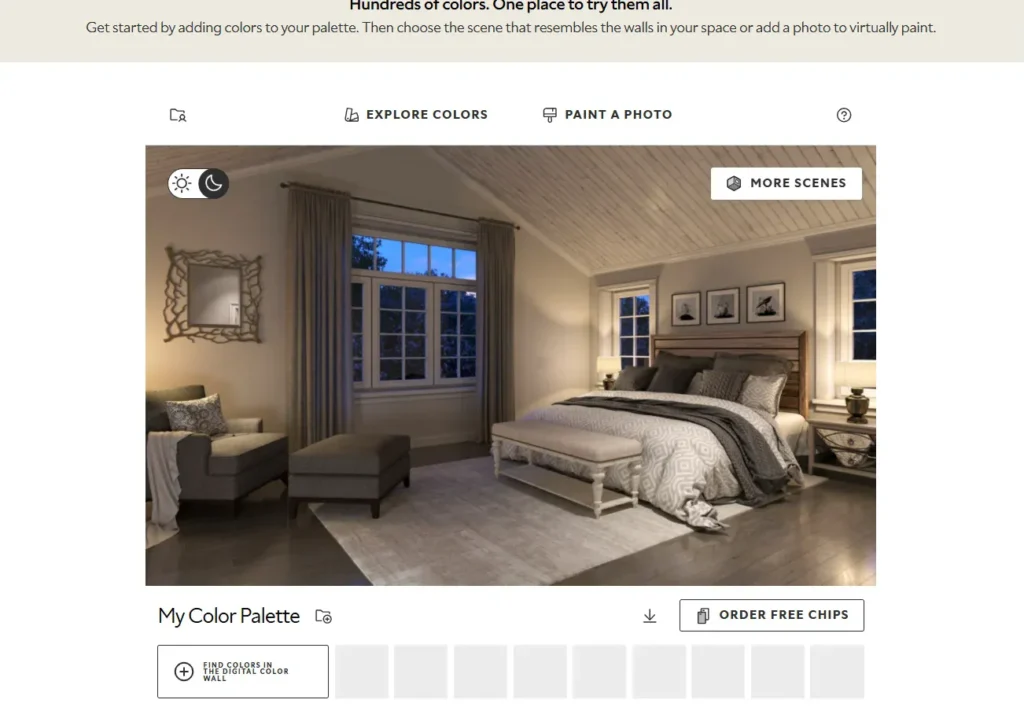
Choosing the right paint color is a significant decision for any homeowner, often accompanied by uncertainty. To help customers visualize their choices, Sherwin-Williams developed the ColorSnap Visualizer, an app that uses 3D visualization and AR to let users “paint” their walls with a chosen color in real-time.
The ability to instantly see a new color on a wall eliminates a major point of friction in the purchase journey. A study on the app’s effectiveness found that users of the visualizer were 10 times more likely to convert to a sale than other website visitors. This tool transformed a guessing game into a confident decision, significantly boosting sales.
Implementation Strategies That Actually Work
Start small. You don’t need to 3D-model your entire catalog tomorrow. Pick your top 10 sellers or your highest-margin products. Get those right first.
For furniture and home goods, focus on spatial placement. The ability to see if something fits is more important than seeing every texture detail. Room scanning tech like IKEA uses is getting cheaper – there are now plug-and-play solutions for under $500/month.
For fashion and accessories, virtual try-on is the killer feature. Whether it’s shoes, jewelry, or clothes, letting people see items on themselves drives massive engagement. The tech for this has gotten good enough that it works on most smartphones without special apps.
For complex products (cars, electronics, customizable items), interactive configurators pay for themselves. Every additional option a customer selects because they can visualize it is pure margin.
The key is making it seamless. If customers need to download an app or jump through hoops, you’ve already lost. The best implementations work right in the browser, load fast, and feel natural to use.
At The End
We’ve seen how this technology enhances the shopping experience, boosts conversions, and streamlines operations. Whether you’re a small boutique or a large enterprise, adopting 3d visualization services is a proactive step toward securing your place in the future of retail.
Brands are already using these 3d rendering services, using 3D models to create a virtual “try-on” experience for their customers. Customers could see how a new model of sneakers or a designer outfit would look on them from every angle. This level of detail and interactivity helped them build a reputation for innovation and quality, and it provided a level of trust that static images simply couldn’t match. It’s an easy way to stand out from the crowd and build a loyal customer base.
It’s about giving your customers more than just a product—it’s about giving them an experience, and that’s something they’ll keep coming back for.
References
- Grabon Blog. “33 Ikea Statistics 2024: Market Share, Revenue & Shoppers Data.” May 12, 2025.
- Virtualitics. “AI in 3D Product Visualization: How Technologies Increase Sales and Reduce Costs.”
- iEnhance. “How the IKEA Kreativ app evolves furniture sales.”
- Renascence. “How IKEA Uses Technology to Improve Customer Experience (CX) in Retail.”
- IKEA U.S. “IKEA U.S. reports continued growth in 2022.” January 25, 2023.
- IKEA. “IKEA reports growth of 5.7% in FY23.”
- ThreeKit. “21 3D Configuration Statistics You Should Know in 2023.” June 9, 2025.
- Professional 3D Services. “13 Stats on 3D Product Configurators Growth in eCommerce.” October 12, 2023.
- Market.us. “Custom Shoes Market Projected to Reach $1.21 Billion by 2032.” April 10, 2023.
- PrintXpand. “Revolutionize Your Customers’ Shoe Shopping Experience with 3D Shoe Configurator.” July 19, 2023.
- Kivisense. “Tiffany’s 3D Showcase and AR Fitting Drive Cart Additions.” January 2, 2025.
- iJewel3D. “Top 7 reasons why you should go for a 3D visualization software.”
- Medium. “Wayfair’s Try-Before-You-Buy Augmented Reality Experience.” April 21, 2022.
- Frontiers in Virtual Reality. “Consumer behavior in augmented shopping reality.” September 20, 2022.
- Journal of Interactive Marketing. “How 3D Virtual Reality Stores Can Shape Consumer Purchase Decisions.”
- L’Oréal. “L’Oréal takes its tech to the next level with a brand-new virtual make-up experience.” 2021.
- TechCrunch. “Swarovski uses augmented reality to let you try on its new rings.” 2019.
- Marxent. “The ROI of AR.” 2021.
- Hwang, J. and Lee, K. Journal of Business Research. 2022.
- Joo, J. and Kim, J. International Journal of Retail & Distribution Management. 2020.
- Xu, J. and Li, D. Journal of Economic Psychology. 2018.